Thursday, May 31, 2007

WARNING - ADULT CONTENT

This blog content includes explicit depictions of sexuality, including homosexuality, heterosexuality, transgender, fetishes and many others.
The goal of this blog is to show my artwork, and talk about erotic art among other “sensible” subjects.
To continue to browse here you must unconditionally support the freedom of expression demonstrated by this blog contents.
TO SEE ALL MY BLOG GO TO ARCHIVES
Enjoy them!
Celso

Discovering the Swiss Army


One more acquisition for my new passion: Discovering the Swiss Army.My husband just offered me this old and rare book, magnificently illustrated by original watercolours and pictures as you can see above…

LES EX-VOTO RACONTENT by Réne Creux


An ex-voto is a votive offering to a saint or divinity. It is given in fulfilment of a vow (hence the Latin term, short for ex voto suscepto, "from the vow made") or in gratitude or devotion. Ex-votos are placed in a church or chapel where the worshipper seeks grace or wishes to give thanks. Shrines decorated with ex-votos are often the destinations of pilgrimages.

Monday, May 28, 2007

Gay activists beaten and arrested in Russia


From The Guardian

Riot police used violence to break up a gay rights demonstration in Moscow yesterday and arrested several European parliamentarians in what critics say is the latest violation of human rights in Russia.
A group of gay rights activists came under attack from neo-Nazi thugs when they tried to present a petition asking Moscow's mayor, Yuri Luzhkov, to lift a ban on a Gay Pride parade. He has previously dubbed gay rallies "satanic". Witnesses said riot police watched as far-right skinheads chanting "death to homosexuals" beat up several activists.
The police failed to arrest the skinheads but detained several of the Europeans - including the German MP Volker Beck, a member of the Green party, and the radical Italian MEP Marco Capatto. Riot police threw Mr Capatto into a police van. "Why don't you protect us?" he shouted. "It was absolutely shocking," the gay rights campaigner Peter Tatchell told the Guardian yesterday. "The police stood there while people knocked me to the ground and kicked me. Four or five neo-Nazis attacked me. The police watched. At a certain point the police then arrested me and let my neo-Nazi attackers walk free."
Religious orthodox protesters and skinheads hurled eggs and stones - injuring Mr Tatchell in the eye. They also attacked Richard Fairbrass, the gay singer from the pop group Right Said Fred.
"When we were in the police van the police taunted us," Mr Tatchell said after his release. "They said, 'Are you a member of the sexual minority?' We said yes. They said, 'We are going to have some fun with you at the police station.' What happened here shows the flawed and failed nature of Russia's transition to democracy. There is no right to protest in Moscow."
The arrest of European parliamentarians is likely to further depress relations between the EU and Russia - which are at a lowpoint after an acrimonious summit this month in the Russian city of Samara. The chairwoman of Germany's Green party, Claudia Roth, yesterday called on the chancellor, Angela Merkel, to raise the issue of rights with President Vladimir Putin at next month's G8 summit.
As a member of the Council of Europe and signatory to the European convention on human rights, Russia is obliged to allow demonstrations. "It has been shown once again today that human rights are systematically abused in Putin's Russia," Ms Roth said.
The activists had tried to deliver a petition signed by 50 MEPs calling on Moscow's mayor to respect freedom of assembly, but 30 of them were arrested and they did not make it to his city hall office. Mr Beck was later released. Three Russian gay rights campaigners were kept in custody and charged with disobeying police.
Neo-Nazi thugs and an orthodox priest attacked the activists when they were freed several hours after their arrest, witnesses said. "This is terrible but I am not scared," a Russian named Alexey said, blood streaming from his face. "This is a pretty scary place, a pretty scary country if you are gay. But we won't give up until they allow us our rights."
Russia decriminalised homosexuality in 1993, but the gay community is still widely reviled. Last year Mr Luzhkov refused to allow a Gay Pride rally to take place.

Wednesday, May 23, 2007

JONNY QUEST by Hanna-Barbera


Directly from my Imagery JONNY QUEST by Hanna-Barbera (1964) is available on DVD now.

Dr. Benton Quest is a research scientist who is frequently called upon for missions that require his scientific and technical expertise. He is usually accompanied by his son Jonny, his tutor/bodyguard Race Bannon, their bulldog with the distinctive mask-like eye markings named Bandit, and Hadji, an Indian orphan who has special abilities of his own. Together, they investigate mysteries; perform rescues and battle nefarious villains around the world, most notably Dr. Zin.

Farmers Weekend in Switzerland I


The last weekend (May19th and 20th) I have been in a meeting for all those who, like me, enjoy the company of farmers and workers in their outfit.Full time wearing our rubber boots or waders we have lots of fun and relaxing time, enjoying food and the good company.

Farmers Weekend in Switzerland II


A beautiful landscape; a typical chalet close to the Lake of Gruyère far away from any houses, it was the perfect place to live our passion for those gears and enjoying being together with other like-minded people.Perfect Atmosphere!!!

Farmers Weekend in Switzerland III


Apero in wellies

Farmers Weekend in Switzerland IV


Rubber Boots Fun

Farmers Weekend in Switzerland V


The hot booted guys

Farmers Weekend in Switzerland VI


Everybody brought his own piece of meat…to grill…

Farmers Weekend in Switzerland VII


Enjoying my waders

Tuesday, May 22, 2007

BOOKS


Now living definitely in Switzerland is time to know a little more about the Swiss Army: Some new available titles in my Library:
L’ARMÉE by Roger de Diesbach and Jean Jacques Grezet
GÉNÉRAL GUISAN published by Librairie Marguerat S.A. Lausanne
Edition directed by André Guex
Both book illustrated with marvellous pictures of the Swiss Army

ICH BIN SOLDAT UND BLEIB SOLDAT a watercolour collection by Fritz Traffelet
Edited by Verlag A. Francke A.G.
Bern – 1935

BOOKS: GAUCHOS by Aldo Sessa and Juan José Güiraldes


Just to let you know that my mother is Gaucha from Rio Grande do Sul, the southern Brazilian state, bordering with Uruguay and Argentina. I have the traditional costume and all paraphernalia; soon you will see me wearing them.

BOOKS: ILLUSTRIERTE GESCHICHTE DER KAVALLERIE by Hervé de Weck


An exceptional history of the Cavalry thru the centuries, very well illustrated, several hot pictures, a real pleasure for my eyes!

BOOKS: PRELUDE TO WAR by Robert T. Elson


… and the editors of Time-Life Books

BOOKS: BLANDFORD COLOUR SERIES


Published by THE MACMILLAN COMPANY in the USA
Uniforms of the American Civil War
Uniforms of the Retreat from Moscow
Uniforms of the Peninsular War 1807-14

BOOKS: EGON SCHIELE by Christian M. Nebehay


One more for my collection

May 2007 – BERLIN


One week in Berlin to work and to attempt to my friends exhibition at the Brazilian Embassy. Taking the opportunity to visit some exhibitions, photographing some models and having some fun at the best city in the world.

May 2007 – BERLIN


Always offering us a detail to be photographed

May 2007 – BERLIN


Or a booted man, even a silver one

May 2007 – BERLIN


Buying books

May 2007 – BERLIN


A stamped cock

May 2007 – BERLIN


A new venue

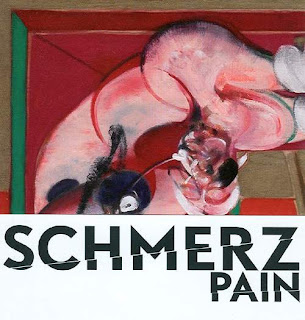
May 2007 – BERLIN – SCHMERZ/PAIN


At the entrance to the Hamburger Bahnhof, a former train station that houses Berlin’s national gallery of contemporary art, the first exhibit that catches the eye is a subtle hint of things to come.

May 2007 – BERLIN – SCHMERZ/PAIN


Enclosed in a showcase is a simple piece of wood, about one meter in length and tightly wrapped in a thick leather hide. Up until the 19th century, it was a staple piece of medical equipment: In the absence of effective anesthetics, countless people dug their teeth into this contraption to avoid biting their own tongue off during painful surgical procedures.

May 2007 – BERLIN – SCHMERZ/PAIN


The exhibition PAIN explores the manifold depictions and expressions of pain: in an early modern painting of the Crucifixion, the medical preparation of a gouty hand, a video installation of mourners, the flickering electrical impulses of a nerve cell, a cry. It examines pain’s ability to create community, as well as the attempts to observe, analyze, seek or escape it. It shows that pain can be many things at once: subjective and objective, creative and destructive.
The two venues, the Hamburger Bahnhof – Museum für Gegenwart – Berlin and the Berliner Medizinhistorische Museum der Charité, are both program and challenge. The museums stand for realms of images and things that could not be more disparate. “Pain” is predestined to thematize these expectations themselves, for neither art no science can claim to have the last word here.
The exhibition PAIN draws from all conceivable sources. Combining and confronting artistic works and medical, folk-art, religious and everyday objects, it traces the boundaries between art, medicine and cultural history. The focus is on Western culture. Following a strategy of reduction, the exhibition is not afraid to make leaps in time. It is conceived as a zone of experimentation for new visual and thematic impulses and puts up for negotiation the viewing habits traditionally associated with both museums – a challenge for curators and visitors alike.

May 2007 – BERLIN – SCHMERZ/PAIN


Artworks by the following artists and others will be shown: Francis Bacon, Birgit Brenner, Albrecht Dürer, A K Dolven, Julio González, Mathilde ter Heijne, Gary Hill, William Kentridge, Bruce Nauman, Aya Ben Ron, Rudolf Schwarzkogler, Mladen Stilinovic, Giovanni Battista Tiepolo, Sam Taylor-Wood, Mark Wallinger.
Curators: Eugen Blume, Hamburger Bahnhof - Museum für Gegenwart - Berlin; Thomas Schnalke, Medizinhistorisches Museum; Annemarie Hürlimann and Daniel Tyradellis, Praxis für Ausstellungen und Theorie

May 2007 – BERLIN – SCHMERZ/PAIN


The passion of Christ
Religious artefacts are an important part of the exhibition. In what is perhaps the Western world’s most vivid image of human suffering, the passion of Jesus Christ is in the foreground of these religious exhibits. But always mixing the religious with the scientific, several exhibits also recall the experiments of Frederick T. Zugibes, an American doctor who in the late 1940s hung his assistants by the cross in order to measure the precise pains incurred by crucifixion.

May 2007 – BERLIN – SCHMERZ/PAIN


At the stairs of Hamburger Bahnhof

May 2007 – BERLIN – SCHMERZ/PAIN


An amazing video, one of the best pieces of the exhibition

May 2007 – BERLIN - THERE IS NEVER A STOP AND NEVER A FINISH


As well as at the Hamburger Bahnhof

An exhibition in memoriam Jason Rhoades.
Works from Friedrich Christian Flick Collection, till August 19th 2007

May 2007 – BERLIN - AKADEMIE


May 2007 – BERLIN - OLHAR DO SUL


Exhibition OLHAR DO SUL
Four artists from Curitiba/Paraná - Brazil, showing their work at the Brazilian Embassy in Berlin from May 16th to June 15th
Ana Lúcia Nóbrega (Ana and the Brazilian Ambassador in Berlin), Mikozs, Nelson Padrella, Átila Wensersky

Embaixada do Brasil em Berlim
Wallstrasse 57
10179 – Berlim – Alemanha

May 2007 – BERLIN


My dearest friends Mikosz and Marili Azim: more than 27 years of friendship. It was great to have been with them.
The pictures were taken at the vernissage of OLHAR DO SUL

May 2007 – BERLIN


Ana has a beautiful view of the Brandenburg Gate.
Picture was taken from her terrace.

May 2007 – BERLIN


Taking a rest and getting some sun bad at Ana’s terrace

May 2007 – BERLIN - Changing portraits with Mikosz


He has a marvellous work and a very good technique. Looking forward to get mine!

What will be happening in Berlin ...


and abroad…


WEDDING

May 10th 2007 – 11:00am Lucerne

Pictures of my Wedding


BRIDES OF MAY


My friend Cesar Almeida (http://rainha2cabecas.blogspot.com/) told me (in a typical Brazilian Portuguese) that I’m a “bicha cliché”, this kind of traditional bride that loves get married on May.

Monday, May 21, 2007

April in Paris


Since always Paris is one of my favourite cities in the world. Unfortunately things (even things we love) can cause some damage sometimes: An April in Paris to forget!
Just posting for exercise and to carry on with my blog but I must confess that I wasn’t really in the mood…

April in Paris – A sunny walk from Tuileries to Les Invalides I


A sunny and unpleasant day: Some nice pictures and awful souvenirs. At least these statues are magnificent. Mind the details!

April in Paris – A sunny walk from Tuileries to Les Invalides II


The Place de la Concorde is one of the largest open vehicular and pedestrian plazas in the world. Traffic swirls continuously around a central pedestrian area marked by two large fountains and an ancient Egyptian obelisk, a 3300-year-old artifact from Luxor, donated by the Viceroy of Egypt to France in 1829.
At each corner of the octagonal square is a statue representing a French city: Bordeaux, Brest, Lille, Lyon, Marseille, Nantes, Rouen and Strasbourg. They were installed in 1836 by Jakob Ignaz Hittorff, who redesigned the Place de la Concorde between 1833 and 1846.
That same year a bronze fountain, called 'La fontaine des Mers' was added to the square. A second one, the 'Elevation of the Maritime' fountain or 'La fontaine des Fleuves', was installed in 1839. Both fountains were designed by Hittorff

April in Paris – A sunny walk from Tuileries to Les Invalides III


Some policemen at La Place de la Concorde

April in Paris – A sunny walk from Tuileries to Les Invalides IV


By the river Seine

April in Paris – A sunny walk from Tuileries to Les Invalides V


Pont Alexandre III is an arch bridge that spans the Seine, connecting the Champs-Élysées quarter and the Invalides and Eiffel Tower Quarter, regarded by many as one of the prettiest in Paris.
The bridge, with its exuberant Art Nouveau lamps, cherubs, nymphs and winged horses at either end, was built between 1896 and 1900. It was named after Tsar Alexander III (father of Nicholas II) of Russia. It was Nicholas II who laid the foundation stone in October 1896. The style of the bridge reflects that of the Grand Palais, to which it leads on the right bank.
The construction of the bridge is a marvel of 19th century engineering, consisting of a 6m high single span steel arch. The design was subject to strict controls that prevented the bridge from obscuring the view of the Champs-Élysées or the Invalides.The bridge was built by the engineers Résal and Alby and inaugurated in 1900 for the Universal Exhibition. Classified as historical monument, four gold-covered bronze statues hover over the bridge, on the top of 17 meter columns, representing "Renommées" standing close to Pegasus.

April in Paris – Montmartre I


Walking around and enjoying a French white wine

April in Paris – Montmartre II


My old boots

April in Paris – Montmartre III


An old poster to sell

April in Paris – Montmartre IV


The awful statue of Nijinsky at Montmartre Cemetery

April in Paris – Montparnasse I


Walking around and visiting some bookshops

April in Paris – Montparnasse II


Painting at an antique shop’s window

April in Paris – Montparnasse III


Montparnasse Cemetery: Génie du Sommeil Eternel
Horace Daillion’s wistful bronze angel of Eternal Sleep (1902) is the cemetery centrepiece.

April in Paris – Montparnasse IV


Montparnasse Cemetery: Un exquisite tomb from a General. Nice portrait and bronze relieves. Dark and terrifying skulls

April in Paris – Le Marais


Always a pleasure, even an ordinary church can be charming and have an especial touch.

April in Paris – Le Marais


Found it in an antique shop for only 800,00€. A bargain!!!

April in Paris – St. Michel


Leaving from gilbert jeune librairie I’ve met some horsemen, they were quite astonished to see another booted man taking some pictures of them…

April in Paris – Bois de Vincennes


With my mate Daniel and River

April in Paris – Equestrian Statues


Some shots for pleasure my eyes!

April in Paris – Exhibitions – LUCIEN JONAS


Not an exhibition but watching the drawings by Lucien Jonas at the Carnavalet Museum – Le Marais
The vast Carnavalet Museum, devoted to the history of Paris, occupies two adjoining mansions (the Hôtel Le Peletier de St-Fargeau and the Hôtel Carnavalet). They include entire decorated rooms with panelling, furniture and many works of art.

April in Paris – Exhibitions – MOVE YOUR ART!


Move Your Art! at the 4eme Mairie – Le Marais
Very interesting and quite funny. Let me suggest you to look this at:

April in Paris – Exhibitions – LILITA POSTAZA


At Les Cloîtres de Billettes – Le Marais

April in Paris – Exhibitions – BARBUS


April in Paris – Exhibitions – ATLANTIDES


ATLANTIDES: L'appât, Faun and Man and Architecture - Pictures by Jürgen Katzengruber at Les Mots à la Bouche

April in Paris – Exhibitions – DE L’ARMÉNIE à MONTMARTRE


De l'Arménie à Montmartre.
Le mouvement arménophile en France (1878 – 1923)The Musée de Montmartre clarifies one of the strongest moments of the French intellectual life (later XIX century and the beginning of XX). From last April 4 and for three months, it presents a rich exhibition illustrating how many politicians, writers or artists - baptized the “Arménophiles” - mobilized themselves about the “Armenian question”. In a new way, the exhibition “Arménie to Montmartre” testifies to a whole side of the history of the friendship francoarménienne and recalls through exceptional works and objects one crucial moment of the Armenian history which flashes back in its time on the French topicality, in particular with Montmartre, hinged plate artists and intellectuals.

April in Paris – Exhibitions – GARDEN OF LOVE


"Garden of love" Installation by Yinka Shonibare at the Musee Quai Branly in Paris till 8, July 2007
Proposed by the London-based Nigerian-born artist, Yinka Shonibare, the installation Garden of Love draws inspiration from French-style gardens and invites the public to embark on an amazing journey.
In the "garden" – between foliage, fountains and copses – visitors will stumble upon a strange ballet of love… Yinka Shonibare presents here his thoughts on identity and history in a blend of his native and adopted cultures.

April in Paris – GILBERT ET JEUNE


A source of pleasure for a bulimic guy like me.

April in Paris – BOOKS


Just some covers

April in Paris – An old post card


April in Paris – A fashonable poster


April in Paris – A page from a gay magazine


April in Paris – A page from a book


Workmen from PTT (Bellevue 30’s)

April in Paris – A revisited artist: NORMAN ROCKWELL


Norman Rockwell’s Four Freedoms – Images that inspired a Nation

The pictures of NORMAN ROCKWELL (1894-1978) were recognized and loved by almost everybody in America.
The cover of The Saturday Evening Post was his showcase for over forty years, giving him an audience larger than that of any other artist in history. Over the years he depicted there a unique collection of Americana, a series of vignettes of remarkable warmth and humour. In addition, he painted a great number of pictures for story illustrations, advertising campaigns, posters, calendars, and books.
As his personal contribution during World War II, Rockwell painted the famous "Four Freedoms" posters, symbolizing for millions the war aims as described by President Franklin Roosevelt. One version of his "Freedom of Speech" painting is in the collection of the Metropolitan Museum of Art.
Rockwell left high school to attend classes at the National Academy of Design and later studied under Thomas Fogarty and George Bridgman at the Art Students League in New York. His early illustrations were done for St. Nicholas magazine and other juvenile publications.
He sold his first cover painting to the Post in 1916 and ended up doing over 300 more. Presidents Eisenhower, Kennedy, and Johnson sat for him for portraits, and he painted other world figures, including Nassar of Egypt and Nehru of India.In 1957 the United States Chamber of Commerce in Washington cited him as a Great Living American, saying that... "Through the magic of your talent, the folks next door - their gentle sorrows, their modest joys - have enriched our own lives and given us new insight into our countrymen."
The Norman Rockwell Museum in Stockbridge, Massachusetts has established a large collection of his paintings, and has preserved Rockwell's last studio as well.

NORMAN ROCKWELL


He loved Scouts Boys

NORMAN ROCKWELL

The guy is awfully reactionary but I love his work!

April in Paris – A Tribute for a Special Man


He was a friend’s boy friend who died some years ago. Amazing coincidence of tastes and fantasies, we definitely share the same universe.
Small details like men’s type and characteristics, situations, collectibles things, making scrapbooks, firemen, policemen, moustachus, etc...
It was like a heritage and from now to perpetuate his memory (when is still possible) I’ll take care of his treasures. Thank you a lot mate!

"His dream was to be a fireman!"

April in Paris – A Tribute for a Special Man – Firemen I


Books and Brochures

April in Paris – A Tribute for a Special Man – Firemen II


Pictures and Images

April in Paris – A Tribute for a Special Man – Gendarmes I


Books and Brochures

April in Paris – A Tribute for a Special Man – Gendarmes II


Pictures and Images

April in Paris – A Tribute for a Special Man – Books


More than 20 Books

April in Paris – A Tribute for a Special Man – Battle Scenes


April in Paris – A Tribute for a Special Man – Collecting and Souvenirs I


April in Paris – A Tribute for a Special Man – Collecting and Souvenirs II


April in Paris – A Tribute for a Special Man – Collecting and Souvenirs III


April in Paris – A Tribute for a Special Man


One of the most unbelievable coincidences is our shared passion for Mustelidae

April in Paris – She is back!


April in Paris – ESCALIER C


Escalie C (1985) by Jean Charles Tacchella

More than 20 year that I’m looking for this film. Saw it first time in Brazil in 1986 and was completely in love with. I’ve just got the DVD in Paris.
Tacchella, who is famous for the warm, joyful "Cousin-Cousine" gives us a very downbeat, intense sort of soapie about a cold, egocentric young art critic, who learns to love through his involvement with the occupants of his apartment building. It's very difficult to like him and to believe in some of the artificial plot developments, but there are some very truthful scenes, performed by an excellent cast.

April 2007 – Elections Présidentielles en France


France just missed the train of modernity and citizenship. Shame of you France!!!

April 2007 – Elections Présidentielles en France


No comments !

April 2007 – Elections Présidentielles en France - Frédéric Nihous


HOT; HOT, HOT
Chasse - Pêche - Nature - Traditions est un mouvement rassemblant des citoyens de toutes sensibilités politiques, qui en ont assez de voir leurs conditions de vie et leur environnement se dégrader de jour en jour et qui refusent de voir disparaître leur identité, leur culture, ainsi que leurs valeurs, parce qu’ils y sont traditionnellement attachés et qu’elles sont porteuses d’avenir.

This guy use to wear rubber boots; can you figure it? Yes I do!!!

April 2007 – France I


Enjoying around Paris wearing my waders and rubber boots

April 2007 – France II


April 2007 – France III


April 2007 – France IV


April 2007 – France V


... a nice booted friend !

April 2007 – Claude François’ grave at the Cemetery of Dannemois


Claude François, a 60's yéyé idol who was on the point of transforming himself into the legendary King of French Disco.
Amazing exemple of kitsch. This grave is still worst than Dalida’s one at Montmartre Cemetery in Paris.
He is awful anyway! You can see his performance at:

April 2007 - Milly-la-Foret


Milly-la-Foret is in the former departement of Seine-et-Oise near the Fontainebleau forest, about 56 kilometres from Paris, 45 minutes by car on the autoroute du Sud (South Highway)

Poster at Milly-la-Foret


I couldn’t resist taking a picture

Milly-la-Foret - Chapelle de St Blaise des Simples


The Chapel was all that remained of a ‘madrerie’ or lazaret where lepers were successfully treated by the ‘simples’ or medicinal plants and when it was restored in 1958 with funds raised by some twenty or so local people -Cocteau was offered the walls to decorate. This he did with remarkable panache, creating wonderful images of medicinal plants climbing towards the ceiling with, on either side of his depiction of angels assisting Christ in his resurrection, two crowns of local thorns and two chandeliers created in the form of upturned gardening forks.

Chapelle de St Blaise des Simples – The famous Cat


In one corner, a cat symbolizes the devil with Cocteau’s signature beneath it with his star and dated 1959.

Chapelle de St Blaise des Simples – Jean Cocteau


Far from being the opium-smoking dilettante of legend, Jean Cocteau was one of the 20th century's most significant artists. Yet his unacknowledged homosexuality and Nazi leanings made him a profoundly tormented figure, writes Gilbert Adair

Chapelle de St Blaise des Simples


Saint Blaise’s Reliquaire

Chapelle de St Blaise des Simples – Glasses


Chapelle de St Blaise des Simples – Eyes


Impressive eyes watching you...

Chapelle de St Blaise des Simples - Soldiers


Directly above the primitive altar is a head of Christ, flanked by the profiles of two conspicuously virile angels. Over these figures, just below the roof's exposed wooden beams, another, now freshly resurrected redeemer is surrounded by a trio of Roman centurions in mini-togas, one of them yawning, the other two fast asleep. There's also a naked young angel, muscular and completely bald. And on the floor beneath our feet is the poet's oblong tombstone.

Chapelle de St Blaise des Simples – Jean Cocteau’s Grave


It's a simple slab of stone. Cocteau's name, like a letterhead, is inscribed at the top, and on the lower right-hand side, scrawled in his familiar spidery handwriting, are the words "Je reste avec vous"

Chapelle de St Blaise des Simples – The Garden


Conservatoire des Plantes à Milly la Forêt. Around the Chapel since XV century.

Chapelle de St Blaise des Simples – The Bell


In the chapel grounds the old bell, which used to mark the beginning and end of the Thursday markets from 1479 to 1926 still stands.

About…


Jean Cocteau


Cocteau wrote poetry, fiction, drama and criticism; he directed several celebrated films; he produced thousands of sketches and paintings; he collaborated with such musicians as Stravinsky, Satie, Milhaud, Poulenc, Honegger, Henze and Menotti; he acted on both stage and screen; he travelled around the world in 80 days (long before S J Perelman, Nicholas Coleridge and Michael Palin); he personally trained the washed-up Panamanian prizefighter Al Brown so effectively that Brown regained his world bantamweight title; and he played the drums in a couple of Parisian nightclubs.
Cocteau reiterated the term "poet" as often and obsessively as a navvy would use another sort of four-letter word, is that he was actually one of the most significant artists of the 20th century. The influence of his writing, both poetry and prose, is detectable in the work of figures as various as Radiguet and Genet, Edith Sitwell and Mishima; that of his film-making in the productions of the New Wave - Truffaut, Godard, Demy, Resnais, Varda and company - as well as in those of Bresson, Melville, Pasolini, Visconti, Bertolucci, Franju, Bergman, Anger, Fassbinder, Ruiz, Carax, Almodovar, Greenaway, Jarman and Tim Burton; and even that of his essential posture in the behavioural mannerisms and sartorial style of countless young French acolytes to this day as equally, if more obliquely, in the white-clown dandyism of someone like Andy Warhol.
In a career that spanned nearly six decades, Cocteau met everybody and did everything (albeit an "everybody" and "everything" as exclusive as they are inclusive). Yet he was also, by virtually universal consensus, a profoundly tormented man - the German novelist and diarist Ernst Junger, who saw a lot of him during the occupation years, referred to him as a "man in hell" but one who "had made himself comfortable there" - and that torment can be traced to two fundamental dramas in his life with which he never properly engaged in his work.
About homosexuality. It was no secret. Yet Cocteau never put his name to an openly, unashamedly homosexual text and invariably alluded to his male lovers - the most celebrated being the precocious novelist Raymond Radiguet and the actor Jean Marais - as his "adopted sons". Even in his private diaries, which he always intended to be published posthumously, he couldn't bring himself to confront the truth of his relationships with them, as though he genuinely hoped to cheat posterity - to cheat God.

Milly-la-Foret - La Maison du Bailli


La Maison du Bailli, the old house bought by Jean Marais and Jean Cocteau in 1947, was the first home the poet owned.
He was deeply pleased, at fifty-eight, finally to have, as he called it, "a frame." The house lies at the end of a cul-de-sac in the tiny village of Milly-la-Foret. A narrow doorway in a stone wall opens into a garden with a millstream and a potages beyond. The cloistered atmosphere breathes a peace world distant from the Sodom and Gomorrah of the old days at the Hotel Welcome in Villefranche, at Toulon, or in Paris.
Two stone sphinxes flanking the entrance stare blindly at the visitor. In the foyer hangs a a large portrait of Cocteau's mother. The present owners, Edouard and Tania Dermit, have now renovated the salon, to the left. But for years after Cocteau's death it remained intact with its strange Douanier-Rosseau- like aura. Two tall gilded palm trees swayed over the images of fauna scattered about the rooms: bronze deer, papier-mâché roosters, a stuffed owl, a pewter ibis, a ram's head with amethyst-studded horns, a vase made from an elephant's foot, a pair of ostrich-leg candlesticks, a chair made of cattle horns, four great steer horns over the mantel embracing a golden sunburst (a gift from Coco Chanel), a bouquet of stag antlers, and the six-foot spiral ivory tusk of a narwhal to remind the beholder of Cocteau's ballet La Dame a Licorne. On a table lay a plaster cast of Cocteau's hands - a pair of wings momentarily at rest - while on the wall hung a small strip of wallpaper from the old family home at Maisons-Laffitte, a talisman from his childhood.

LE CYCLOPE of Fontainebleau


Sculpture by Jean Tinguely and Niki de Saint Phalle, France

A strange apparition awaits the visitor in the midst of this forest: a massive twenty-two-metre high construction by Swiss sculptor Jean Tinguely, made of three hundred tons of metal. It rises like a totem in the form of a huge cyclopean head sparkling with mirrors and traversed with stairways, footbridges and mezzanines that enable the visitor to explore this enchanting world. On the outside, a giant ear, a moving eye inlaid like a diamond in the middle of the forehead, and a fountain gushing out of the mouth and running down the tongue like a waterslide. On the inside, a riveting clutter of riotous machines with gears made from scrap metal spinning, colliding, and clattering. Le Cyclop is a "museum" of Tinguely's mechanical universe and a monument of contemporary art.
Work on Le Cyclop began in 1969. It took ten years to make the monumental sculpture and ten years to complete the installation. Jean Tinguely invited fifteen artists to join him in the building of this great adventure. Inside the sculpture the visitor will discover works by Niki de Saint Phalle, Daniel Spoerri, Arman, César, Jean-Pierre Raynaud, Eva Aeppli Jesus Raphael Soto, Bernhard Luginbühl, Seppi Imhof, Rico Weber, Larry Rivers, Philippe Bouveret, Pierre Marie Lejeune...

LE CYCLOPE by Jean Tinguely


Milly-la-Forêt 50 km from Paris

The Forest of Fontainebleau, an outdoor workshop


Un atelier grandeur nature. De Corot à Picasso
From 6 March to 13 May 2007. In the 19th century, as open-air painting became increasingly popular, the Barbizon painters and later the Impressionists took over the Fontainebleau forest, turning it into an artist’s haven...

What made the Fontainebleau such an inspirational location for 19th century painters, photographers, writers and poets? The Musée d’Orsay attempts to provide an answer by way of an exhibition. The sheer scope of the exhibition can be gauged from the fact that this picturesque forest inspired hundreds of works illustrating the art of landscape painting by a host of artists, from Corot to Picasso. Through this collection of works by some of the greatest names in art, the exhibition invites visitors to examine the nature of the attraction this extremely particular location exercised on artists all through the 19th century: they drew inspiration from the spirit of the place and modified its image. The exhibition unveils the mysteries of the Fontainebleau forest, which was made the world’s first listed natural site in 1874 because of its impact on French art.

The Forest of Fontainebleau


Camille Corot
Un artiste passant dans un chaos de rochers - 1829-1830
Oil on paper
32 x 40 cm
Musée d'Art et d'Histoire de Neuchâtel

April 2007 - The Rocks of Fontainebleau


Famous rocks of Fontainebleau several times portrayed by impressionist artists

April 2007 - Fontainebleau


April 2007 - Fontainebleau


A carrousel in Fontainebleau

Monday, May 07, 2007

about France and Voltaire


"…the only way to comprehend what mathematicians mean by Infinity is to contemplate the extent of human stupidity"
Voltaire