Thursday, March 29, 2007

CALL FOR ENTRIES


The Queer Lisboa 11 – 11th Lisbon Gay and Lesbian Film Festival is accepting film submissions to its forthcoming edition, in the following formats: Feature Film (fiction), Documentary (feature and short), Short Film (fiction and documentary), Experimental and Animation (both features and shorts).
The deadline for submissions is Thursday 31 st May 2007
The submission form and festival regulation are available for download in our website: www.lisbonfilmfest.com
The 11th Lisbon Gay and Lesbian Film Festival, which will adopt the new designation of Queer Lisboa - from now on, will take place between the 14 th and the 22nd September 2007, at the Cinema São Jorge, in Lisbon, Portugal

The Festival has three competition categories: Best Feature Film (Jury Award), Best Documentary (Jury Award), and Best Short Film (Audience Award)
In its previous edition, the Festival screened 114 films, representative of over 22 different countries, and the Competition Winners were: "Un Año sin Amor", by Anahí Berneri (Best Feature); "Au-delà de la Haine", by Olivier Meyrou (Best Documentary); and "Hitchcocked", by David M. Young (Best Short Film)
For its forthcoming edition, we estimate to programme circa 80 films, representative of gay, lesbian, bisexual, transsexual and transgender world cinematography, offering priority to productions dated from 2006 and 2007, to be premiered in Portugal at the Festival. A parallel section will focus on gender and sexuality issues in pop music, among other sections to be announced in due time.

For additional information, please visit our website or contact us through the e-mail

João Ferreira
Director and Programmer
QUEER LISBOA / LISBON GAY & LESBIAN FILM FESTIVAL
Associação Cultural Janela Indiscreta
Apartado 30036, Estação Correios Necessidades,
1351-901 Lisboa, Portugal
Fax: + 351 21 364 39 17 / Mobile: + 351 91 402 28 86 lisboa.filmfest@netcabo.pt /queerlisboa@gmail.com
www.lisbonfilmfest.com
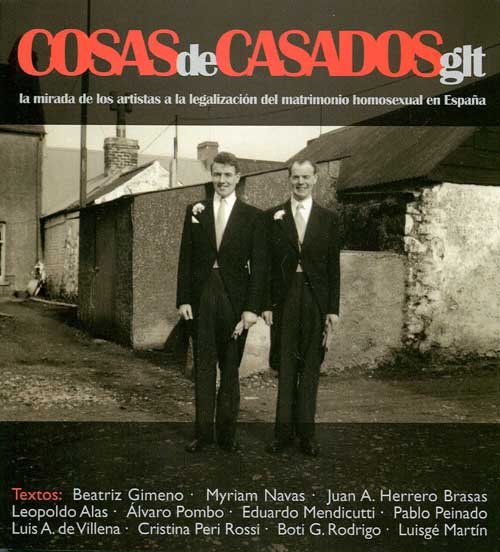
Cosas de Casados GLT


The glance of 66 artists about the legalization of the homosexual marriage in Spain.
Spain occupies one of the first places of the world concerning the defense of the human rights. VISIBLE wants that this conquest is fixed for history and has published this book celebrating a total equality of rights, between all the citizens and citizens.
66 graphical works from different artists and texts from authors like Alvaro Pombo, Eduardo Mendicutti, Cristina Peri Rossi or Leopoldo Wings.

You can find my contribution at page 30

Boda en Lisboa – 2005
(Fotografia Retocada)

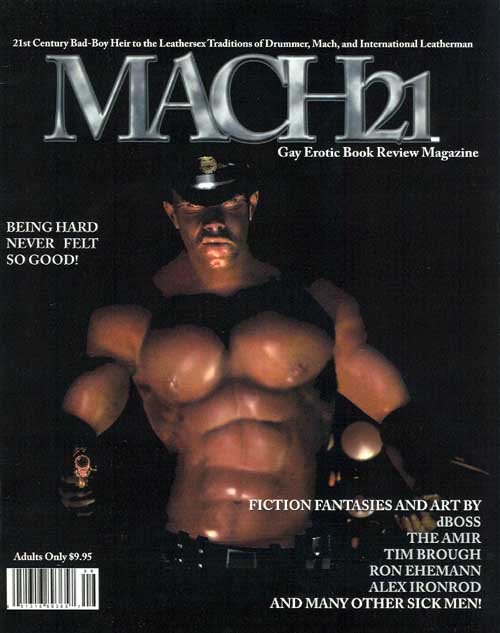
MACH21


The Nazca Plains Corp. (a closely held Nevada corporation) was organized in November, 1994 with the purchase of Naked Magazine® – then published from Los Angeles, California. Historically, the Company has focused on the male gay market.
Magazines Published and Planned: Naked Magazine® enjoyed a run from 1994 to 2001. After 9/11, bulk mailing and magazine distribution became so bogged down that publication was suspended – at a time that it had a 14,000 person subscription base. Naked Magazine® is currently on hiatus as we are preparing to reintroduce MACH21 – a gay book review magazine. The first issue of MACH21® was out in the Spring of 2005. Other planned magazines will focus on strippers and erotic stage performers.
They have been watching the growth of interest in the Master/slave movement and have now responded by opening a division of our company to focus on this special area of interest.
available on amazon.com

On issue n° 2 (see picture) you can find my artwork from page 43 to 46
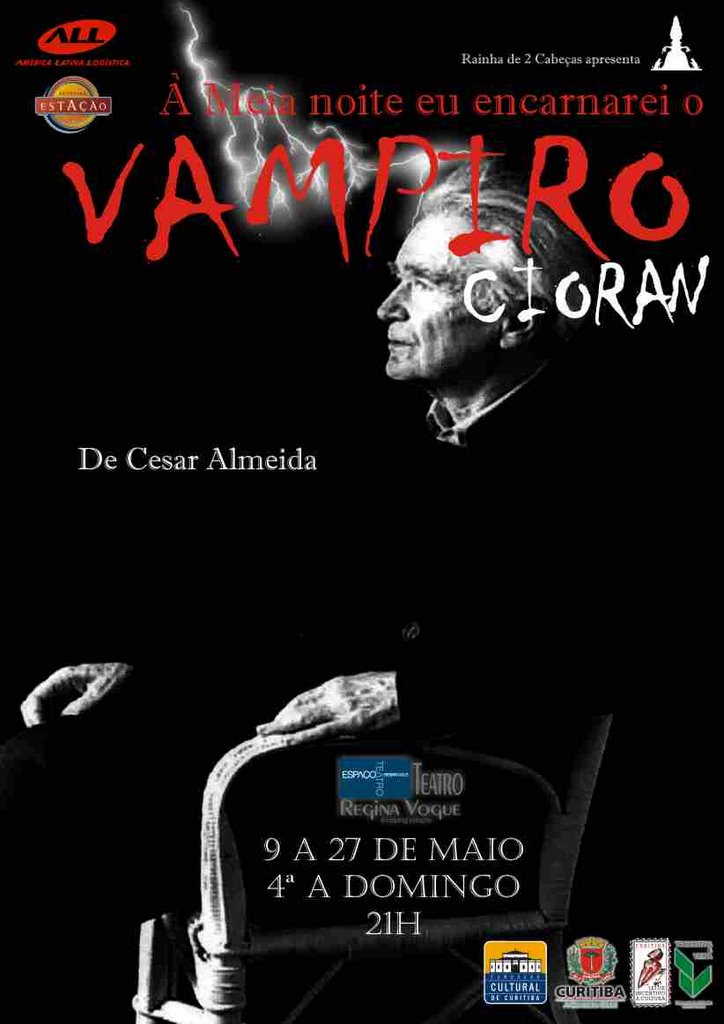
Rainha de 2 Cabeças


I have no idea about what my dearest Cesar Almeida is doing mixing Cioran (in my opinion the best philosopher from the XX century) with Vampires. Perhaps the fact of both of them came from Transylvania, well, he knows...
“O pensamento é uma mentira, como o amor e a fé.pois as verdades são fraudes e as paixões, odores; e no final das contas, a escolha está entre o que mente e o que fede.”
Cioran(Breviário de Decomposição)

check his blog at: http://rainha2cabecas.blogspot.com/

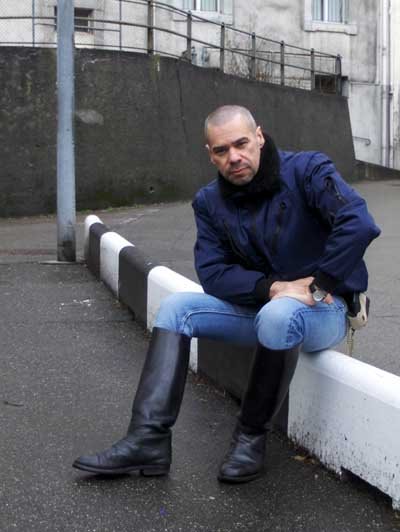
HOT BOOTS


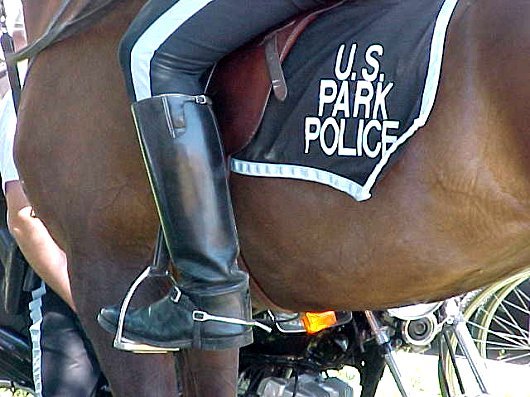
HOT BOOTS is the web site for the man who loves BOOTS . . .the man who enjoys wearing them for work and for play . . . and who likes to look at them and talk about them, too!
There is no membership and no registration at HOT BOOTS.
This site was started almost ten years ago (on March 3, 1997) and it has been growing continuously since then. It's a labor of love for Larry, our webmaster.

WHAT YOU'LL FIND THERE:
There's a lot to look at here at Hot Boots!!
You'll find the "Boots On Line" message board - your place to talk about boots - and the "Boots For Sale" message board - a place to list boots for sale here or listed for sale or auction on another site. There's also "Boot Chat" where you can engage in live conversation with other bootmen.
There are several photo galleries with thousands of photos of boots and men in boots, pages with links to manufacturers and stores selling new boots, used boots, leather, rubber and other merchandise, a calendar of upcoming events where you're sure to find men in boots, "Hot Boots Personals" for making contact with other bootmen, "Boot Swap" for listing your interest in swapping or exchanging boots, links to boot information - including an excellent tutorial on all types of boots, to boot clubs and organizations, other boot web sites and Bootmen's sites, to leather-levi bars, other boot-related message boards, boot chat rooms, and lots more!
Although not "boot-related", It has pages on this site with links to leather, rubber, uniform and Bear clubs, to publications, music files, other fetish sites, and many other sites of interest.
Visit the site at:
http://www.hotboots.com/index.html

HOT BOOTS


You also can go directly to my profile page at:
http://www.hotboots.com/celso.html

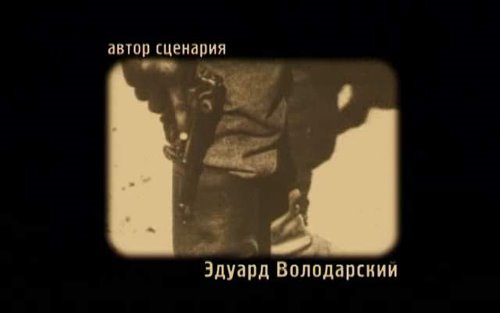
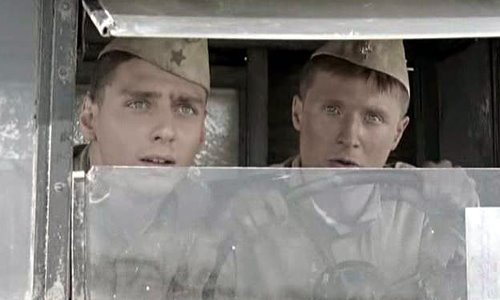
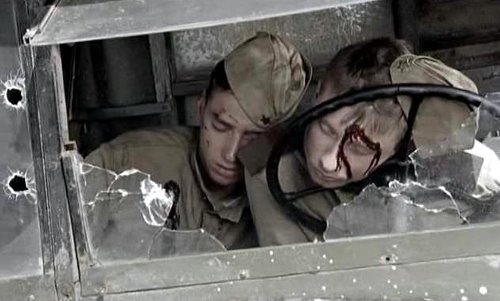
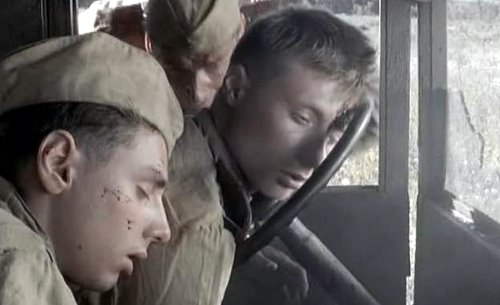
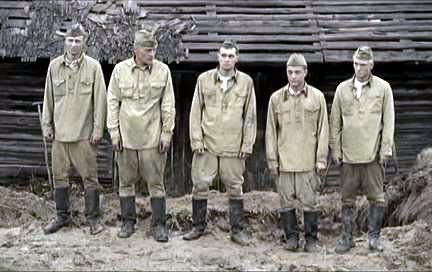
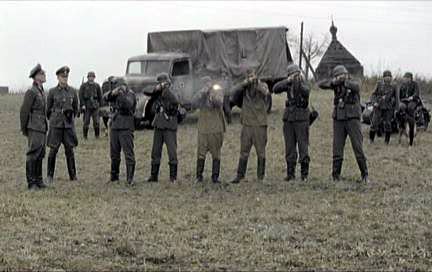
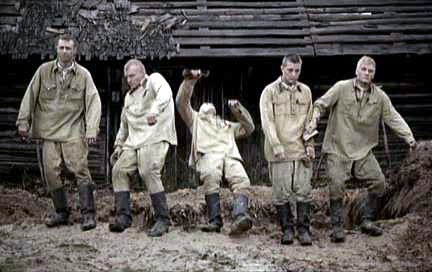
STRAFBAT by Nikolai Dostal


The Shtrafbat - Penal Battalion
Russia 2004
Director: Nikolai Dostal
Colour, 550 min (11 parts)
Cast: Aleksei Serebriakov, Iurii Stepanov, Aleksandr Bashirov, Il'ia Kovrizhnykh, Roman Madianov, Dmitrii Nazarov


Nikolai Dostal'’s critically acclaimed 11-part television serial Penal Battalion redefines Russia’s last Soviet myth—the heroic myth of the Great Patriotic War.

The serial focuses on the theme of penal battalions—Stalin’s application of GULAG methods to combat environment. This theme, like the GULAG, was a taboo topic during Soviet times and continues to be a rare subject matter for discussion in the Russian media and historiography. Penal battalions were created in 1942 following Stalin’s Order #227 known as “Not A Step Back” to punish soldiers and officers retreating under the pressure of the German offensive. The soldiers sentenced to service in a penal battalion were considered “enemies of the people” who had two choices: either to die or, in the words of Stalin’s order, “to redeem their guilt with blood.”

STRAFBAT by Nikolai Dostal


STRAFBAT by Nikolai Dostal


Thanks to P3dr4 (from Montevideo) for the suggestion. I'm glad cause I've got the 11 episodes.

DIE ROTE ARMEE by Carey Schofield and Leonid Jakutin


Wow, You can't believe the pictures inside...

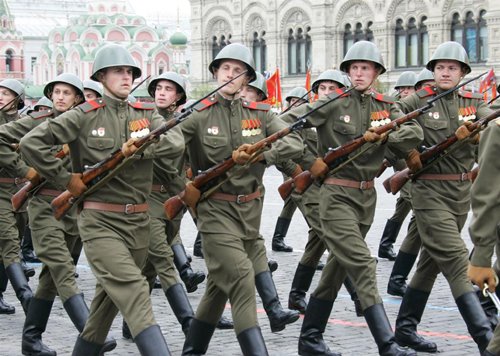
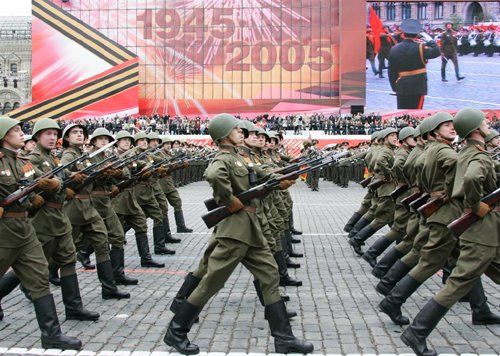
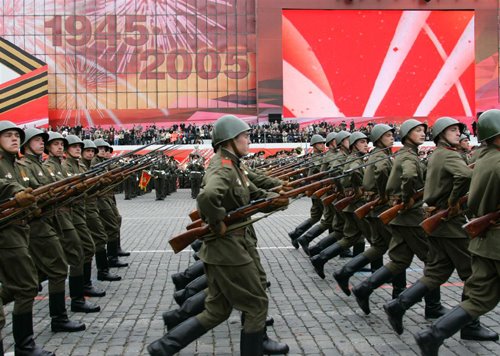
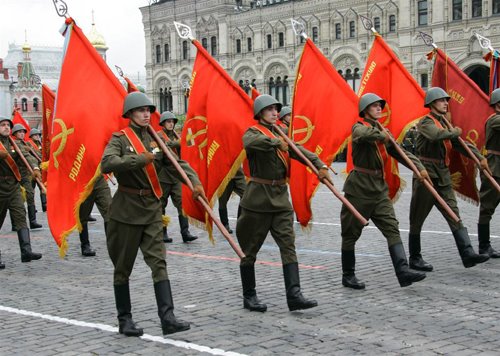
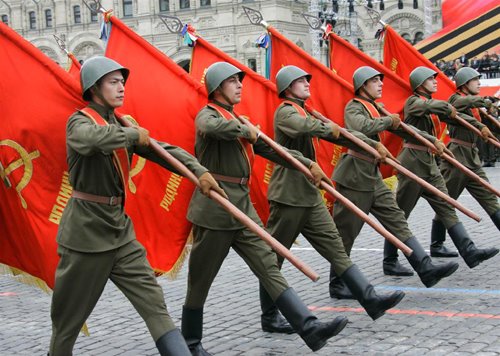
Armies boot out Soviet tradition


The post-Soviet armies of Ukraine and Belarus are set to part with one of their oldest traditions.
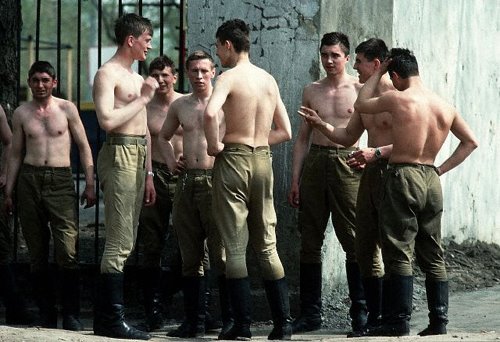
Defense ministries in both countries are decommissioning traditional foot bindings and canvas boots.
For centuries they formed part of a soldier's standard uniform across the Russian empire.
Then the Soviet Union inherited the tradition and after its demise in 1991 many of its successor countries preserved this tradition.
Early service regulations of the Red Army even explained in great detail how to wear the boots and how to wind on the foot bindings.
For soldiers, the learning curve was steep. Alexander - who served as a tank gunner in the 1980s - says that in the first few weeks of the military service his feet were covered with bleeding wounds.

Russian army chiefs say their soldiers will keep wearing them

Sore Feet


"You can't just stick your feet in and go off on a cross-country march" - he recalls. "It takes a while to get used to the foot bindings and to the canvas, and then you grow enormous corns, and just don't care any longer. Your feet become so hard you can drive in nails with your toes".
A traditional foot binding is a rectangular piece of thick cloth 35 by 90 centimetres (13.6 by 35 inches) in size.
First worn with bast sandals by Russian peasants, they remained almost unchanged through the ages. But, for all the blood, sweat and tears involved in wearing bindings, former soldiers say the thick cloth and the canvas boots were a perfect match.
Former infantryman Ian Leder described typical Soviet boots as "a tough piece of work".
"There were stitches in places where you'd least expect them. And measurements were rather vague. So the thicker the layer between your feet and your boots, the better", he says.

Cold Climate


Some long-serving privates did try to switch to socks, but very soon they all went back to the foot bindings.
Advocates of the tradition say cheap and virtually indestructible boots and foot bindings suit the cold Russian climate better than the refined footwear of Western armies. And in the marshland, there is almost no danger of water making its way inside.
So, while large parts of Russia remain off-limits to anyone but the toughest, generals in Moscow do not seem prepared to move on.
Russia's neighbours face a terrain which is, arguably, less challenging. This could, perhaps, explain their post-Soviet change in footwear priorities.
Defence chiefs in Ukraine say there is a need to maintain hygiene in the army and to make soldiers' lives more bearable.
In Ukraine, the old tradition will be phased out within a few months. Belarus is taking things slower. There, the last pair of canvas boots and matching bindings will only be laid to rest in 2010.

"It takes a while to get used (to them) and then you grow enormous corns, and just don't care any longer"
Ian Leder, former Soviet infantryman

Wednesday, March 28, 2007

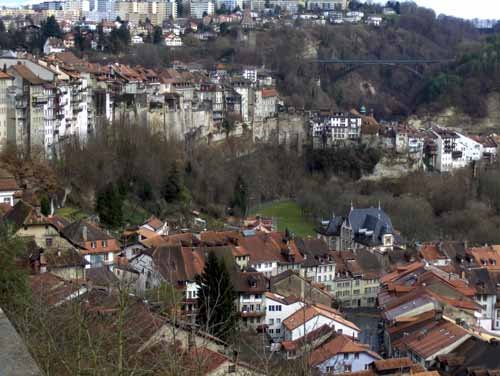
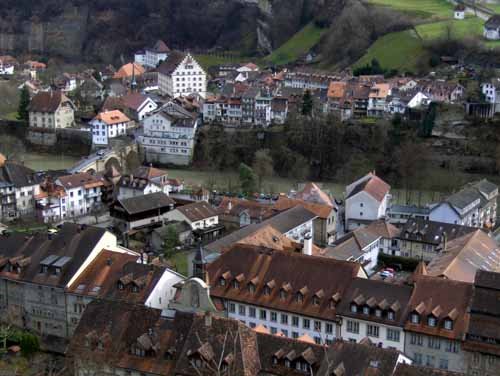
February 2007: Fribourg


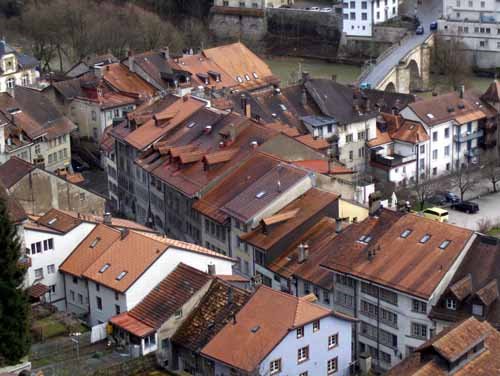
A medieval unity unique in Europe
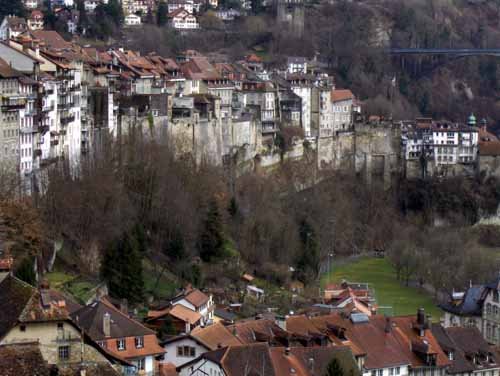
Timeframes converge upon Fribourg. The old part of town proudly lines up thousands of medieval mansions hiding historical treasures set in a perfectly upkept artistic heritage. Fribourg is a modern town where exchanging viewpoints and open-mindedness will inevitably lead you to charming cafés, restaurants or to see a show.
Founded in 1157 by Duke Berthold IV of Zaehringen and sheltered from the ravages of history, Fribourg is an important volume in the complete set of Western civilization and its old town, one of the biggest Medieval architectural ensembles in Europe. Wherever you go, wherever you look, you come across a surprise, make your way through the centuries, architecture from the past and other objects made by traditional handcrafts as well as modern work. Fribourg is a city
that preserves its past and remains open to the future.

Art and History have woven a bond of love in Fribourg. Eight centuries of artistic creation have shaped its prestige, perpetuated by many contemporary artists such as Jean Tinguely whose works have gained international acclaim.

February 2007: Fribourg


Enjoying Fribourg

February 2007: Fribourg – Cathédrale St-Nicolas


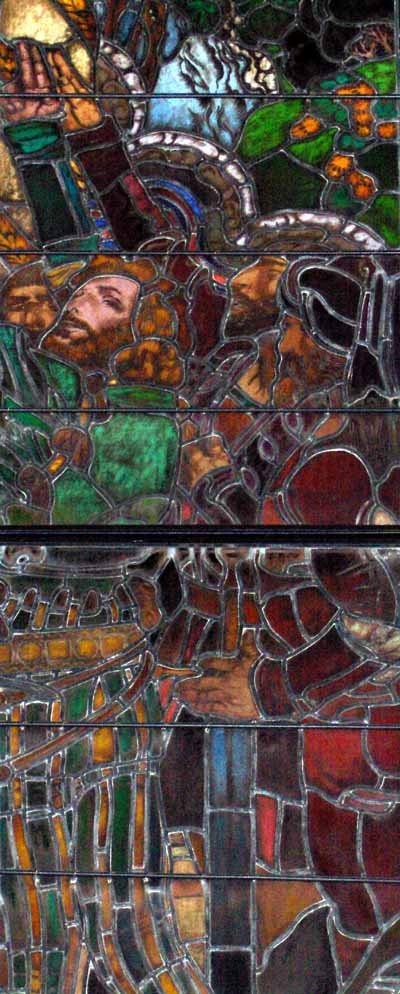
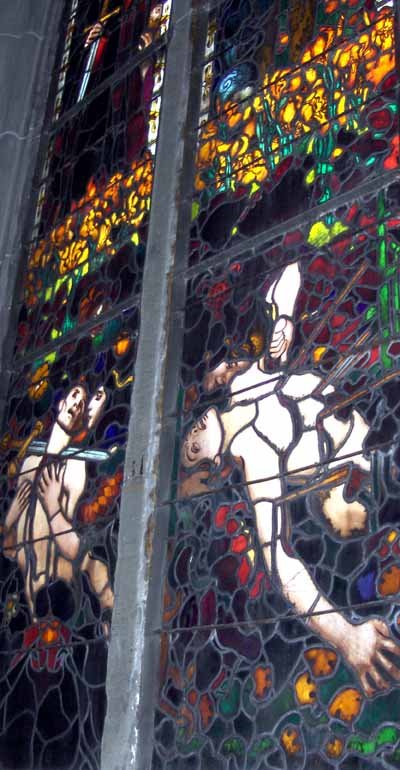
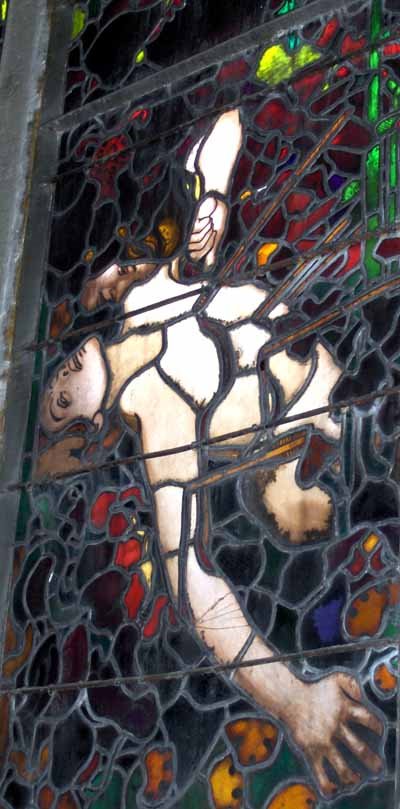
Fribourg’s highlight is the towering, High Gothic Cathédrale St-Nicolas, just off Place Notre-Dame. Take a moment to absorb the breathtaking, soaring, buttressed tower, exposed to view for its entire 73m height clear to the ring of feathery spires on top. Built over a church dating from the city’s foundation in 1157, the present building was begun in 1283, and took two centuries to complete. Traffic swishes past the elaborate main portal, featuring a tympanum with the Last Judgment.

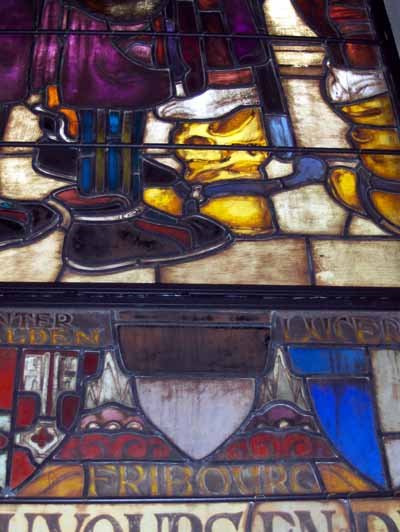
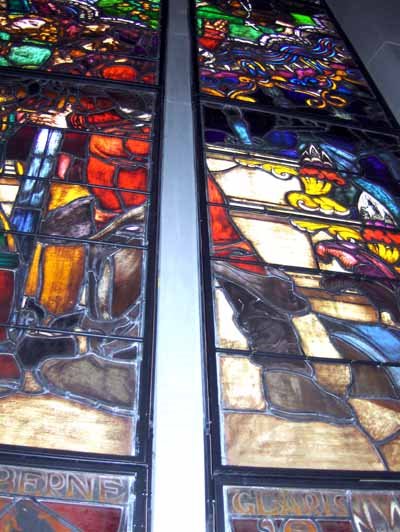
The vast interior is impressive, especially with the atmosphere done by the stained Art Nouveau glasses. Magnificent. Saints and Martires hurt to death by arrows, soldiers wearing seducing boots.

February 2007: Fribourg - L'Hôtel de Ville


L'Hôtel de Ville - City Hall - bears late-Gothic traits. Originally, it was conceived to function as a granary. Note that Master Hermann (1501) started construction and Hans Felder completed it in 1522. It is located within Fribourg's old part of town and today seats the Cantonal Parliament and Court.
You can find there this wonderful bas-relief honouring the soldiers dead at the WWI

February 2007: Fribourg – Book Shop


A real Ali-Baba's cave, treasures and treasures: Thousands of books, all subjects, all languages. Prices couldn't be more reasonable: One of the first Books I've got in English, more than 25 years ago, was L'Amour Bleu by C. Beurdeley, a book about the History of Homosexuality in Art. The French version called Beau Petit Ami was available for only 5CHF- (Five Swiss Francs) – nothing considering that this book cost less than a capuccino...
I also got the catalogue “Triumph und Tod des Helden” jabout one of my favourite subjects: Triumph and Death of Heroes, an excellent compilations of the master pieces in West Civilization Art, painters like David, Goya, Velasquez, Rubens, Gericault among others.
And other precious things as you can check at the post below:

If once in Fribourg visit
HARTEVELD RARE BOOKS LTD.
Rue des Alpes 5
CH1700 Fribourg
www.harteveld.ch

February 2007: Fribourg - Du Noir et Blanc au Rouge et Blanc


Un Siècle d'Histoire Militaire Fribourgeoise – 1875 – 1975 by Roland Ruffieux

February 2007: Fribourg - Cuno Amiet

Cuno Amiet


Cuno Amiet (1868–1961)
Swiss painter (and occasional sculptor), a leading exponent of Symbolism and Post-Impressionism in his country. He was born in Solothurn and studied locally, then at the Munich Academy, 1886–8, and the Académie Julian, Paris, 1888–91. After a year at Pont-Aven working with members of Gauguin's circle, he returned to Switzerland, living at Basle and then Solothurn before settling at Oschwand in 1898. Thereafter he drew much of his inspiration from the surrounding ...

Cuno Amiet
Self-Portrait – 1920
Oil on Canvas
46cm x 38cm
Kunstmuseum Luzern ...Yes, here in Lucerne

February 2007: Fribourg – Vienna, 1890-1920


Vienna, 1890-1920 by Robert Waissenberger
Most of the works written in Vienna around the year 1890 – the period often called the fin-de-siècle (‘end of the century’) – are composed in what we now call the ‘late Romantic’ style (examples are Brahms’ 4th Symphony of 1886 or Richard Strauss’s Don Juan of 1889). Yet by 1920, only thirty years later, Viennese audiences were presented with works so different, the term ‘The New Music’ was coined to describe them.Not only in the arts (although painting, poetry and drama also saw new styles emerge) but also in terms of politics, society and economics, Vienna of 1920 was hardly recognizable as the same city as the Vienna of 1890.

February 2007: Milan


A long weekend in Milan with my love and our friend Christian from Paris. Some book shops, some galleries, Il Duomo, enjoying some cafés and more than 2000, yes, two thousand pictures taken at the Cemetery Monumentale.
So, find here a small diary of this great time spent in Milan.

February 2007: Milan


Cloudy days or under a constant rain...

February 2007: Milan – Il Duomo


The Duomo, which traditionally symbolizes the city of Milan, is the most extraordinary example of Italian late Gothic art. It ranks third in terms of dimension after the Saint Peter's Basilica at the Vatican in Rome and Seville's Cathedral. Located in the very heart of the city it represents both the core of the city and the unavoidable destination of countless visitors from Italy and abroad.The construction of the Duomo began in 1386 promoted by Gian Galeazzo Visconti, lord of Milan, and continued for centuries.The Duomo is entirely covered from its base with pinkish-white marble. Wide slabs of marble make up the roof of the Duomo which can be reached by a steep external staircase, consisting of 919 steps, carved between the left side and the transept. The effort of "climbing" the Duomo is highly rewarded by the magnificent view of the surrounding plain up to the Alps; should the weather be ungenerous it will still be possible to enjoy the vision of the "Madonnina" , the golden statue of the Virgin Mary, the 135 lace-like spires and the many statues which decorate the roof. On entering the majestic interior of the cross-shaped cathedral, the sight is captured by the polychrome stained glass windows depicting scenes from the life of the saints.

February 2007: Milan – Il Duomo


In front of Il Duomo: 3 different days, moments and lights

February 2007: Milan – Il Duomo - The Doors


In the façade five large portals are inserted carrying high-relief illustrating sacred and historical scenes such as "The life of Sant'Ambrogio".
See details and more pictures of the main Door as well as of Right Door at:

http://travellingandboots.blogspot.com/2007/03/february-2007-milan-duomo-door.html

February 2007: Milan – Il Duomo – Statues


The eight naves of the Cathedral are divided by 52 gigantic pillars topped by a series of niches with statues.
See all set of pictures that illustrates this post at:
http://travellingandboots.blogspot.com/2007/03/february-2007-milan-duomo-statues.html

February 2007: Milan – Il Duomo – Bootedman


Well, I wasn't the only one with the boots on ...

February 2007: Milan – Galleria Vittorio Emanuele


The Galleria was initially planned as a covered street to honour the Austrian Emperor Franz Joseph in 1859; but when Giuseppe Mengoni took over the direction of the works in 1864, it had already been dedicated to Vittorio Emanuele II of Savoy.
The Galleria was opened in 1867 and completed by the year 1878. This monumental building with a glazed iron roof is a pedestrian mall linking Piazza del Duomo with Piazza della Scala. On the floor in the central octagonal area, directly under the 47-m (154-ft) hight glass dome, is the heraldic symbol of the Savoy family, a white cross on a red ground. Positioned on corbels at the entrances and in the Octagon between July and September 1867 were a series of life-size plaster statues of "illustrious men": figures who contributed to the foundation of literary, artistic and scientific culture.
The 25 statues were executed by the best academy sculptors of the mid19th century, including Odoardo Tabacchi, who realised the statue of Dante, Antonio Tantardini, responsible for the statue of Romagnosi, and Pietro Magni, who made those of Volta, Michelangelo, Galileo, Cavour, Leonardo and Pier Capponi. The works, which were to have been translated into marble, were, however, never replaced and, as a result of damage caused by changes in temperature, were removed in 1891. Lunettes were installed above the Octagon and below the valut in August 1867 with colossal personifications of the four corners of the globe, executed in tempera on canvas panels (America, Asia, Europe, and Africa).
The decorative programme was rounded off by the semi-lunettes with depictions of human activities.Its grounds host elegant restaurants, cafes and shops, including several bookstores.
Thanks to the elegance and grace of its shops the Galleria, being one of the symbols of the city, is often referred to as Milan's "drawing-room".

February 2007: Milan – Galleria Vittorio Emanuele


A pause for a coffee at Gucci Cafe.
Coffee in Italy is superb, not like this dirty water we use to get in almost all Europe.

February 2007: Milan – La Rinascente


Another pause for a coffee with my love at La Rinascente

February 2007: Milan - I Carabinieri


The corps was created by King Victor Emmanuel with the aim of providing Piedmont with a police corps similar to the French Gendermerie. Their Uniforms couldn't be more beautiful.

The Carabinieri belongs to my imagery: I remember when a child I have this book with some illustration sin black and white and just have the images on my mind of two carabinieri arresting Pinocchio for a crime he has not committed. in 1882 the Carabinieri made an appearance in Pinocchio by Carlo Collodi.
Many films and TV series have featured the Carabinieri, including as protagonists. Racconti del Maresciallo, La Tenda Nera, Il Maresciallo Rocca and Carabinieri are some of the titles that have been produced, mainly by the RAI, in the last few years. What is really good and my eyes say Thank you RAI for that.


These Pictures I've got them at the Galleria Vittorio Emanuele, the two gentle agents were pleasured to pose to me. Blessed them!!!

Tuesday, March 27, 2007

February 2007: Milan - Company Club


Saturday evening we went to Company Club and suddenly I realize that one of my paintings was hung on the wall.

MARK II
Oil on canvas 1995
78cm x 65cm
Exhibited in Milan Company Club 1996
Company Club Collection – Milan - Italy

Company Club is another dark room bar, with a relaxed atmosphere and a leathery bent, attracting men of all ages
Via Benadir 14; +39-02/282-9481

Closed Monday and open 10pm-2:30am
until 6pm on weekends.

February 2007: Milan - “IL MONUMENTALE”


The Cimitero Monumentale in Milan is located on the square given its name, Piazzale del Cimitero Monumentale. Near the heart of Milan, the cemetery was designed by the architect Carlo Maciachini (1818-1899).
It opened in 1866 and since then has been filled with a wide range of both contemporary and classical Italian sculptures. The impressive entrance, the large Famedio (Temple of Fame), a massive Neo-Medieval style building of marble and stone that serves as the tomb for some of the country's most honored citizens, opens up to a splendid necropolis rich with chapels and funeral monuments, masterpieces of contemporary and classical Italian sculptures as well as Greek temples, elaborate obelisks, and other original works of metal, marble and stone, which makes the cemetery an unique open-air museum.
As far back in time as we can reach, man has conducted a never-ending, ultimately losing battle with death to gain his own mortality.

February 2007: Milan - “IL MONUMENTALE” - A “GAY” Cemetery


Everything is relative and a point of view may all change.
Instead to see the Monumentale Cemetery with a “normal eye” I decided to visit and see it in a “gay way”.
When a Gay Man decides to have his own vision of a subject even a football game can be something artistic, interesting and deeply gay. In a cemetery like Il Monumentale, with so many male sculptures it will be impossible to have a different regard.
Enjoy the Gay Monumentale, a personal, very personal view by Celso Junior

February 2007: Milan - “IL MONUMENTALE” - The Best of I


This monument (19th Century) couldn't be more gay: Two men kissing, holding hands... Marvelous!

Monday, March 26, 2007

February 2007: Milan - “IL MONUMENTALE” - The Best of II


Magnificent!!!

February 2007: Milan - “IL MONUMENTALE” - The Best of III


Vault of Family Paolo Chinelli
Sculpture by Lucio Fontana
Architect Renzo Zavanella – 1949


Lucio Fontana’s respect for the advancements of science and technology during the 20th century led him to approach his art as a series of investigations into a wide variety of mediums and methods. As a sculptor, he experimented with stone, metals, ceramics, and neon; as a painter he attempted to transcend the confines of the two-dimensional surface.

February 2007: Milan - “IL MONUMENTALE” - The Best of IV

February 2007: Milan - “IL MONUMENTALE” - The Best of V

February 2007: Milan - “IL MONUMENTALE” - The Best of VI


Vault of Family Castellotti
Sculpture by Lucio Fontana
Architect Renzo Zavanella – 1935


See all set of pictures that illustrates this post at: http://travellingandboots.blogspot.com/2007/03/february-2007-milan-il-mon_117494212268664454.html

February 2007: Milan - “IL MONUMENTALE” - The Best of VII

February 2007: Milan - “IL MONUMENTALE” - The Best of VIII


Vault Tullo and Manlio Morgagni

The sculptures in marble of Carrara introduces six feminine allegorical figures stood out on a background with mosaics that accommodates on the lower surface the text in golden letters signed from Benito Mussolini.
Master piece from the Architect Enzo Bifoli finalized in 1921

February 2007: Milan - “IL MONUMENTALE” - Angels I


People use to say that an Angel has no sex. Could be true?
Doesn't matter, what I know is that this is the most beautiful Angel I ever see in my life!

February 2007: Milan - “IL MONUMENTALE” - Angels II

February 2007: Milan - “IL MONUMENTALE” - Angels III

February 2007: Milan - “IL MONUMENTALE” - Angels IV

February 2007: Milan - “IL MONUMENTALE” - Angels V

February 2007: Milan - “IL MONUMENTALE” - Angels VI


Male, this Angel is a male one...

February 2007: Milan - “IL MONUMENTALE” - Male Statues


So many beautiful sculptures showing us the male body!!! What is behind the sculptors inspiration and desires?

February 2007: Milan - “IL MONUMENTALE” - Male Statues I


Marvelous!!!

February 2007: Milan - “IL MONUMENTALE” - Male Statues II


Marvelous!!!

February 2007: Milan - “IL MONUMENTALE” - Male Statues III


Magnificent!!!

February 2007: Milan - “IL MONUMENTALE” - Male Statues IV


Just enjoy the beauty of these sculptures!

February 2007: Milan - “IL MONUMENTALE” - Male Statues V


Just enjoy the beauty of this grave!

February 2007: Milan - “IL MONUMENTALE” - Male Statues VI


Vault Family Besenzanica
Sculptures by Enrico Butti – 1907 – 1912

February 2007: Milan - “IL MONUMENTALE” - Male Statues VII


Just enjoy the beauty of this grave!

February 2007: Milan - “IL MONUMENTALE” - Male Statues VIII

February 2007: Milan - “IL MONUMENTALE” - Male Statues IX

February 2007: Milan - “IL MONUMENTALE” - Male Statues X

February 2007: Milan - “IL MONUMENTALE” - Male Statues XI

February 2007: Milan - “IL MONUMENTALE” - Male Statues XII

February 2007: Milan - “IL MONUMENTALE” - Male Statues XIII


Just enjoy the beauty of this grave!

February 2007: Milan - “IL MONUMENTALE” - Male Statues XIV


Just enjoy the beauty of this grave!

February 2007: Milan - “IL MONUMENTALE” - Male Statues XV

February 2007: Milan - “IL MONUMENTALE” - Male Statues XVI

February 2007: Milan - “IL MONUMENTALE” - Male Statues XVII

February 2007: Milan - “IL MONUMENTALE” - Male Statues XVIII

February 2007: Milan - “IL MONUMENTALE” - Male Statues XIX

February 2007: Milan - “IL MONUMENTALE” - Male Statues XX

February 2007: Milan - “IL MONUMENTALE” - Male Statues XXI


Just enjoy the beauty of this grave!

February 2007: Milan - “IL MONUMENTALE” - Male Statues XXII

February 2007: Milan - “IL MONUMENTALE” - Male Statues XXIII

February 2007: Milan - “IL MONUMENTALE” - Male Statues XXIV

February 2007: Milan - “IL MONUMENTALE” - Male Statues XXV

February 2007: Milan - “IL MONUMENTALE” - Male Statues XXVI

February 2007: Milan - “IL MONUMENTALE” - Male Statues XXVII

February 2007: Milan - “IL MONUMENTALE” - Male Statues XXVIII

February 2007: Milan - “IL MONUMENTALE” - Male Statues XXIX

February 2007: Milan - “IL MONUMENTALE” - Male Statues XXX

February 2007: Milan - “IL MONUMENTALE” - Male Statues XXXI

February 2007: Milan - “IL MONUMENTALE” - Male Statues XXXII

February 2007: Milan - “IL MONUMENTALE” - Male Statues XXXIII

February 2007: Milan - “IL MONUMENTALE” - Male Statues XXXIV

February 2007: Milan - “IL MONUMENTALE” - Male Statues XXXV


An intimate conversation

February 2007: Milan - “IL MONUMENTALE” - Soldiers I


“And think, this heart, all evil shed away,
A pulse in the eternal mind, no less “


From The Soldier by Rupert Brooke

February 2007: Milan - “IL MONUMENTALE” - Soldiers II


This sculpture has transported me to the last paragraph from D. H. Lawrence' s The Prussian Officer

"The bodies of the two men lay together, side by side, in the mortuary, the one white and slender, but laid rigidly at rest, the other looking as if every moment it must rouse into life again, so young and unused, from a slumber."

D.H. Lawrence

February 2007: Milan - “IL MONUMENTALE” - Soldiers III


“Soldier, rest! They warfare o’ver,
Sleep the sleep that knows not breaking;
Dream of battled fields no more,
Days of danger, nights of waking.”


Sir Walter Scott’s “Soldier, Rest”

See all set of pictures that illustrates this post at: http://travellingandboots.blogspot.com/2007/03/february-2007-milan-il-mon_117486406909262821.html

February 2007: Milan - “IL MONUMENTALE” - Soldiers IV


"old soldiers never die: they simply fade away"

extracted from the British Army's C20 parody of the song 'Kind Thoughts Can Never Die'

See all set of pictures that illustrates this post at: http://travellingandboots.blogspot.com/2007/03/february-2007-milan-il-mon_117486388832916228.html

February 2007: Milan - “IL MONUMENTALE” - Soldiers V


“Half a league, half a league,
Half a league onward,
All in the valley of Death
Rode the six hundred."
Forward, the Light Brigade!"
Charge for the guns!"
he said:Into the valley of Death
Rode the six hundred. “

Alfred, Lord Tennyson

See all set of pictures that illustrates this post at: http://travellingandboots.blogspot.com/2007/03/february-2007-milan-il-mon_117486361579440770.html

February 2007: Milan - “IL MONUMENTALE” - Soldiers VI


"Forward, the Light Brigade!"
Was there a man dismay'd?
Not tho' the soldier knew
Someone had blunder'd:
Their's not to make reply,
Their's not to reason why,
Their's but to do and die:
Into the valley of Death
Rode the six hundred. “

Alfred, Lord Tennyson

See all set of pictures that illustrates this post at: http://travellingandboots.blogspot.com/2007/03/february-2007-milan-il-mon_117486351116241817.html

February 2007: Milan - “IL MONUMENTALE” - Soldiers VII


“Cannon to right of them,
Cannon to left of them,
Cannon in front of them
Volley'd and thunder'd;
Storm'd at with shot and shell,
Boldly they rode and well,
Into the jaws of Death,
Into the mouth of Hell
Rode the six hundred. “

Alfred, Lord Tennyson

See all set of pictures that illustrates this post at: http://travellingandboots.blogspot.com/2007/03/february-2007-milan-il-mon_117486326198232515.html

February 2007: Milan - “IL MONUMENTALE” - Soldiers VIII


“Flash'd all their sabres bare,
Flash'd as they turn'd in air,
Sabring the gunners there,
Charging an army, while
All the world wonder'd:
Plunged in the battery-smoke
Right thro' the line they broke;
Cossack and Russian
Reel'd from the sabre stroke
Shatter'd and sunder'd.
Then they rode back, but not
Not the six hundred. “

Alfred, Lord Tennyson

See all set of pictures that illustrates this post at:
http://travellingandboots.blogspot.com/2007/03/february-2007-milan-il-mon_117486307820252472.html

February 2007: Milan - “IL MONUMENTALE” - Soldiers IX


“Cannon to right of them,
Cannon to left of them,
Cannon behind them
Volley'd and thunder'd;
Storm'd at with shot and shell,
While horse and hero fell,
They that had fought so well
Came thro' the jaws of Death
Back from the mouth of Hell,
All that was left of them,
Left of six hundred.”

Alfred, Lord Tennyson

See all set of pictures that illustrates this post at: http://travellingandboots.blogspot.com/2007/03/february-2007-milan-il-mon_117486294923145112.html

February 2007: Milan - “IL MONUMENTALE” - Soldiers X


“When can their glory fade?
O the wild charge they made!
All the world wondered.
Honor the charge they made,
Honor the Light Brigade,
Noble six hundred.”

From Poems by Alfred Tennyson,
J. E. Tilton and Company, Boston, 1870

See all set of pictures that illustrates this post at: http://travellingandboots.blogspot.com/2007/03/february-2007-milan-il-mon_117486281050288439.html

February 2007: Milan - “IL MONUMENTALE” - Soldiers XI


"It's only in their baptism of fire that the young ones shrink and start."

in George Lawrence's Guy Livingstone, 1857

February 2007: Milan - “IL MONUMENTALE” - Soldiers XII


“We've fought 'em in trooper, we've fought 'em in dock, and drunk with 'em in betweens, When they called us the seasick scull'ry-maids, an' we called 'em the Ass Marines; But, when we was down for a double fatigue, from Woolwich to Bernardmyo, We sent for the Jollies -- 'Er Majesty's Jollies -- soldier an' sailor too! They think for 'emselves, an' they steal for 'emselves, and they never ask what's to do, But they're camped an' fed an' they're up an' fed before our bugle's blew. Ho! they ain't no limpin' procrastitutes -- soldier an' sailor too.”

Rudyard Kipling

See all set of pictures that illustrates this post at: http://travellingandboots.blogspot.com/2007/03/february-2007-milan-il-monumentale_26.html

February 2007: Milan - “IL MONUMENTALE” - Soldiers XIII


"My soul gave a tremble, I struggled to hear,
and I crept to the door just to see who was near.
Standing out in the cold and the dark of the night,
A lone figure stood, his face weary and tight."

by: Michael Marks

See all set of pictures that illustrates this post at: http://travellingandboots.blogspot.com/2007/03/february-2007-milan-il-mon_117485947365269072.html

February 2007: Milan - “IL MONUMENTALE” - Soldiers XIV


“For when war is over
And all things righted,
God is neglected -
The old soldier slighted”

Anonymous

See all set of pictures that illustrates this post at: http://travellingandboots.blogspot.com/2007/03/february-2007-milan-il-mon_117485915777260916.html

February 2007: Milan - “IL MONUMENTALE” - Soldiers XV


“Do you remember that hour of din before the attack
And the anger, the blind compassion that seized and shook you then
As you peered at the doomed and haggard faces of your men?
Do you remember the stretcher-cases lurching back
With dying eyes and lolling heads...those ashen-grey
Masks of the lads who once were keen and kind and gay?”

Aftermath by S. Sassoon.

See all set of pictures that illustrates this post at: http://travellingandboots.blogspot.com/2007/03/february-2007-milan-il-mon_117485086183279043.html

February 2007: Milan - “IL MONUMENTALE” - Soldiers XVI


"I would like the words.
Alone through the forests dusky glade
a soldier went by night
no moon beam pierced the dusky glade
no star shed guiding light
yet on his lonely midnight round
the youth all cheerily passed
unchecked by aught of boding sound
that muttered in the blast
where were his thoughts that lonely hour?
in his far home perchance
his father's hall, his mother's bower
midst the gay vines of France
wondering of battles lost and won
to hear and bless again
the rolling of the wild garonne
and the murmer of the Seine
Hush, hark, did stealing steps go by
came not faint whispers near?
No, the wild wind hath many a sigh
amidst the foliage seer
hark yet again and what hand has
grasped the blade
oh single midst a hostile band
young soldier thou art betrayed
silence in undertones they cry
no whisper not a breath

the sound that warns they comrades
nigh shall sentence thee to death
still, at the bayonet's point
he stood and strong to meet the blow
he shouted midst his rushing blood
Arm, arm, auverne the foe
the stir, the tramp, the bugle call
he heard the tumult grow
and sent his dying voice though all
auverne, auverne the foe."

by Felicia Hemens

See all set of pictures that illustrates this post at:
http://travellingandboots.blogspot.com/2007/03/february-2007-milan-il-mon_117485069068011317.html

February 2007: Milan - “IL MONUMENTALE” - Soldiers XVII


“His uniform jacket was old and tight,
He had polished each button, shiny and bright.
He crossed that stage with a soldier's grace,
Until he and the boy stood face to face”

It's the Soldier by Charles M. Province

See all set of pictures that illustrates this post at: http://travellingandboots.blogspot.com/2007/03/february-2007-milan-il-mon_117485047355638223.html

February 2007: Milan - “IL MONUMENTALE” - Soldiers XVIII


"Once he was really someone long ago
It was amazing what he did back then
He has a story but no one to know
Who he used to be in the way-back-when
He refuses to talk about it now
Bearing his secrets to the grave below

So no one knows exactly as to how
It was that destiny chose him to be
A hero but he is a hero still
And if he were to talk he might well say
Those who were there never talk never will
Old soldiers do not die they fade away"

Old Soldier by Steven Curtis Lance

See all set of pictures that illustrates this post at: http://travellingandboots.blogspot.com/2007/03/february-2007-milan-il-mon_117485030953838214.html

February 2007: Milan - “IL MONUMENTALE” - Soldiers XIX


“Twixt death in the air above them
And death in the waves below,
Through balls and grape and shrapnel
They neared-my God! how slow!

And many a brave stout fellow,
Who sprang in the boats with mirth,
Ere they made that fateful crossing
Was a load of lifeless earth.

And many a brave stout fellow,
Whose limbs with strength with rife,
Was torn and crushed and shattered
A helpless wreck for life.”

Source: Miller and Mooney, "The Civil War-The Nantucket Experience" (Wesco Publishing Co., 1994)

See all set of pictures that illustrates this post at: http://travellingandboots.blogspot.com/2007/03/february-2007-milan-il-mon_117485010295318068.html

February 2007: Milan - “IL MONUMENTALE” - Soldiers XX


A Soldier’s Cemetery
Poem by John William Streets (killed and missing in action on 1 July 1916 aged 31)


"Behind that long and lonely trenched line
To which men come and go, where brave men die,
There is a yet unmarked and unknown shrine,
A broken plot, a soldier’s cemetery.
There lie the flower of youth, the men who scorn’d
To live (so died) when languished Liberty:
Across their graves flowerless and unadorned
Still scream the shells of each artillery.
When war shall cease this lonely unknown spot
Of many a pilgrimage will be the end,
And flowers will shine in this now barren plot
And fame upon it through the years descend:
But many a heart upon each simple cross
Will hang the grief, the memory of its loss."

See all set of pictures that illustrates this post at: http://travellingandboots.blogspot.com/2007/03/february-2007-milan-il-mon_117484993545504332.html

February 2007: Milan - “IL MONUMENTALE” - Soldiers XXI


"toy toy toy toy toy toy toy
soldier soldier soldier
sorry sorrry sorry sorry
cry cry cry cry cry cry
dont dont dont dont"


Toy Soldier by Vishal Powar

See all set of pictures that illustrates this post at: http://travellingandboots.blogspot.com/2007/03/february-2007-milan-il-mon_117484976576120252.html

February 2007: Milan - “IL MONUMENTALE” - Soldiers XXII


"Into the Eyes of the last Soldier standing
Carnage no Human should have to engage
From Fields of Flesh to Rivers of Blood
Same ole' story...just another page"

BAND OF ANGELS (A Soldiers Story) by Frank James Ryan Jr

See all set of pictures that illustrates this post at: http://travellingandboots.blogspot.com/2007/03/february-2007-milan-il-mon_117484955908057567.html

February 2007: Milan - “IL MONUMENTALE” - Soldiers XXIII


"Into the Soul of the last Soldier standing
The Terror of a Boy...now be quelled
Soon he'll hear Trumpets on another Stage
His welcome....... A Band of Angels"

BAND OF ANGELS (A Soldiers Story) by Frank James Ryan Jr

See all set of pictures that illustrates this post at: http://travellingandboots.blogspot.com/2007/03/february-2007-milan-il-mon_117484936532143425.html

February 2007: Milan - “IL MONUMENTALE” - Soldiers XXIV


"Soldier, soldier come from the wars,
Why don't you march with my true love?"
"We're fresh from off the ship an' 'e's maybe give the slip,
An' you'd best go look for a new love."
New love! True love!
Best go look for a new love,
The dead they cannot rise, an' you'd better dry your eyes,
An' you'd best go look for a new love”

Rudyard Kipling

See all set of pictures that illustrates this post at: http://travellingandboots.blogspot.com/2007/03/february-2007-milan-il-mon_117483631321606328.html

February 2007: Milan - “IL MONUMENTALE” - Soldiers XXV


“I cannot name my battles
For the visions are not clear,
Yet, I see the twisted faces
And I feel the rending spear.

Perhaps I stabbed our Savior
In His sacred helpless side.

Yet, I've called His name in blessing
When after times I died.”

Through a Glass, Darkly by George S. Patton, Jr.

See all set of pictures that illustrates this post at: http://travellingandboots.blogspot.com/2007/03/february-2007-milan-il-mon_117483612444940073.html

February 2007: Milan - “IL MONUMENTALE” - Soldiers XXVI


“In the dimness of the shadows
Where we hairy heathens warred,
I can taste in thought the lifeblood;
We used teeth before the sword.”


Through a Glass, Darkly by George S. Patton, Jr.

See all set of pictures that illustrates this post at: http://travellingandboots.blogspot.com/2007/03/february-2007-milan-il-mon_117483592890381892.html

Sunday, March 25, 2007

February 2007: Milan - “IL MONUMENTALE” - Feet


Surrounded by so many male statues showing bare feet inspired me and make me remind an intimate conversation.
I do believe that these pictures can illustrate it very well. Just sharing with you my thoughts and souvenirs.

February 2007: Milan - “IL MONUMENTALE” - Feet I


"So, do ya like my hot feet?"

See all set of pictures that illustrates this post at: http://travellingandboots.blogspot.com/2007/03/february-2007-milan-il-mon_117482183899080016.html

February 2007: Milan - “IL MONUMENTALE” - Feet II


"Yea, I am wearing my stinky dirty shitty sweaty boots now, and I feel the sort of heat inside them. I need someone to sniff them."

See all set of pictures that illustrates this post at:
http://travellingandboots.blogspot.com/2007/03/february-2007-milan-il-mon_117482163265822991.html

February 2007: Milan - “IL MONUMENTALE” - Feet III


"Oh yea, whenever I see policemen in boots, I turn on!!! Just imagine when they are patrolling in the 30-something-degree days, I just wanna go pull off their stinky sweaty smelly dirty tall leather boots (as your boots), loot them and take a deep sniff of them! Wao....the mixed smell of their feet sweat and the stinky leather turn me completely ON!! My feet are damn stinky!! And I am wearing them 24/7. I have been wearing my boots for 5 days. In the same sense, I did not take shower or clean my feet for 5 DAYS!"

See all set of pictures that illustrates this post at: http://travellingandboots.blogspot.com/2007/03/february-2007-milan-il-mon_117482149283121485.html

February 2007: Milan - “IL MONUMENTALE” - Feet IV


"Oh...tell ya something, I definitely wear my boots without any socks - bare feet! They can make my boots and my feet more stinky. Have you ever been asked to check your identity by the police? 'cause they think men in boots should have something inside the boots."

See all set of pictures that illustrates this post at:
http://travellingandboots.blogspot.com/2007/03/february-2007-milan-il-mon_117482131203310057.html

February 2007: Milan - “IL MONUMENTALE” - Feet V


"I have. The policemen did search my body and one of them squeezed his hands into my boots to see whether I had something in them. Then he frowned after searching in my tall boots, 'cause my boots had the sort of stink in his hands already. I have some toe jam in-between his fingers as well. And then he asked me to pull my boots off for further check. My feet did stink up the whole room and almost suffocated them by seeing that they covered their noses. Shit! Then I dissed them by saying "ya wanna lick my toes, don't ya? Or else, why did ya ask me to put 'em off?" They were so shocked by my answer, 'cause they might have never thought of sniffing or licking men's feet!"

See all set of pictures that illustrates this post at:
http://travellingandboots.blogspot.com/2007/03/february-2007-milan-il-mon_117482112222096514.html

February 2007: Milan - “IL MONUMENTALE” - Feet VI


"Oh...yea! They were fuckin' shocked! But seeing them fuckin' shocked even turned me on harder and harder. And could you kinda imagine how stinky my boots and my feet were when they dared to put their hands into my boots for "gold searching"?"

See all set of pictures that illustrates this post at:
http://travellingandboots.blogspot.com/2007/03/february-2007-milan-il-mon_117482091377372400.html

February 2007: Milan - “IL MONUMENTALE” - Feet VII


"My booted feet are absolutely stinky and sweaty with toe jam. I would also like to flex my toes in the damn sweaty dirty stinky shiny tall leather boots which attract so much attention from other people."

See all set of pictures that illustrates this post at:
http://travellingandboots.blogspot.com/2007/03/february-2007-milan-il-mon_117482071645544455.html

February 2007: Milan - “IL MONUMENTALE” - Feet VIII


"If you were a policeman, would you wear your boots all day long without showering just because of the bad smell in your boots? Would you like to get searched by the police just because they feel strange about your fetish for boots?"

See all set of pictures that illustrates this post at:
http://travellingandboots.blogspot.com/2007/03/february-2007-milan-il-mon_117482051349423556.html

February 2007: Milan - “IL MONUMENTALE” - Feet IX


"Yes, my feet are of course STINKY!!!"

See all set of pictures that illustrates this post at:
http://travellingandboots.blogspot.com/2007/03/february-2007-milan-il-mon_117482029624137973.html

February 2007: Milan - “IL MONUMENTALE” - Feet X


"Why is your cock hard now? 'cause you saw my damn HOT feet pictures? just kiddin''...
... cause I used not to clean them. I even sleep in boots and have worn my boots for four consecutive days."


See all set of pictures that illustrates this post at:
http://travellingandboots.blogspot.com/2007/03/february-2007-milan-il-mon_117482005960279026.html

February 2007: Milan - “IL MONUMENTALE” - Feet XI


"Your boots are definitely horny! and stinky? Oh ya sure? You have worn your socks for two months in the same boots? Have you ever had your bare feet in boots? They smell really bad but HOT!"

See all set of pictures that illustrates this post at:
http://travellingandboots.blogspot.com/2007/03/february-2007-milan-il-monumentale_25.html

February 2007: Milan - “IL MONUMENTALE” - Feet XII


"I bet your feet must be stinky as hell with your tall riding hot boots. My toes are jammed with crud because i used to have my bare feet in them. A patrol policeman once had dared to put his hands down my boots to see whether I have loaded something illegal. Later, I was asked to allow him to pull my boots off and my feet stunk up the whole area. He had to cover his nose man! I like displaying my boots to patrol policemen, because theirs are damn HOT and they would be jealous of mine!!"

See all set of pictures that illustrates this post at:
http://travellingandboots.blogspot.com/2007/03/february-2007-milan-il-monumentale.html

February 2007: Il Western all'Italiana


Definitely my best shop in Milan was this excellent book Il Western all'Italiana by Alberto Castagna and Maurizio Cesare Graziosi. You can find all about the Western Spaghetti in Italy and around the world.
Picture: Franco Nero in Tempo di Massacro by Lucio Fulci

February 2007: Il Western all'Italiana - A FISTFUL OF DOLLARS by Sergio Leone


A Fistful of Dollars (1964)
Directed bySergio Leone
Also Known As:
A Fistful of Dollars (USA)

Für eine Handvoll Dollar (West Germany)
For a Fistfull of Dollars (UK)
Magnifico Straniero (Italy)
Por un Puñado de Dólares (Spain)
Runtime: 99 min
Country: Italy, Spain and West Germany
Language: Italian, English
Colour: Colour(Technicolor)
Sound Mix: Mono (Western Electric Sound System)
Cast:
Clint Eastwood as Joe
Gian Maria Volonté as Ramón Rojo (as Johnny Wels)


An anonymous, but deadly man rides into a town torn by war between two factions, the Baxters and the Rojo's. Instead of fleeing or dying, as most other would do, the man schemes to play the two sides off each other, getting rich in the bargain.

February 2007: Il Western all'Italiana - VIVA MARIA! by Louis Malle


Viva Maria! (1965)
Directed by Louis Malle
Runtime:119 min.
Country: France and Italy
Language: Spanish, French and German
Colour: Colour (Eastmancolour)
Sound Mix: Mono


The former Irish terrorist Maria II joins the vaudeville act of the French singer Maria I in Central America in 1907. During their first performance on stage they invent - per chance- strip tease and come to local stardom. When they come across a local rebellion, Maria I falls in love with the leader Flores. When he is deadly wounded, she promises him to continue the revolution against military, capitalists and the church.
Brigitte Bardot and Jeanne Moreau as Maria and Maria

February 2007: Il Western all'Italiana - UN DOLLARO TRA I DENTI by Luigi Vanzi


Un Dollaro tra i denti (1967)
Directed by Luigi Vanzi
Also Known As:
A Dollar Between the Teeth (USA)
A Stranger in Town (USA)
For a Dollar in the Teeth (UK)
Runtime: 90 min
Country: Italy, USA
Language: Italian
Colour: Colour (Metrocolor)

Sound Mix: Mono
Cast: Tony Anthony as The Starnger
Raf Baldassarre as Corgo

The particular strength of "Un dollaro tra i denti" is that everything that isn't required was stripped off. Here you get the basic ingredients straight in your face: a mysterious stranger (Tony Anthony) arrives in a town. He is not a hero - his only motivation is money, and he offers the villain (Frank Wolff) a deal. After the deal isn't kept, i.e. the money isn't shared, the stranger will have his revenge. Nobody talks very much, the first minutes are without any dialog at all. The musical theme is returning again and again, supplying the feeling that whatever is going to happen will be inevitable. Doomed to die with his boots on, Wolff may fire as many bullets with his machine-gun on Anthony as he likes, there's no escape...

February 2007: Il Western all'Italiana - PRAY TO GOD AND DIG YOUR GRAVE by Edoardo Mulargia


Pray to God and Dig Your Grave (1968)
Directed by Edoardo Mulargia
Also Known As
Prega Dio... e scavati la fossa (Italy)
Prie et creuse ta Tombe (France)
Runtime: 83 min Country:
Italy Language: Italian
Colour: Colour Sound
Mix: Mono
With Calisto Calisti as Anthony Stevens

The best scene is certainly the Calvary Federales being machine gunned and falling down rolling the hill.

February 2007: Il Western all'Italiana - VAMOS A MATAR, COMPAÑEROS by Sergio Corbucci


Vamos a matar, compañeros (1970)
Directed by Sergio Corbucci
Also Known As
Companeros - France / USA
Los Compañeros (Spain)
Runtime: 110 min
Country: Spain, Italy, West Germany
Language: English, Spanish
Colour: Colour (Technicolor)
Sound Mix: Mono
Cast:
Franco Nero as Yodlaf Peterson
Thomas Milian as El Vasco
Fernado Rey as Prof. Xantos
José Bódalo s Gen. Mongo
Eduardo Fajardo as Colonel


Arms dealer Yolaf Peterson aims to make a sale to guerilla Mongo, but the money is locked in a bank safe, the combination known only to Professor Xantos, a prisoner of the Americans. Yolaf agrees to free Xantos, accompanied by reluctant guerilla Basco, but a former business partner of Yolaf's- John 'The Wooden Hand', has other ideas.

February 2007: Il Western all'Italiana - BLINDMAN by Ferdinando Baldi I


Blindman (1971)
Directed by Ferdinando Baldi
Also Known As:
Il Cieco (Italy)
Pistolero Cieco, Il (Italy)
O Cego (Brazil)
Runtime: 105 min
Country: Italy and USA
Language: Italian
Colour: Colour: (Technicolour)
Sound Mix: Mono


This is one of those movies that I have been dreaming all my life to see. I would recommend this movie to anyone who is into same fetish than I am. Tony Anthony (Blindman) and Ringo Star (Candy) play wonderfully in this movie. As well as I was completely horny watching two actors Raf Baldassarre (Mexican general), hot as hell and Lloyd Battista as Domingo (hot as well). The movie really stretches ones suspension of disbelief when the blind man is able to ride a horse to Mexico, and when he exhibits his uncanny ability to aim a gun, but this is such a high-quality film that it manages to pull it off with ease.Besides being a spaghetti western, this film also borrows some elements from exploitation movies, (lots of scantily clad and naked women, women behind bars, etc.) but manages to do it without sacrificing the quality of the movie. Fans of both genres should be especially pleased with this film.
The best scene is definitely the one where in a theater a group of federales are waiting for the girls and instead them, they got a rain of bullets from an angry machine-gun!!!
Fuck!!!

February 2007: Il Western all'Italiana - BLINDMAN by Ferdinando Baldi II


Raf Baldassarre (Mexican general), hot as hell and Lloyd Battista as Domingo (hot as well).

February 2007: Il Western all'Italiana - LONG LIVE YOUR DEATH by Duccio Tessari


Long Live Your Death (1971)
Directed by Duccio Tessari
Also Known As
¡Viva la muerte... tuya! (Spain)
Don't Turn the Other Cheek (USA)
Et viva la révolution! (France)
Viva la muerte... tua! (Italy)
Runtime: 103 min
Country: Spain, West Germany, Italy
Language: Italian
Colour: Colour (Technicolor)
Sound Mix: Mono
Cast:
Franco Nero as Prince Dmitri Vassilovich Orlowsky
Eli Wallach as Max Lozoya
Lynn Radgrave as Mary O'Donnell
Eduardo Fajardo as Gen. Huerta


A spaghetti western in which three adventurers team up during the Mexican Revolution. Mary O'Donnell, a radical Irish journalist, wants to foment a peasant revolt in Mexico. She enlists the help of a seedy bandit, Lozoya, by saving him from a death sentence in Utah. They meet a man calling himself Prince Dmitri Vassilovich Orlowsky, who claims to be a Russian prince, not to mention a man of the cloth. Wallach pretends to be a Mexican folk hero. The trio crosses the border, the two men seeking a cache of gold while O'Donnell pursues her revolution. Lozoya has the key to the gold, but Nero knows where the other half of the map is.

February 2007: Il Western all'Italiana - DEAF SMITH AND JOHNNY EARS by Paolo Cavara


Deaf Smith abd Johnny Ears (1972)
Directed by Paolo Cavara
Also Known As
Los Amigos (Spain)
Runtime: 91 min
Country: Italy
Language: Italian
Colour: Colour (Metrocolor)
Sound Mix: Mono
Cast:
Franco Nero as Johnny Ears
Anthony Quinn as Erastus 'Deaf' Smith


Set in 1830's Texas just after the Republic won its independence from Mexico. The Republic's future is in doubt, with various factions and foreign powers hoping to sway matters to their own advantage. President Sam Houston instructs one of his agents, deaf-mute Erastus "Deaf" Smith, to infiltrate and put down one of the growing rebel factions. Accompanying him is his friend Johnny Ears, who must not only do Smith's hearing for him, but must also conceal Smith's handicap, as the rebels have intercepted a message that a deaf-mute spy is in their midst.

February 2007: Il Western all'Italiana - THE WRATH OF GOD by Ralph Nelson


The Wrath of God (1972)
Directed by Ralph Nelson
Runtime: 111 min
Country: USA
Language: English
Colour: Colour (Metrocolor)
Sound Mix: Mono
Cast:
Robert Mitchum as Father Oliver Van Horne
Frank Langella as De La Plata
Rita Hayworth as Señora De La Plata


The theme of "The Wrath of God" is "redemption through sacrifice." Mitchum did this better in "Heaven Knows, Mr. Allison". Sam Peckinpah did it better with "The Wild Bunch". Richard Brooks did it better with "The Professionals". Heck, even Anthony Quin did it better in "Guns for San Sebastian," the movie this one most nearly resembles thematically. Still, there is much to enjoy in "The Wrath of God" to dismiss it entirely.

February 2007: Il Western all'Italiana - CHE C'ENTRIAMO NOI CON LA RIVOLUZIONE? by Sergio Corbucci


Che c'entriamo noi con la rivoluzione? (1974)
Directed by Sergio Corbucci
Also Known As
¡Qué nos importa la revolución! (Spain)
Bete, Amigo! (west Germany)
What Am I Doing in the Middle of the Revolution (USA)
Runtime: 103 min
Country: Spain, Italy
Language: Italian
Colour: Colour
Sound Mix: Mono
Cast:
Vittorio Gassman as Guido Guidi
Paolo Villaggio as Don Albino Moncalieri
Riccardo Garrone as Peppino
Eduardo fajardo as Herrero


Never mind how they got into it ...wait 'till you see how they get out!

February 2007: Il Western all'Italiana - DOLLAR FOR THE DEATH by Gene Quintano


Dollar for the Dead (1998)
Directed by Gene Quintano
Also Known As:
Un Dólar por los muertos (Spain)
Django - Ein Dollar für den Tod - Germany (DVD title)
Runtime: 94 min
Country: USA, Spain
Language: English
Colour: Colour
Sound Mix: Stereo
Cast:
Emilio Estevez as Cowboy
Willian Forsythe as Dooley
Joaquim de Almeida as Priest
Jonathan Banks as Col. Skinner


“The real purpose is for Emilio Estevez to squint and Howie Long to wear a duster while shooting up the "bad" guys in an attempt to emulate Sam Raimi or Peckinpah”. Agree 100% with this comment what make this film very hot and stimulating.

Saturday, March 24, 2007

February 2007: Berlin


First of all let me suggest you, if you don't know yet, to visit my blog Celso Travelling and Boots at http://travellingandboots.blogspot.com/
Go to the archives February 2006 and you will find a extensive guide of Berlin with more than 1.000 pictures. Made in very gay way but not only for the lgbt community.

February 2007: Angels and Demons


An angel is a supernatural being found in many religions. In Christianity, Judaism, Zoroastrianism and Islam, angels, as attendants or guardians to man, typically act as messengers from God.

In religion, folklore and mythology a demon (or daemon, dæmon, or even daimon) is a supernatural being that has generally been described as a malevolent spirit , and in Christian terms it is an angel not following God.

February 2007: Angels and Demons I


guiding me... about 11 am

February 2007: Angels and Demons I.1


this angel has posed for Pierre and Gilles in the past

February 2007: Angels and Demons II


Aromatic oils... same day about 5pm

February 2007: Angels and Demons III


Meeting Sgt. Gunner, same day about 8pm

February 2007: Angels and Demons IV


Meeting YorkSSkinBoSS, same day about 11pm

February 2007: “things” from Berlin I


Alexander von Humboldt is always a reference. Well, one day, soon I hope, I'll be able to read German to enjoy both books above.

February 2007: “things” from Berlin II


Let's go party...
The owner of this venue is hot as hell!
mmmmmmmm, next time in Berlin...

February 2007:“things” from Berlin III


An interesting and hot post card

February 2007: “things” from Berlin IV

February 2007: WURST FILMS


Always a pleasure to be in touch with them.

From now I just can tell you people that soon, very soon you will have some news about Wurst Films and my artwork.

February 2007: Expressionism by Ashley Bassie


How Expressionist art led the way to a new, intense, evocative treatment of psychological, emotional, and social themes in the early 20th century through the work of Max Beckmann, Otto Dix, Egon Schiele, Paul Klee, and others.

The term ``Expressionism'' can be used to describe various art forms but, in its broadest sense, it is used to describe any art that raises subjective feelings above objective observations. The paintings aim to reflect the artists's state of mind rather than the reality of the external world. The German Expressionist movement began in 1905 with artists such as Kirchner and Nolde, who favoured the Fauvist style of bright colours but also added stronger linear effects and harsher outlines.Characterized by heightened, symbolic colours and exaggerated imagery, it was German Expressionism in particular that tended to dwell on the darker, sinister aspects of the human psyche.

February 2007: Berlin – Exhibitions – NGBK


NGBK - the different art society The basic democratic principal: The New Society for Fine Arts (NGBK) is an association where everyone can become a member: who is interested in promoting contemporary fine arts as well as in thematic exhibition projects. Different form other art societies the membership is making the decisions concerning the annual program. All projects are being planned and organized by teams of NGBK members.

Kreuzberg/Bethanien and Haus am Kleistpark
http://ngbk.de/typo3/

February 2007: Berlin – Exhibitions – NGBK - SEXWORK


SEXWORK - Art Mythos Reality was the exhibition saw at NGBK, Kunstraum

February 2007: Berlin – Exhibitions – Visconti at Schwules Museum


Life and Work of Luchino Visconti at Schwules Museum .
I do believe that the Schwules Museum is an Institution and a peregrinate place for LGBT people; curious about Gay Culture and Identity. So, could be wise and reasonable that the Schwules Museum provide us, foreigners visitors, some translations: German language isn't so easy and accessible to everybody. Isn't the first time that I have been visiting an exhibition there and must stay restrict to the images. I'm sure that the museum curators are able to speak and write in English, if not, surely they easily could find volunteers to translate the textes.

February 2007: Berlin – Exhibitions – Kunst und Propaganda


Art and Propaganda - Clash of Nations 1930-1945 - An exhibition of the German Historical Museum
Curators: Dr. Hans-Jörg Czech und Dr. Nikola Doll

As part of its series “Political Iconography” the German Historical Museum presents an international exhibition, “Art and Propaganda: The Clash of Nations 1930-1945.” Running from 26 January to 29 April 2007 and featuring over 400 works, the exhibition is devoted to examining art that served as propaganda for war and the state in the first half of the twentieth century. Alongside artefacts from Germany, Italy, and the Soviet Union, the exhibition introduces the public to objects never before seen outside the United States.
In close collaboration with the Wolfsonian collections in Miami Beach and Genoa, and along with numerous loans from Russia, the DHM presents its wide-ranging collection of National Socialist art. “Art and Propaganda” seeks to identify and compare the visual models of political propaganda employed from 1930 to 1945 by the competing political and social systems of Fascism, National Socialism, Soviet Communism, and, for the first time, the American “New Deal.” In this context, paintings, graphic works, sculpture, and the applied arts are to be critiqued and categorized in an effort to reveal the continuities as well as the differences between the iconographic strategies employed by the four nations whose propaganda is under examination. Objects from the DHM’s collection of National Socialist materials will be supplemented by artefacts from the Wolfsonian-FIU in Miami Beach, most of which have not before been exhibited in Europe.

February 2007: Berlin – Exhibitions – Kunst und Propaganda


The exhibition is excellent, very interesting and I must confess that I've got some hard on; Be watching some paintings be watching some audience.

February 2007: Berlin – The Neue Nationalgalerie – The Classic Collection


The Neue Nationalgalerie shows once more its Permanent Collection : An exclusive collection of modern art: Edvard Munch and Oskar Kokoschka are exhibited beside Karl Schmidt-Rottluff, Ernst Ludwig Kirchner, Otto Dix and George Grosz. International artists including Picasso, Léger, De Chirico, Dalì, Magritte and Max Ernst also benefit from the admirable backdrop of the building constructed by Ludwig Mies van der Rohe. The glazed, flat-roofed building, whose roof is held up by only six supports, also hosts special exhibitions of international importance.

Also got the The Neue Nationalgalerie's Catalogue. Excellent!

February 2007: Berlin – The Neue Nationalgalerie – Kokoschka's master-pieces


Marvelous portraits of Adolf (1909) and Bessie Loos (1910). Kokoschka in his best! They are magnificent and any picture can reproduce the pleasure to see them alive.

February 2007: Berlin – The Neue Nationalgalerie – Kokoschka's The Women and the Doll


Oskar Kokoschka's Sex Toy: The Women and the Doll Who Conceived the Artist Bonnie Roos How can those terrified vague fingers push The feathered glory from her loosening thighs? And how can body, laid in that white rush, But feel the strange heart beating where it lies? --William Butler Yeats, "Leda and the Swan" (1923) Upon returning home from World War I, Oskar Kokoschka found that his lover, Alma Mahler, had married another man. In response, he commissioned the creation of a life-size doll to match Mahler's exact proportions.
Kokoschka provoked rumor and scandal as he escorted his doll to the opera, held parties in its honor, and hired a maid to dress and service it. This provocative public performance inspired rampant speculation about what else, exactly, Kokoschka did with the doll. The doll met its "unnatural" demise when one of Kokoschka's parties got out of hand. Police questioned Kokoschka in the morning about a murder; a beheaded and bloody body was reportedly seen outside his home. Evidently it was the naked, wine-splattered doll, which had somehow lost its head during the revelries of the previous evening. This was the story that Kokoschka and his critics, both then and now, loved to tell, embellishing racy details, speaking to fetishism, sex dolls, pranks, and occasional misogyny.

February 2007: Berlin – The Neue Nationalgalerie


Der Postdamer Platz was the name of an exhibition I saw some years ago.
I've got the catalogue at The Neue Nationalgalerie Book Shop. You must visit it: Excellent choice, excellent prices.

February 2007: Berlin – Ernst Ludwig Kirchner


German painter, who was one of the leading practitioners of expressionism. He was influenced by the strong colours and compositional distortions of neo-impressionism and by the expressiveness of African and Oceania woodcarving.As a founding member of the expressionist group Die Brücke (The Bridge) in Dresden in 1905, Kirchner tried to distil natural forms in radical and sometimes brutal simplifications. In such paintings as Self-Portrait with Model (1907, Kunsthalle, Hamburg), his bold lines and clashing colours create a sense of violent emotion.Moving to Berlin in 1911, Kirchner produced some of the most characteristic work of German expressionism, especially in scenes with women, in which grotesque distortions mock the mannered artificiality of Berlin society.His work in the late 1920s became increasingly abstract as he attempted to solve theoretical questions.The Nazis deemed him a degenerate artist and confiscated 600 of his paintings. Soon afterward, he committed suicide.

The pictures above show as Kirchner wearing his helmet and uniform at his atelier in Dresden.

February 2007: Berlin – Kirchner's Potsdamer Platz


Kirchner definitely is one of my favourite painters and is always a pleasure to see once more his artwork. Be at The Brücke Museum or at The Neue Nationalgalerie.
Potsdamer Platz is one of the most significant and beautiful Kirchner's work. A master piece.

Potsdamer Platz - 1914
200cm Χ150cm
Oil on canvas
Staatliche Museen Berlin - The Neue Nationalgalerie

February 2007: Berlin – Exhibitions – 40 years of Brücke-Museum


Another visit to Brücke-Museum, marvelous as the usual! And another excellent book about The Brücke to complete my collection.

The Brücke-Museum has the world's largest collection of works by this expressionist society includes roughly 400 paintings as well as thousands of hand drawings, watercolours, and original graphics, including masterpieces of wood engraving.

Bussardsteig 914195 Berlin-Zehlendorf
Die Brücke or The Bridge - A group of German Expressionist artists based in Dresden and Berlin between 1905 and 1913, mostly painters, they depicted landscapes, nudes, and carnival performers in strong colours and broad forms. They also revived the German woodcut tradition, but as a form of personal expression. Die Brücke is German for "The Bridge," and was not intended to be a style, but as a bridge toward a better future. They lived and worked as a community, in emulation of the guilds of the Middle Ages.
Die Brücke was founded by four architecture students: Fritz Bleyl (1880-1966), Ernst Kirchner (1880-1938), Erich Heckel (1883-1970), and Karl Schmidt-Rottluff (1884-1976); other members included Emil Nolde (1867-1956) and Kies van Dongen.

Friday, March 23, 2007

February 2007: Berlin – Exhibitions – Christian Dior und Deutschland, 1947 bis 1957


At Kulturforum Potsdamer Platz, Kunstbibliothek till next May 28th you can see Christian Dior and Germany, 1947 to 1957.
In February 1947, Christian Dior revolutionised the international world of fashion with his first collection. The "New Look” was born; Dior’s Paris house of fashion became world-famous overnight and rose to become a booming empire of luxury. Up until his sudden death in 1957, Christian Dior created 22 collections which shaped the rebirth of Paris haute couture after 1945 and the history of fashion in the 20th Century in an unprecedented manner. The exhibition marks the 60th anniversary of the first Dior collection. It highlights, for the first time, the links Christian Dior had to Germany in the founding years of his house of fashion (1947 to 1957): the German licences, the early fashion shows, Dior’s visit in 1955, the echo of the German fashion press. The exhibits include 20 original Dior models from German museums and 24 early Dior costume jewellery sets of Pforzheim manufacture, which are unique in their high-quality diversity.

February 2007: Berlin – Exhibitions – Zauber Südlichen Lichts


Till next Abril 29th you can see works by Hans Purrmann at Kunstforum. Beautiful colours.

February 2007: Berlin – Exhibitions – The Gemäldegalerie


Another visit to The Gemäldegalerie which exhibits many extraordinary examples of European painting, at which every art-lover will marvel. After reunification, exhibits from the collections of both parts of the city were reunited and put on display in the new building, which supplemented the museum buildings already present on the site and drew them into a coherent whole. The collection includes epoch-making German paintings from the 13th to 18th centuries by Dürer, Cranach, and Holbein. Dutch and Flemish painting is represented by its most important masters, including Brueghel, Vermeer and Rembrandt. There are also extraordinary works of French, English and Spanish art. Italian painting is a further focus of the Gemälde.

February 2007: Berlin Melancholy Genius and insanity in the West


Saw last February 2006 only now I was able to buy the catalogue: This is the German edition of the catalogue relating to the exhibition Melancholy Genius and insanity in the West.
No mental state has so occupied the Western mind as melancholy; going to the heart of the problems that preoccupy us today from history to philosophy, from medicine to psychiatry, from religion to theology, from literature to art.
Melancholy, traditionally the cause of suffering and folly has also, since antiquity, been considered one of the elements in the temperaments of those marked for greatness, in our heroes and geniuses. Its description as a sacred illness implies a certain duality and melancholy is still mysterious even though today, with its new name of depression, there is a medico-scientific approach to it.
The iconography of melancholy is extraordinarily rich and it is therefore not surprising that it is history of art that has been in the forefront of the establishment of a new approach to the cultural history of this saturnine malaise.
The exhibition will offer the public a glimpse of these little-known riches by showing over 250 works divided into eight themes (Melancholy in Antiquity / The devil’s pool; The Middle Ages / The children of Saturn; The Renaissance / The anatomy of melancholy; The age of enlightenment / Light and shadow; The eighteenth century / The death of God; The romantics / The naturalisation of melancholy / The Angel of History; Melancholy and Modern Times), constants and variations on this sacred theme.From Attic stele to contemporary works, from Dürer to Ron Mueck via La Tour, Füssli, Goya, Friedrich, Delacroix, Rodin, Van Gogh, Munch, De Chirico, Picasso and others this exhibition emphasises the vital role played by melancholy on the different forms of artistic creation throughout Europe.

February 2007: Berlin - Marilyn Horne sings Famous Arias


For only 3€ I bought this fantastic DVD where Marilyn Horne sings Famous Arias with the Orchestra della Svizzera Italiana. At an amazing music second hand shop (you can find all kind of CDs DVDs, singles and Lps) at Motzstrasse.

February 2007: Berlin - 57° berlinale


That was the 11th time that I have been present at the Berlin Film Festival: More than 370 films in the public programme and another 700 at the European Film Market: the Berlinale 2007 was once again a genuine film fest - for professionals from all over the world as much as for the public audience.
If you wish to recall highlights of the festival or gather information on films, makers and winners, you will find a wealth of information, great festival photos and exclusive live streams on the Berlinale website. The online archive documents all festival years extensively. In 1951, the Berlinale took place for the first time; from February 7 to 17, 2008, it will see its 58th edition.
The Berlinale's film programme is divided into six sections: Competition, Panorama, International Forum of New Cinema, Generation, Perspektive Deutsches Kino and Retrospective. Each section is headed by a section director, who is responsible for selecting the films and is advised by the Berlinale's correspondents and other experts.

February 2007: Berlin - 57° berlinale – Panorama


In the Panorama the emphasis is on independent and art-house cinema, films which are made in a personal style and attract a demanding, passionate audience. Generation presents lively cinema aimed at young audiences. The section's two competitions, Generation Kplus and Generation 14plus, allow for fine-tuning in the programme according to the age range within the audience.
By the way my dearest Wieland Speck, Panorama's Director, always has been a handsome man but he is getting better and better...

February 2007: Berlin - 57° berlinale – Teddy Award


In 2007, the main political focus at the TEDDY Awards is the theme of religion and queer communities. This also links to the political angle of the last ceremony: homophobia in Poland and the situation for gay, lesbian and trans folks in South Africa.
TEDDY Awards is the most Important Meeting Point for the Queer Community and is still the only queer film prize which is part of a major international film festival and in 2007 was celebrating its 21st birthday.

TEDDY Award: A Moral StatementThe TEDDY Award has always had a political dimension and the ceremony continues to provide a platform for guests to speak out against human rights abuses worldwide.

The TEDDY – A success story


The first TEDDY Award took place in 1987. It is still the only queer film award at an A-list film festival worldwide. Oscar winners such as Pedro Almodovár and otheraward winning artists such as Tilda Swinton, Greta Schiller, Andrea Weiss, Derek Jarman and Gus Van Sant were early TEDDY discoveries. Throughout the years, films with gay, lesbian and trans content have increased their visibility in all sections of the Berlinale programme. Any film from any section which relates to a queer theme is relevant to the TEDDY Award, and this is around 40 films every year. The nine strong TEDDY jury taken from the international film business battle it out to decide the best short film, feature and documentary or essay film.
Two excellent documentaries saw this 2007 edition

Teddy Award and Panorama - THIS FILTHY WORLD


The 'pope of trash' was how William S. Burroughs once dubbed filmmaker John Waters. In this film portrait the high priest of bad taste grants us something of a private audience. Everything you ever wanted to know about the director of HAIRSPRAY and POLYESTER but never dared ask is answered here in a highly entertaining, extremely professional one-man show - for John Waters is a tried and tested stage performer. When he began making films in the 1960s, he travelled the country with his early works, MONDO TRASHO and MULTIPLE MANIACS, presenting them as part of a stage performance that is still legendary today, the high point of which was a live appearance by Waters' 'superstar' Divine. Waters and Divine appeared together at cinemas, punk rock venues, comedy clubs, colleges and even Oxford University. But this film is not merely a retrospective view of these heady times. Not only does Waters regale us with numerous anecdotes from the past, he is also delighted to provide us with an insight into the workings of his mind. The result is a vivid depiction of his obsessions such as actual crimes, exploitation films, and the most ridiculous excesses of the world of contemporary art. One of the holy cows Waters takes relish in slaughtering is independent cinema, of which he is a founding father. He is particularly sceptical when it comes to contemporary filmmaking, yet he has plenty of warm advice for young cineastes: "All young people need somebody bad to look up to and I hope I can do that for tonight. Sort of a filth elder, if you will."

Teddy Award - The MOSKVA.PRIDE'06 by Vladimir Ivanov


This documentary deals with the discrimination of homosexuals by the state and by the public in Russia. The Christopher Street Day parade 2006 in Moscow became infamous when activists and international visitors were violated by by-standers.
The film was screened under strong police protection due the threat of the Russian's extreme-right activists.
Shame of you Russia!

February 2007: Berlin - 57° berlinale - Outfest's Legacy Project for LGBT Film Preservation


Outfest protects our past, showcases our present and nurtures our future by fostering artistic expression of gender, sexuality and LGBTQ (Lesbian, Gay, Bisexual, Transgender, Queer) culture and its transformative social impact on the world.Many of the landmark lesbian, gay, bisexual and transgender (LGBT) films produced over the last 30 years are already in danger of fading away, their original exhibition prints in tatters, their negatives in woeful storage conditions … or even lost.
What if we were unable to share these crucial, life-altering images with future generations? These moving images represent a profoundly important record of our struggles and joys, a record of where we come from as LGBT people.
Outfest’s inaugural $1.5 million campaign will support the Legacy Project over the next three years as we build landmark collections of crucial LGBT moving images and undertake our first film restoration projects.
Outfest Legacy Project is the only program in the world devoted to addressing the crisis in LGBT film preservation. In partnership with the UCLA Film & Television Archive, the Legacy Project has established the largest publicly accessible collection of LGBT moving images in the world. In addition, Outfest and UCLA are collecting film prints and other material for permanent preservation, will strike new prints for widespread public exhibition and restore damaged films to their initial release forms.

February 2007: Berlin - 57° berlinale - The European Film Market


The European Film Market (EFM) of the Berlin International Film Festival had another strong year in 2007.

The EFM has grown steadily over the past years, a trend which continued in 2007. Approximately 260 companies from 46 countries participated in the Market. Over 700 films were shown in more than 1,000 screenings in 31 theatres and video studios.
Since 2006, the EFM is located at the prestigious Martin-Gropius-Bau.

The European Film Market - Ex Drummer by Koen Mortier


A very raw movie that could shock some people, but this is reality and reality never pleasure certain kind of people. Ex Drummer talk about racism, homophobia, disabled persons, violence, poverty, mistreating children with lots of humour and lots of sarcasms. The movie was filmed in Ostend. The soundtrack is heavy. If you have the chance to see that movie don't hesitate. It give you a realistic view how some people live in the 21th century. It also give you the chance to learn about Herman Brusselmans, the writer of the book.

The European Film Market - Other Tittles


Some other tittles saw at the EFM this year

57° berlinale - The Best of Berlinale 2007


LA LEÓN
Argentina, France, 2006, 85 min
Director: Santiago Otheguy
Cast: Jorge Román, Daniel Valenzuela
Section: Panorama Special


That is Cinema: LA LEÓN is a master piece. A poetry of images in black and withe. Marvellous, definitely the best of berlinale 2007.

Alvaro's world is one of rivers and streams. This remote island off the Argentinean coast is where he ekes out a humble existence. Fishing and reed cutting are his only sources of income. Out here, it is as if time has stood still. Alvaro's homosexuality makes him just as much of an outsider as does his love of books. The only link between this forlorn part of the world in the middle of the wide ocean and the city on the mainland is skipper El Turu's little boat, "El León", that carries islanders back and forth, once a day. El Turu himself takes the helm every single day. A rough and sometimes violent man, El Turu is convinced that Alvaro poses a threat to the remote island community and its prevailing values and virtues. Moreover, since he regards himself as the tacit ruler of this world, he is determined to enforce these values. Intolerant and unrelenting, he bullies Alvaro whenever he can - although his actions display an increasing lack of propriety and dignity. Yet if truth be known, his aggressive rejection of an alternative existence only serves to conceal his inner emotional turmoil...


PS: If you are into RUBBER BOOTS you certainly will enjoy this film!

57° berlinale - The Worst of Berlinale 2007 – 300 by Zack Snyder


...awful, atrocious, abominable, dreadful, terrible, unspeakable, detestable, execrable, deplorable, miserable, inferior, disgusting, hideous and 300 more synonyms to figure this really bad film.

The film 300 is adapted from the graphic novel 300 by Frank Miller in which Spartan King Leonidas and 300 Spartans ought to the last man against Persian King Xerxes (played by the Brazilian actor Rodrigo Santoro) and his massive army. Facing insurmountable odds, the Spartans' sacrifice inspires all of Greece to unite against the Persian invaders. The story is loosely based on the Battle of Themophylae which took place in the September of 480 BC.
The analogy with Americans versus The Evil Persians, Iraqis or whatever from the Middle East is fragrant. What was missing in this shit was Condoleezza Rice in front of the 300 men to guide them to the final battle against Persians.
Definitely one of the most overly hyped films in history. A stupid and boring fast-food version of b-movies, with better scripts, better acting and better battles.
Looks like a contradiction, because I'm a fan of B-movies. But B-movies are B movies and that is all. When a Z-movie like 300 has the pretension to be cinema that make me feel furious. I want my 40 minutes back. Yes, 40 minutes was how much I stayed inside the room, both of us suffering, my intelligence and I.
HOW DARE THEM? 300 men fighting to defend their freedom.
HOW DARE THEM TALK ABOUT FREEDOM?
What this “people” know about freedom? They are prisoner of themselves and their stupidity, insanity. 300 isn't a film but a muscle magazine showing a bunch of sexy men swinging swords and screaming bloody murder. At the press conference the director Zack Snyder said that the film was in his mind for ages but only now he has got the money to do it. Logical! I'm absolutely sure that only now Condollezza, Donald Rumsfeld or whoever from Bush administration open their credit to make 300 a reality.
The film is pure PROPAGANDA and bad one. Is a terrorist attack against our intelligence.
The producer Mark Canton dared to described 300 as "an anti-epic" and that the project "has major themes of freedom, democracy and brotherhood that are very much in keeping with the world today."
To finish my point of view: We know how the Festivals' policies are and sometimes we haven't any option and we must screen some films. But berlinale is an institution and must preserve its name and level of quality. I have no idea how 300 was shown there.
Shame of them!!!

Thursday, March 08, 2007

February 2007: INCIDENTE EM ANTARES


Incidente em Antares was a TV series in twelve episodes, produced by Rede Globe - Brazil in 1994 from the homonym romance by Érico Veríssimo. Charles Peixoto and Nelson Nadotti adapted it and were directed by Paulo José, Carlos Manga and Nelson Nadotti.

http://bootedcelso.blogspot.com/2007/01/reference-book-v-incidente-em-antares.html

February 2007: Estonian Army Rain Coats


A mate that shares with me the same fetish for Rain Rubber Coats sent me some hot pictures from the new Estonian Army Uniforms. Now is my turn to share with you. Enjoy them!

February 2007: Killingmania - Villanos y Compañia


After my Special Dossier about DEATH was finished, among all contributions I’ve got a nice email as well as an invitation to participate in a Discussion Forum Group called Killingmania - Villanos y Compañia
A forum made for fans, collectors and admirers of the nasty Killing. You can find almost all the 62 issues there.Visit the site at: http://killingmania.crearforo.com/index.php

Check earlier posts at:
http://bootedcelso.blogspot.com/2007/01/imagery-viii-photo-novels-killing.html
http://bootedcelso.blogspot.com/2007/01/imagery-viii-photo-novels-killing-i.html

February 2007: SAUDEK by Daniela Mrazkova


The Czech Republic has long been a land of mystery and magic, home to alchemists, artists, and the original bohemians, all of them weavers of spells, creators of fantastic worlds of the imagination. Internationally famous Czech photographer Jan Saudek is no exception, and equally as uncompromising in pursuit of his own unique vision. For over four decades Saudek has created a parallel photographic universe, a two-dimensional home full of longing, peopled with the most extraordinary characters and coloured by desire. The timeless strength of his hand-tinted photographs lies in their poetic compositions and their forceful—at times ribald—pictorial language, with its overtones of medieval genre pictures and Baroque mythology. Rejecting the traditional beauty in his famous nude photographs, Saudek shows the distinctively different: old women, fat women, children; real people in tableaux vivants that remind us of everything from surreal early movies to fin-de-siecle carnival nights. They exist outside time, a uniquely coloured and almost mythical theatre of dreams. Covering his debut in the 1950s through his lesser-known work to recent images, this dazzling collection offers us the true "velvet revolution," fertile and unsettling images from the dreams we might still have.

February 2007: IT’S A MAN’S WORLD by Adam Parfrey


Men’s Adventure Magazines, The Postwar Pulps
By Adam Parfrey, with contributions from Bruce Jay Friedman, Josh Alan Friedman, Mort Kunstler, David Saunders, Bill Devine
Top of Form Man’s Exploits, Rage, Escape to Adventure—these were a few of the 35 cent magazines that helped veterans confront the confusion of jobs, girls and the Cold War after coming home from World War II.


It’s a Man’s World looks back at the last great run of pop illustrations, at least as brilliant as pulp’s best. Contributions from Bruce Jay Friedman, Josh Alan Friedman, and David Saunders help bring us inside the offices, showing us how the writers, illustrators, editors, and publishers put together two decades of “armpit slicks.”

Original art from the notorious Mort Kunstler, Norman Saunders and Norm Eastman are featured within, and Bill Devine’s annotated checklist of the many thousands of adventure magazines is essential for collectors of the genre.Author Adam Parfrey is the editor of Extreme Islam, Apocalypse Culture II, and the co-author of Lexicon Devil: The Fast Times and Short Life of Darby Crash and the Germs. The work of Design Editor Hedi El Kholti can also be seen in the Feral House publications Russ Columbo and the Crooner Mystique and Hot Girls of Weimar Berlin and the Dilettante Press Book, Starstruck: Photographs from a Fan.

February 2007: KEEPING UP APPEARENCES


Roy Clarke’s KEEPING UP APPEARENCES (1990) - Hyacinth Bucket (pronounced "bouquet") continually looks for opportunities to climb the social ladder, though she's wedged on a rung just below her sister Violet (whose house has a swimming pool, sauna, and room for a pony) and just above her working class sisters Daisy and Rose. Hyacinth's passion for flawless entertaining unnerves her neighbour Elizabeth, who is often invited to the Bucket home for coffee. Elizabeth's divorced brother Emmet, who also lives next door to the Buckets, tries to avoid Hyacinth because she breaks into song in his presence in the hope he'll cast her in one of his "little theatre"

Cast:
Patricia Routledge as Hyacinth
Clive Swift as Richard
Judy Cornwell as Daisy
Geoffrey Hughes as Onslow
Josephine Tewson as Elizabeth
Mary Millar as Rose
David Griffin as Emmet

43 Episodes produced by BBC: Amusement guarantee

February 2007: DON CARLOS by Giuseppe Verdi


Don Carlos by Giuseppe Verdi at the Theater Basel
Photo by Marian Pop, Leandra Overmann, Karl_HeinzBrandt

February 2007: Pier Paolo Pasolini


Excellent book and catalogue for an exhibition: Pier Paolo Pasolini “O Sonho de uma Coisa” edited by Cinemateca Portuguesa – Museu do Cinema
Lisbon – 2006A present from my dearest friend Ângelo

February 2007: February 05th


Delayed with my postings once more.
I have been travelling almost all February what means any time to spending here. Anyway, back home and staying for a while. Time to start a retrospective from early February till now…


On February 05th - 46 years old. First pictures taken after my birthday