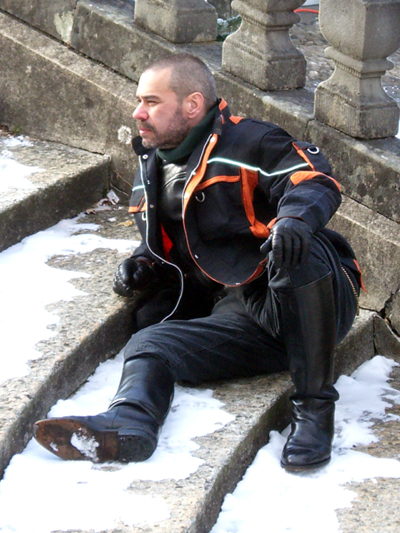
Saturday, December 30, 2006

HAPPY NEW YEAR


After some lack of time and mood, I restarted working on my BLOG.

You can find it updated, and on this archive (December 2006) you will find a complete retrospective from March till the present day.

Coming soon

SPECIAL DOSSIER: DEATH at the same web address and
SPECIAL DOSSIER: LISBON at
http://travellingandboots.blogspot.com/


I also take the opportunity to wish you a HAPPY NEW YEAR
Celso Junior

Friday, December 29, 2006

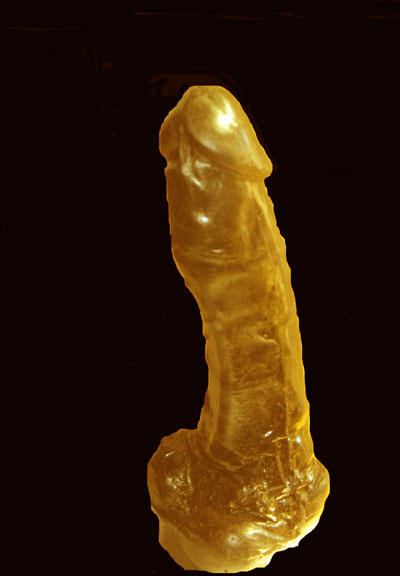
2006 GOLDEN COCK AWARDS


Still in the belief that my BLOG is an Institution, I’ve decided to continue to offer my visitors The Prize and the Winners of the GOLDEN COCK.

The GOLDEN COCK 2006 awards, in twelve (12) different Categories, from now and for the future, the distinguished personalities, facts, events and places concerning the subjects brought up on my BLOG.

The Prizes will be given away on the following Categories:

1. Homophobic World Personality or collective
2. Homophobic Portuguese Personality (last year AWARD)
3. Year’s Personality
4. Best Portuguese Journalistic Blog (last year AWARD)
5. Best City
6. Best Gay Venue
7. Best Gay Event
8. Best Fetish Site
9. Best Film
10. Best Exhibition
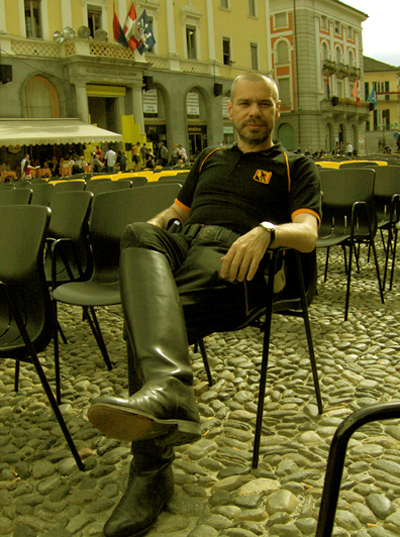
11. Year’s Hottest Boots
12. Year’s Hottest Man

2006 Homophobic World Personality


... and the GOLDEN COCK 2006 goes to: Bush and their accomplices (read Bush administration and all stupid Americans who have voted for them). As well as the presidents of Cameroon, China, Cuba, Iran, Pakistan, the Russian Federation, Senegal, Sudan, and Zimbabwe.

United Nations: U.S. Aligned With Iran in Anti-Gay Vote

In a reversal of policy, the United States backed an Iranian initiative to deny United Nations consultative status to organizations working to protect the rights of lesbian, gay, bisexual, and transgender (LGBT) people. In a
letter to Secretary of State Condoleeza Rice, a coalition of 40 organizations, led by the Human Rights Campaign, Human Rights Watch, the International Gay and Lesbian Human Rights Commission, and the National Gay and Lesbian Task Force, called for an explanation of the vote which aligned the United States with governments that have long repressed the rights of sexual minorities.

“This vote is an aggressive assault by the U.S. government on the right of sexual minorities to be heard,” said Scott Long, director of the LGBT rights program at Human Rights Watch. “It is astonishing that the Bush administration would align itself with Sudan, China, Iran and Zimbabwe in a coalition of the homophobic.”

In voting against the applications to the NGO committee, the U.S. was joined by Cameroon, China, Cuba, Iran, Pakistan, the Russian Federation, Senegal, Sudan, and Zimbabwe.

“It is an absolute outrage that the United States has chosen to align itself with oppressive governments – all in an effort to smother the voices of lesbian, gay, bisexual and transgender people around the world,” said Matt Foreman, executive director of the National Gay and Lesbian Task Force.
“It is deeply disturbing that the self-proclaimed ‘leader of the free world’ will ally with bigots at the drop of a hat to advance the right wing’s anti-gay agenda.”

2006 Homophobic Portuguese Personality


this year will be the last one that I’ll attribute this price, from 2007 on the GOLDEN COCK will be Homophobic Swiss Personality

... and the GOLDEN COCK 2006 goes to: Portuguese Government (Justice Ministry) and Portuguese Media


Gisberta, Brazilian immigrant, transsexual, HIV positive, drug user, sex worker and homeless was found dead on the February 22nd in an unfinished building in the city of Oporto and that the crime was confessed by a group of 14 boys, aged from 10 to 16 years old, most of them coming from a catholic child protection institution.

The victim had a deeply fragile health condition and that she was frequently chased by these boys, with insults and harassment. That on the 19th, a group of these boys entered the unfinished and abandoned building where Gisberta was staying, tied her up, gagged and assaulted her with extreme violence, kicking her, and beating her up with sticks and stones.

That the group also confessed to have introduced sticks in Gisberta's anus, whose body presented great injuries and have abandoned her at the scene. That her body presents also cigarette burning marks. That on the 20th and 21st, they have returned to the scene and repeated the aggressions. That by dawn, from the 21st to 22nd, they finally threw her to the pit, attempting to hide the crime. That the autopsy will clarify if she was still alive, since her body was not floating, yet submerged in the bottom of the pit, indicating that she died drowned.

This case was widely spread by the Portuguese media on the 23rd and 24th in a biased and erroneous way. While some of the Portuguese media mentioned the murder of a "transvestite", most of them only mentioned her homeless" or "homeless, sex worker, drug addict " condition. Gisberta was, also in some media, called Gisberto, her (masculine) legal name. According with this omission, and even before any details about the murder or about the identity and personal characteristics of the victim were known, many newspapers, in opinion columns, printed articles from opinion-makers (already known in Portugal for their personal opposition to LGBT rights), defending that this couldn't be considered as a "hate crime" and that it wouldn't be legitimate to consider any connection with Gisberta's transsexuality among the motivations to the crime. Usually, the arguments were about the underage of most aggressors. at the same time the press releases of the Portuguese LGBT associations, clarifying the "transsexuality" and victims identity, demanding legal and social measures against discriminations and protection against hate crimes motivated by gender identity, sexual orientation, social condition, disease or national origin were, and still are, being ignored by the media , though it was vaguely mentioned a solidarity vigilance (a citizen's initiative supported by the LGBT associations) on the 24th evening, but, once again, the media ignored the arguments of the associations and their request that victim's transsexuality to be mentioned, as well as transphobic discrimination as one of the probable crime motivations. It becomes clear that by avoiding mentioning, "hate crime" using the argument of the aggressors' underage, with the exception of a few politicians that expressed their personal opinion, no Portuguese political party as such took a stand nor condemned this crime.

The only reaction from the Government came from the minister responsible for this underage institution, that simply stated "the feeling of shock", without any more words or comments and demanded an inquiry to the institution responsible for the aggressors.

These aggressors, with the exception of a 16 year-old boy, who has been made criminally responsible and who is already in preventive detention, were sent back to the institution and are in a semi-liberty regime. No other measure is known to have been taken towards the aggressors. Psychological support for the 10 year-old boys, for example?

Strange as well that no photo of the victim was printed in most newspapers. The media and the opinion-makers focused the "shock" of the crime because of the aggressors' age, and not with the death of a citizen. That they gave voice to insinuations by the responsible priest for the underage institution, who said publicly that a boy from the institution was being "abused" by a pedophile and this would be an "extenuating circumstance". These declarations didn't lead to the publication of any reaction.

Contrary to the current praxis, the data revealed on the 24th about the victim's sexual harassment, as well as the possibility of Gisberta being still alive when she was thrown at the pit, were only printed by an Oporto's newspaper. That only four days after the crime was denounced, a sudden media silence about it is almost absolute.

A terrible murder that configures as a most likely hate crime, facing tendentious omissions of the sexual and transphobic component of the crime, facing an apparent media and political attempt of de-valorizing the crime itself, facing the omission of the "hate" component in the death of a person that accumulated so many social exclusions, facing the attempts to make the victim accountable for the situation, and publicly silencing this case.

The accused boys were found not guilty because Gisberta drown and none of the injuries her aggressors inflicted on her were fatal. This unfair reality represents a total disrespect for the most elementary Human Rights, which can only be qualified as unacceptable in a country from the European Union, in the XXI century.

SHAME ON YOU PORTUGAL!
2006 Personality


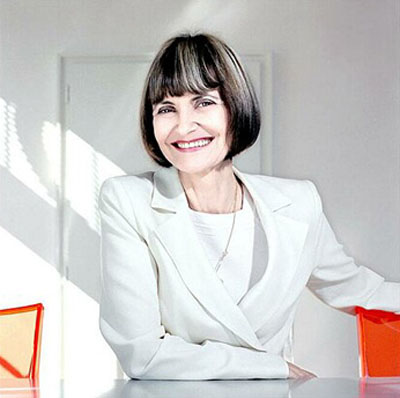
... and the GOLDEN COCK 2006 goes to: Micheline Calmy-Rey

In 2007 she will be the second female President of the Swiss Confederation in history,. She was elected as President on 13 December 2006

A Great Politician and a Great Woman.

2006 Best Portuguese Journalistic Blog


this year will be the last one that I’ll attribute this price, from 2007 on the GOLDEN COCK will be Best Journalistic Blog

... and the GOLDEN COCK 2006 goes to: Diário Ateista.

The strengths are the publication of news and quotes from whatever concerning the madness of the religion thru our sad and blind world.
It’s a pity that the site is only in Portuguese language.

http://www.ateismo.net/diario/

2006 - Best City


... and the GOLDEN COCK 2006 goes to: Antwerp

Antwerp, so many handsome men, everywhere you are surrounded by art and culture. How can a small city be so cosmopolitan?

2006 Best Gay Venue


... and the GOLDEN COCK 2006 goes to: Mutschmanns – Berlin


Mutschmanns became today what Scheune was in the past. Hot men, pure dress code. A kind of paradise for your eyes and your cock.

Fetish - Cruising – Point
Martin - Luther - Strasse 19
10 777 - Berlin Schöneberg
Tel.: 030 219 19 640
Wittenbergplatz U- Bahn - U1 - U2 - U15 - Bus 146
Nollendorfplatz U - Bahn - U1 - U2 - U4 - U15
Viktoria-Luise-Platz U - Bahn - U4
www.mutschmanns.de

2006 Best Gay Event


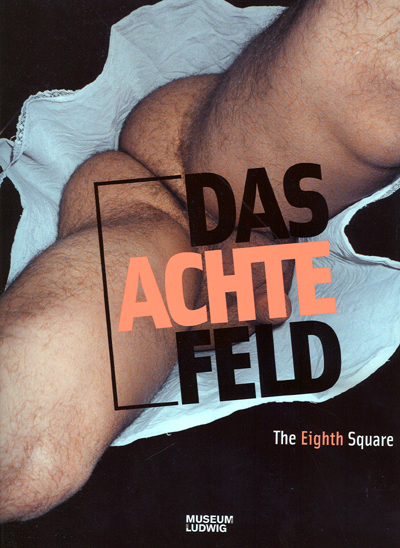
... and the GOLDEN COCK 2006 goes to: The Eighth Square at Cologne's Museum

LudwigSometimes a gay cultural event is worth more than a crowded and fashionable silly gay party. That is the case.

Proving that sex and chess have more in common than originally thought the Museum Ludwig in Cologne presents the The Eighth Square: Gender, Life and Desire in Art Since 1960, a huge exhibit exploring marginal sexuality, or as Judy B might say, the "reappropriation of the feminine."

The title of the show comes from a rule in chess, which stipulates:
When a pawn in a chess match reaches the eighth square on the far side of the board, the player can swap him for a piece of his or her choice. So the pawn - a lowly foot soldier - can transform into a queen, a powerless figure into the epitome of power, a man into a woman.

The show includes over 250 works by over 80 artists including such stars of track and field like Nan Goldin, Tracey Moffatt, Peter Hujar, Lucas Samaras, and Diane Arbus, plus an orgy full of lesser known though no less respected artists

2006 Best Fetish Site


... and the GOLDEN COCK 2006 goes to: Intoboots – A Nice World of Tall Boots

This site is devoted to high leather boots (especially riding boots, thigh boots or Wescos) worn with riding outfit, uniforms or leather. You'll be able to see there more than 5000 pictures but you won't find there anything hardcore.
For a quick visit, have a look at the galleries, at the webmaster personal pageand the major contributors.


Visit it at: http://intoboots.free.fr/

2006 Best Film


... and the GOLDEN COCK 2006 goes to: 18:15 FROM OSTKREUZ by Jörg Hartmann

I’m a little bit tired and fed up with cinema in general, be the independent cinema, the underground, the cinema art and especially the mainstream one. I just want to draw on the B movies, to laugh and enjoy a silly, naïf and well done comedy:

18:15 FROM OSTKREUZ ia an amazing comedy by Jörg Hartmann and staring Ades Zabel.

A parody about Miss Marple’s Agatha Christie novel. 4:50 from Paddington (Murder She Said) with Margaret Rutherford

Saw at Berlinale, February 2006

2006 Best Exhibition


... and the GOLDEN COCK 2006 goes to: FEAST OF COLOUR - Kunsthaus, Zurich

Kunsthaus Zürich has presented the Merzbacher-Mayer Collection, one of the most important private collections of Classical Modernism worldwide.Comprising almost 200 paintings and sculptures: The collection includes key worksby leading exponents of the main trends in Classical Modernism: Vincent van Gogh,Pablo Picasso, Henri Matisse, Ernst Ludwig Kirchner, Wassily Kandinsky, Alexejvon Jawlensky and many more.

Thursday, December 28, 2006

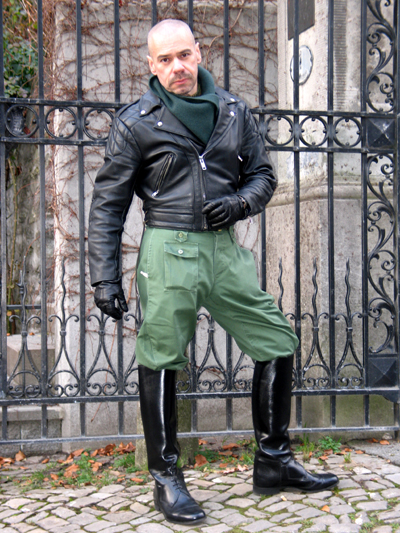
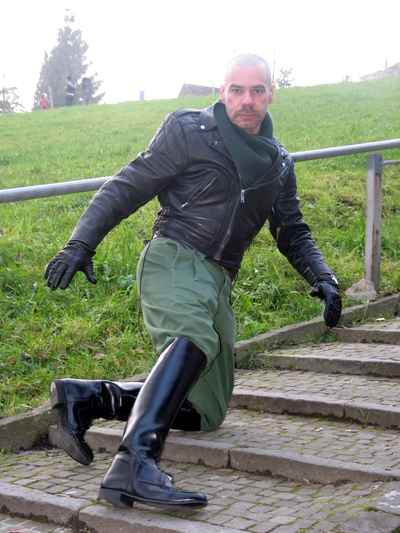
Year’s Hottest Boots - The hottest boots bought in 2006


... and the GOLDEN COCK 2006 goes to: Guarda Nacional Republicana Leather High Boots

Bought last springtime at Feira da Ladra, the most famous flee market in Lisbon. Believe it or not the price was 20,00€, yes, TWENTY EUROS.
It happens only once in lifetime. Guarda Nacional Republicana (GNR) is a Military Portuguese Police similar to Carabinieri in Italy or Gendarmerie in France.

2006 The Hottest Man


... and the GOLDEN COCK 2006 goes to: Chaba from Oslo!
hot hot hot hot hot hot hot hot hot hot hot hot hot hot hot hot hot hot hot hot hot hot hot hot hot hot hot hot hot hot hot hot hot hot hot hot hot hot hot hot hot hot hot hot hot hot hot hot hot hot hot ...

Wednesday, December 27, 2006

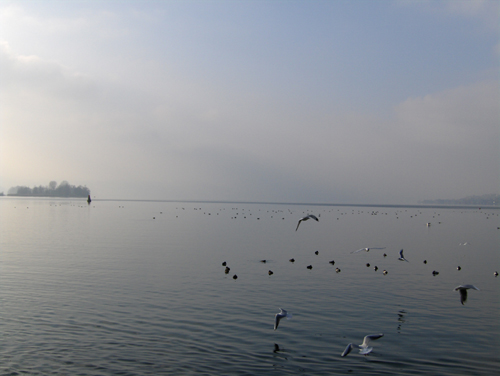
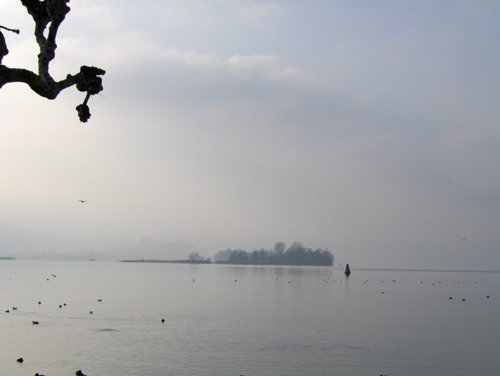
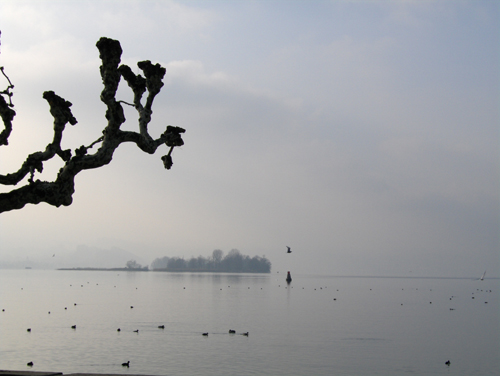
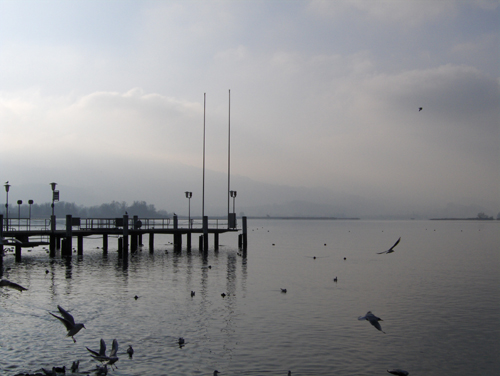
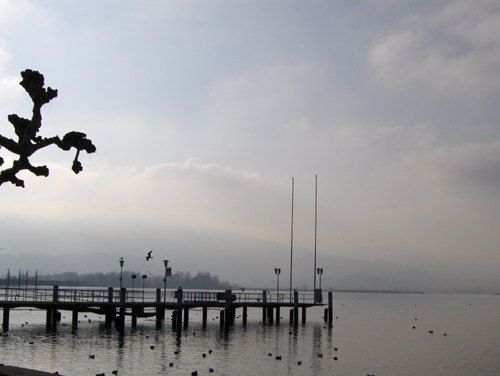
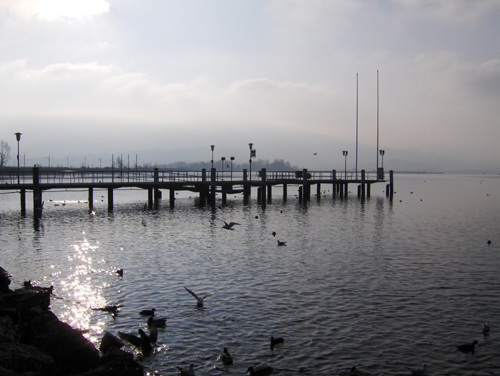
Wintertime


Wintertime in Lucerne

Tuesday, December 26, 2006

Gay Zurich


A helpful guide for Christmas Time … and the guy isn’t bad at all…

I WISH YOU THE BEST FOR 2007


My best wishes for all leathermen, rubbermen, friends and visitors

Zurich – Kunsthaus


International highpoints include the largest collection of works by Edvard Munch outside Norway, important paintings by Picasso and the Expressionists Kokoschka, Beckmann and Corinth. There is also a significant group of works by Claude Monet, including two of his water lily pictures, and the Chagall Gallery. Modern artistic trends are represented by Rothko, Merz, Twombly, Beuys, Bacon and Baselitz.

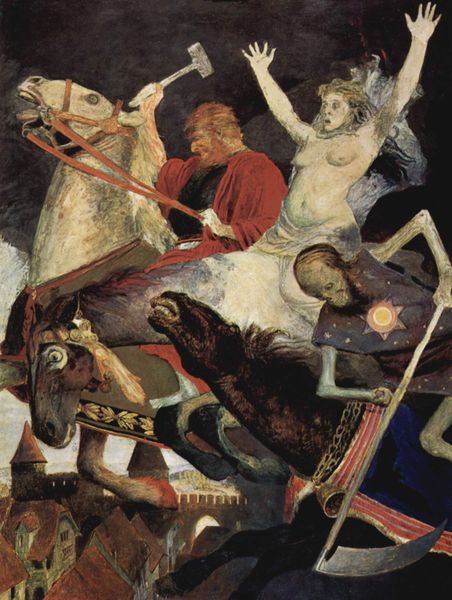
Arnold Böcklin - Der Krieg

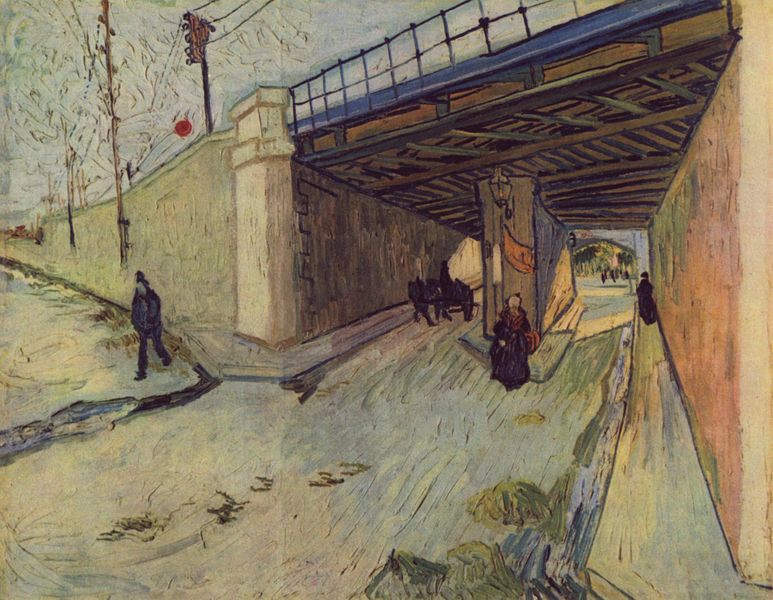
Vincent van Gogh - Eisenbahnbrücke über die Straße nach Tarascon

Henri Rousseau - Am Waldrand

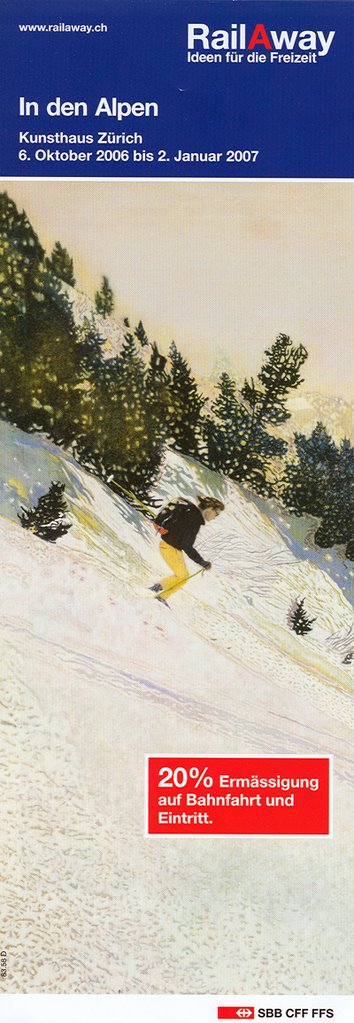
Zurich – Kunsthaus - In the Alps


The Kunsthaus Zürich shows how the Alps have been seen by experts, artists and amateurs, and thus transformed from a natural feature into a cultural phenomenon. The exhibition offers a veritably kaleidoscopic view of the topic from the 17th century to the present day, featuring some 300 items including votive miniatures, cartographic models and examples of both commercial and fine art.

Zurich – Kunsthaus - Dürer. Master Prints


The Kunsthaus Zürich hosts its first showing since 1946 of master engravings by the Renaissance artist Albrecht Dürer (1471-1528), including ‘The Knight’, ‘Melencolia I’ and ‘Saint Jerome in His Study’. Kunsthaus Zürich acquired the 55 perfectly preserved prints in 2000 when it received the collection of Landammann Dietrich Schindler (1795-1882)

The Museum of Fine Arts Bern


Works by Paul Klee, Pablo Picasso, Ferdinand Hodler and Meret Oppenheim have made the Museum of Fine Arts Bern an institution with an international reputation. At the present time, the constantly growing and evolving collection consists of over 3,000 paintings and sculptures as well as 48,000 drawings, prints, photographs, videos and films.

The roots of the museum’s history reach back to the revolutionary ideas proliferatingtowards the end of the 18th century which, in 1809, led to the founding of the National Art Collection in Bern and, in 1879, to the opening of the first museum building.

The Museum of Fine Arts Bern is the oldest art museum in Switzerland with a permanent collection and houses works covering eight centuries.


Ferdinand Hodler - The Chosen One - 1893-94

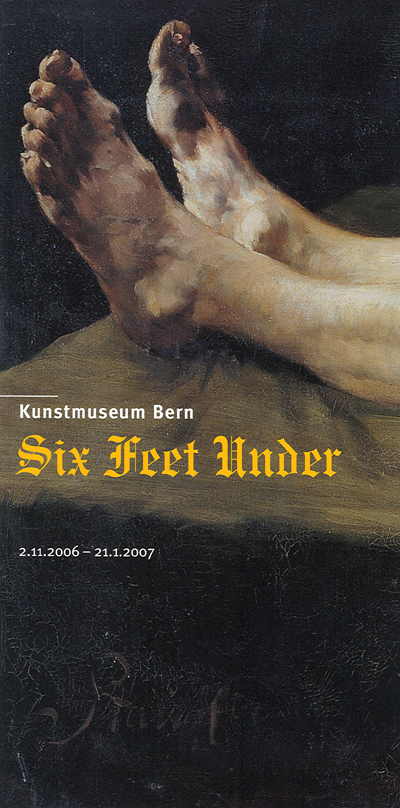
Bern: Musée des Beaux-Arts de Berne - Six Feet Under


Autopsy of our relation to the dead

Six Feet Under is an exhibition made up of works from the collections of the Museum of Fine Arts Berne and from other public and private collections as well as works specially created for the show, ranging from the 16th century to today, and originating from different continents and civilizations – Europe, America, Mexico, China, India, Thailand, Ghana.

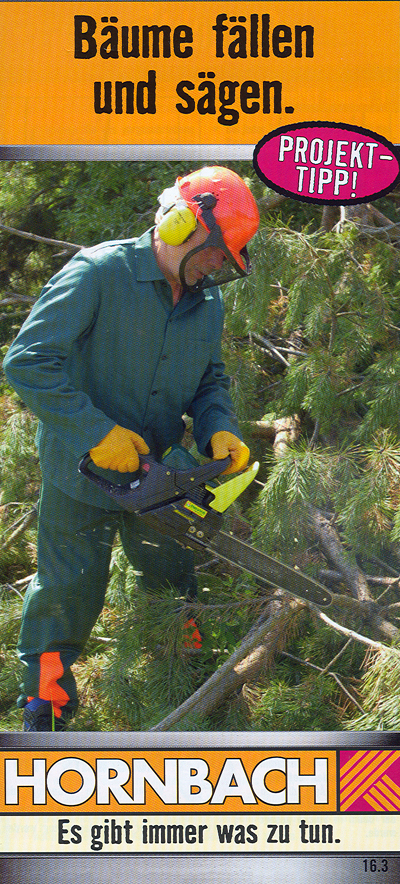
HORNBACH: a good advise


One of the best places to buy the right outfit for the winter season…HORNBACH

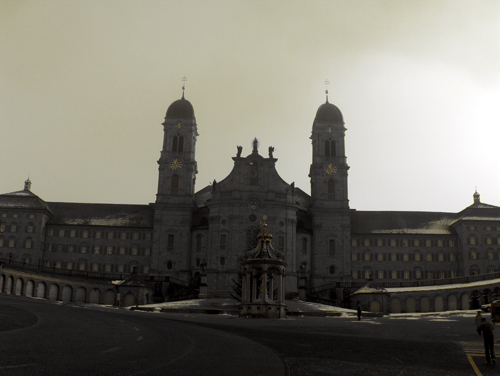
Einsiedeln


Visiting Einsiedeln

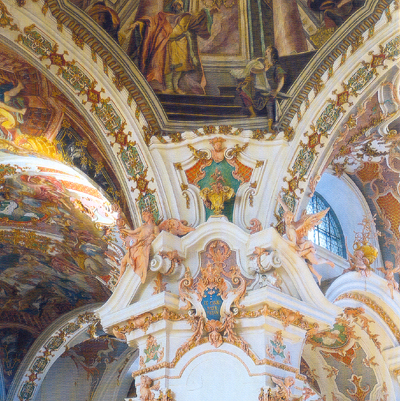
Visiting Einsiedeln - The Abbey of Einsiedeln


In the German language the word einsiedler means hermit, and Switzerland's greatest pilgrimage shrine, the abbey of Einsiedeln, derives its name from being the 'place of the hermits'. While legends indicate the site was sacred in pre-Christian times, its historical fame began in the early 9th century. In 835, Meinrad, a young nobleman who had been a monk in the monastery of Reichenau, left the monastery to live a hermit's life in the deep woods of northeast Switzerland. For 26 years he lived alone in the woods with two crows as his only companions. In 861, two bandits came upon Meinrad in his hermitage and murdered him. Legends tell that Meinrad's two crows followed the bandits, hovering and shrieking in a strange manner, until the bandits were captured in Zurich, 30 miles away.

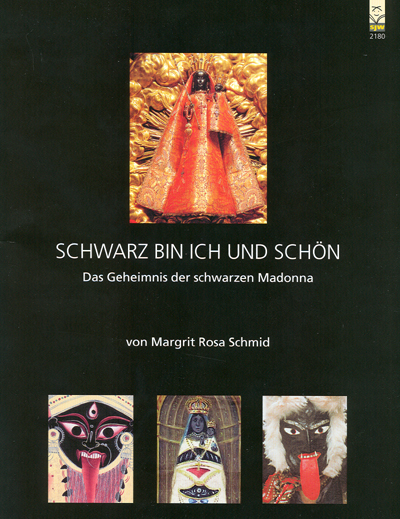
Visiting Einsiedeln - The Abbey of Einsiedeln – Black Madonna


When Meinrad had first come to the forest he had brought along one of the mysterious Black Madonna statues, considered by many scholars to be Christianized pagan Dark Goddesses. After Meinrad's death a small Benedictine cloister was built at the site of his hermitage and this cloister, housing the Black Madonna, soon became a pilgrimage site of great importance. The enormous abbey standing today rose over a period of many centuries and only legends are left regarding the sites sacred use in prehistoric times. Inside the church the primary object of pilgrimage visitation is the Chapel of Grace which houses a mid-15th century Black Madonna icon (the earlier icon having been destroyed in a fire). The Chapel of Grace, standing directly upon the site of Meinrad's original hermitage, is believed to have been consecrated by Christ himself when he miraculously appeared on September 14, 948.

Black Madonna


The Black Madonna images in European pilgrimage shrines are a matter of some controversy. Throughout Western Europe there are over 200 examples of these black images and, while anathema to the orthodox church, they are widely venerated as having esoteric, magical and wonder-working powers.
It is evident from a serious study of these matters that the patriarchal Roman church in its effort to exterminate the ancient and immensely popular goddess cults had only succeeded in driving them underground. In contemporary Europe the veneration of the feminine principle and her sacred sites is once again gaining power. As Begg interprets it, "The return of the Black Virgin to the forefront of collective consciousness has coincided with the profound psychological need to reconcile sexuality and religion."

Rapperswil


This place inspires the wanderlust! Located on Lake Zurich, the leisure area of Rapperswil can easily be discovered by train, or even by boat. Visiting the Lake, Castle, Churches, shopping at the Old Town…

Rapperswil


the lake

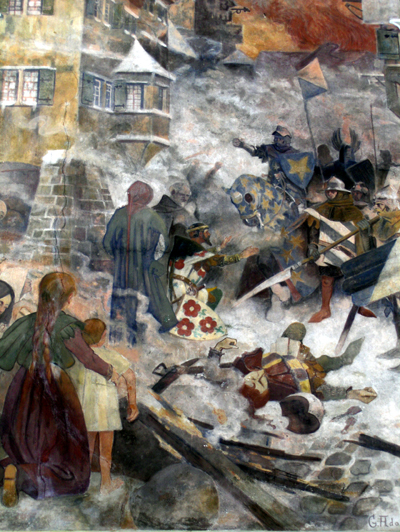
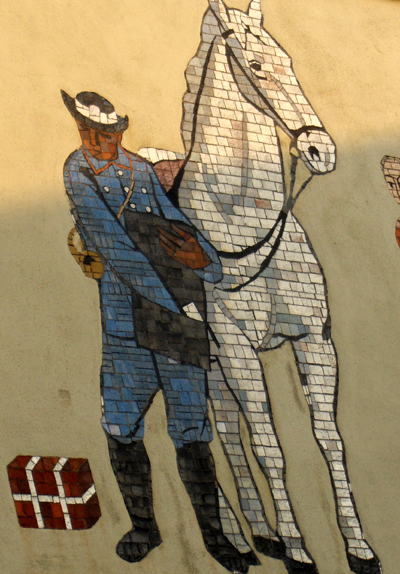
Rapperswil - Painting Walls and Mosaics


Just walk to discover them

Mr. Switzerland to Service Soccer Widows


Reuters reports that Switzerland hopes to capitalize on this summer's World Cup soccer finals in neighbouring Germany by enticing soccer widows who are likely bored with the games and their men. But how? What does Switzerland have to offer soccer widows? Chocolate? Alps? Cheese? How about beefcake?

The Swiss Tourist Authority is about to launch a Tv Spots featuring a cow-milking Mr. Switzerland and other handsome men including a strapping farmhand, a sexy train conductor, a fit mountain climber, a dapper ferryman and a brawny lumberjack.

But the star of the campaign will be Renzo Blumenthal, Mr. Switzerland 2005, milking and then leaning up against a cow. I'm assuming that in Switzerland and Europe the obvious man milking the cow "pun" is not as "entertaining" as it would be to an American audience?

Highlights: Triga Films


The best selection of Porno Movies, the models are really natural and hot.
Visit the webpage at: http://www.trigafilms.co.uk/

Highlights: The Singing Butler by Jack Vettriano


Jack Vettriano has been one of my favourite artists for a long time. My all time favourite of his works is definitely The Singing Butler.
The Singing Butler has a unique charm, elegance and romanticism that are uniquely Vettriano. People who view this image feel like they are in another world, a world they aspire to be in. It is a world that has no worries, no problems and is the ultimate romantic spot on the planet.

Highlights: Gewürztraminer Vine


The Gewürztraminer varietals grape is grown in limited areas of the world, in particular, the region of Alsace, France. Wine texts report that "gewürz" translates from German as "spicy"; so literally Gewürztraminer means "spice grape", or as many prefer, "perfumed grape", or "aromatic grape".
It seems possible that Gewürztraminer vines were first imported into Alsace from the Pfalz, just west of the Rhine, as early as the 16th century, but given the fuzziness that surrounds the history of grape varieties before the 19th century, it’s also quite possible that Traminer and Gewürztraminer coexisted without much distinction until rather recent times.

The best choice for 2006

Highlights - LOST BOYS


This is a provocative study of gay youth culture featuring images of fellow artists, models and agents provocateurs. This is a compelling collection of Mogutin's portraits and landscapes taken over the last 10 years since he was exiled from Russia for "malicious hooliganism with exceptional cynicism and extreme insolence." Although it was his outspoken gay writing that angered the Soviet authorities, Mogutin's photographs courted just as much controversy. Provocative yet iconoclastic, his work transcends the conventions of male nude photography, confronting the viewer/voyeur with a raw style and new sensibility. A cross between porn and fashion, pop culture and marginal kink, "Lost Boys" is a poetic and sometimes raunchy journey into different obsessions and fetishes of the cosmopolitan urban youth culture. Crimean rasta boys, Russian wrestlers and military cadets, German skinheads, and football hooligans are among the subjects of these incendiary but intimate portraits.

Highlights - Natalie Dessay : Le Miracle d'une Voix


L'événement lyrique de cette fin d'année ! Natalie Dessay est le soprano français au firmament de l'art lyrique international. Célèbre autant pour sa voix aérienne aux sur-aigus stupéfiants que pour ses talents d'actrice hors du commun, elle est l'incarnation même de l'artiste qui a renouvelé l'art lyrique

Quelle voix ! Quelle comédienne ! Et en plus Elle est ravissante. Pour voir et écouter entre autres les 3 versions magnifiques comme Olympia au Compte de Hoffmann (Jacques Offenbach), le duo de La Mouche au Orphée aux Enfers (Jacques Offenbach) et surtout dans le récital interprètent Candide de Bernstein.

Highlights - Mozart - Mass in C minor, K427; Masonic Funeral Music, K477


No comments, just listen…
Fantastic!!!

Highlights - remembering TV shows of our youth


Home video is our own little time tunnel, instantly transporting us back to dimly remembered TV shows of our youth. The only thing more fun than re-encountering a show one hasn't thought about in years is the happy discovery that it holds up relatively well. See below some of this series bought in 2006

Combat: See Post on SPECIAL DOSSIER: NAZIS – Archives February 2006

Highlights - remembering TV shows of our youth - The Time Tunnel - 1968


Scientists Tony Newman and Doug Phillips are the young heads of Project Tic-Toc, a multi-billion dollar government installation buried beneath the desert. They have invented a Time Tunnel, which will allow people to visit anywhere in time and space. While testing the tunnel for an impatient senator, Newman and Phillips became trapped in time, and each week coincidentally found them at the site of an important historical event, be it the Siege of Troy, the sinking of the Titanic or an assassination attempt on President Lincoln. Sometimes they travelled into the future, and battled alien invaders.

James Darrin and Robert Colbert star as intrepid scientists Tony Newman and Doug Phillips.

Highlights - remembering TV shows of our youth - The Rat Patrol – 1966


Set in North Africa during World War II, this series chronicles the adventures of a 4-man team of commandos within the Long Range Desert Group. In utter defiance of historical accuracy, the team consists of three Americans and one Brit.
Armed with jeeps equipped with .50-caliber machine guns--and endless chutzpah--they wage a highly irregular war against Rommel's Afrika Korps. Their most common nemesis is Hauptmann Dietrich, though Dietrich and the Rats join forces from time to time against a common enemy.
The Rat Patrol was filmed in colour. Being that it was filmed in 1966-1968, colour was one of the selling points of the series. All those wonderful shots of military half tracks and trucks blowing up in huge fireballs.

Series main cast:
Christopher George as Sgt. Sam Troy
Gary Raymond as Sgt. Jack Moffitt
Eric Braeden as Capt. Hauptman Hans Dietrich (as Hans Gudegast)
Lawrence P. Casey as Pvt. Mark Hitchcock (as Lawrence Casey)

Justin Tarr as Pvt. Tully Pettigrew

Highlights - remembering TV shows of our youth – Lost in Space – 1965 - 1968


From 1965 to 1968 the United States of America brought us a fantastic science fiction television series called "Lost In Space". The television network CBS televised 84 episodes, including the pilot episode "No Place To Hide". The first series was filmed in black and white with the animated credits and original theme tune written by John Williams of "Jaws" and "Star Wars" fame. However, the second series was filmed in colour with such a beautiful array of colours that combined wonderfully with the suspenseful background music. Also there were superb performances by Jonathan Harris who originally was only supposed to be in the first six episodes but whose cowardly antics and exaggerated reactions to events around him, made his character, Dr.Zachary Smith the most popular personage in the whole series.

Series main cast:
Guy Williams, as Professor John Robinson, June Lockhart, as his wife, Maureen and the two daughters Penny, played by Angela Cartwright and Judy, played by Marta Kristen, the boy Will Robinson played by Billy Mumy.
Mark Goddard as Maj. Don West and Jonathan Harris as the evil Dr. Zachary Smith

Long may "Lost In Space" continue to entertain people of all generations in the future.

Highlights - remembering TV shows of our youth – Lost in Space – The Complete 1st Season


This box set includes all 29 black and white episodes from the first season (with a burst of colour at the end of the last show--a foretaste of the garish look of the remaining two seasons) along with "No Place to Hide", the expensive pilot show that sold the series but which prompted Allen to revamp the whole premise in comic mode when network execs responded best to its unintended humour.

Episodes:
The Reluctant Stowaway
The DerelictIsland in the Sky
There Were Giants in the Earth
The Hungry Sea
Welcome Stranger, my Friend
Mr Nobody
Invaders from the Fifth Dimension
The Oasis
The Sky is Falling
Wish Upon a Star
The Raft
One of Our Dogs is Missing
Attack of the Monster Plants
Return from Outer Space
The Keeper, Parts 1 & 2
The Sky Pirate
Ghost in Space
The War of the Robots
The Magic Mirror
The Challenge
The Space Trader
Hi Majesty Smith
The Space Croppers
All That Glitters
The Last Civilization
A Change of Space
Follow the Leader
No Place to Hide (unaired pilot episode)

Highlights - remembering TV shows of our youth – Lost in Space – The Complete 2nd Season


The series 2 was classy and very bold colourful sets, funny, with an increasingly camp.

Episodes:
Blast Off into Space
Wild Adventure
The Ghost Planet
The Forbidden World
Space Circus
Prisoners of Space
The Android Machine
The Deadly Games of Gamma 6
The Thief from Outer Space
Curse of Cousin Smith
West of Mars
A Visit to Hades
The Wreck of the Robot
The Dream Monster
The Golden Man
The Girl from the Green Dimension
The Questing Beast
The Toymaker
Mutiny in Space
The Space Vikings
Rocket to Earth
The Cave of the Wizards
Treasures of the Lost Planet
Revolt of the Android
The Colonists
Trip Through the Robot
The Phantom Family
The Mechanical ManThe Astral Traveller

Highlights - remembering TV shows of our youth – Lost in Space – The Complete 3rd Season


In the year 1997, Professor John Robinson and his family are selected to establish a colony on the third planet in the Alpha Centauri star system, as Earth is hugely overpopulated. The scheming Doctor Zachary Smith, an agent from an enemy government, is sent to sabotage the mission, and is successful in reprogramming the ship's robot. However, he gets trapped on the ship and due to the excess weight, the ship becomes hopelessly lost in space. The family's mission, then, becomes a fight for survival as they search for their way home. Features the complete 24 episodes from the third season.

The Condemned of Space
Visit to a Hostile Planet
Kidnapped in Space
Hunter’s Moon
The Space Primeval
The Space Destructors
The Hunted Lighthouse
Fight into the Future
Collision of the Planets
The Space Creature
Deadliest of the Species
A Day at the Zoo
Two Weeks in Space
Castles in Space
The Anti-Matter Man
Target Earth
Princess of Space
The Time Merchant
The Promised Planet
Fugitives in Spaces
Space Beauty
The Flaming Planet
The Great Vegetable Rebellion
The Junkyard of Space

Highlights - remembering TV shows of our youth – Margaret Rutherford’s Miss Marple


Murder She Said marked the first big-screen appearance of Agatha Christie's Miss Marple. The script by David Pursall and Jack Seddon is based on the 1957 novel "4:50 From Paddington".

It's success lead to three more equally entertaining films starring Margaret Rutherford. Agatha Christie liked Rutherford as an actress but thought that she was all wrong for the part. Indeed Rutherford is nothing like the Jane Marple that Joan Hickson would portray in the highly successful BBC series of the 1980's-90's, but she is a delight to watch as she makes the part entirely her own and earned herself a legion of fans.
Incedentally, Hickson appears in this film in a minor role as the miserable housekeeper Mrs Kidder.
A great supporting cast includes Muriel Pavlow, Arthur Kennedy and James Robertson Justice. Charles Tingwell plays the hapless Inspector Craddock who cannot bear Miss Marple interfering and solving his cases for him, a role that in which he is featured in all the entries in this series. Another regular in the series is Stringer Davis (Rutherford's real life husband) who plays the local librarian and her closest friend Mr Stringer.

Sequels:
MURDER AT THE GALLOP (1963)
MURDER MOST FOUL (1964)
MURDER AHOY (produced in 1964 but released in late 1965 to space out the series).

Monday, December 25, 2006

November 2006: PREF


In my opinion PREF is the best Gay publication in Europe, the issue November/December 2006 is especially very well done with some excellent articles about Fetish.

Visit the webpage at: http://www.prefmag.com/

November 2006: Autumn in Lucerne I


Autumn in Lucerne

November 2006: Autumn in Lucerne II


Autumn in Lucerne

November 2006: Autumn in Lucerne III


Autumn in Lucerne

November 2006: Autumn in Lucerne IV


Autumn in Lucerne

November 2006: Autumn in Lucerne V


Autumn in Lucerne

November 2006: Autumn in Lugano


Autumn in Lugano

November 2006: Autumn - Associations with melancholy


Autumn in poetry has often been associated with melancholy. The possibilities of summer are gone, and the chill of winter is on the horizon. Thoughts and skies turn to grey. Rainer Maria Rilke, a famous German-language poet, has expressed such sentiments in one of his most famous poems, Herbsttag (Autumn Day), which reads in part:

Who now has no house, will not build one (anymore).
Who now is alone, will remain so for long,
will wake, and read, and write long letters
and back and forth on the boulevards
will restlessly wander, while the leaves blow.


We might also think of Yeats' poem 'The Wild Swans at Coole' where the maturing season that the poet observes symbolically represents the poet's ageing self. Like the natural world that he observes he too has reached his prime and now must look forward to the inevitability of old age and death. Paul Verlaine's "Chanson d'automne" ("Autumn Song") is likewise characterized by strong, painful feelings of sorrow.

November 2006: Lucerne - Richard Wagner Museum


"Wherever I turn outside my house I am in the midst of a magic world: I know of no more beautiful place on earth, none homelier than this."

From Richard Wagner to King Ludwig II of Bavaria, referring to his residence in Tribschen, April 1866

The Wagner’s residence in Tribschen is a museum devoted to Wagner and his years living at Tribschen. The first floor includes many photographs, scores (and facsimiles of scores, including the "Siegfried Idyll"), paintings and memorabilia from Wagner festivals. The second floor is a musical instrument museum, which, while it does not include instruments relating to Wagner, contains many interesting instruments including several important brass instruments.

November 2006: MY BOOT COLLECTION


My new acquisition comes from Brazil: The Calvary Police Boots from the Polícia Militar de São Paulo

November 2006: Gruyères – Montbovon


A first class trip on the GoldenPass Railway. Beautiful!!!

November 2006: Gruyères – The City and La Fondue


Gruyère is a very mountainous region, criss-crossed by deep and narrow valleys sheltering traditional wood-built chalets. To enter the region, one has to pass thorough the only existing portico, over which the fine town of Bulle stands guard as over the entrance to a castle.
Once inside, one discovers a harmonious mixture of slender summits, verdant high pastures, streams and forests. Hospitality and good food here reign supreme. You must try La Fondue at Chalet des Gruyères , really a religious experience!

November 2006: Gruyères – H.R. Giger Museum


The Giger Museum, a place to appreciate the acclaimed Swiss surrealist H. R. Giger,creator of the terrifying life forms and their otherworldly environment in the film classicALIEN, for which he received the Oscar in 1980. Painter, sculptor, designer, interior architect, Giger extends his artistic vision into all domains. Fundamental to the nature of his work is his Biomechanical aesthetic, a dialectic between man and machine, representing a universe at once disturbing and sublime.

November 2006: Gruyères – Rubber Boots Moment


November 2006: Château de Chillon (Montreux)


Lake Leman lies by Chillon’s walls: A thousand feet in depth below Its massy waters meet and flow... There are seven pillars of Gothic mould, In Chillon’s dungeons deep and old, There are seven columns massy and grey, Dim with a dull imprison’d ray, A sunbeam which hath lost its way…

Lord Byron, The Prisoner of Chillon

One of the highlights of a visit to Switzerland, is the stunning 13th century Château de Chillon. This impressive specimen, among the best-preserved medieval castles in Europe, just besides Montreux, an elegant, turreted pile jutting out into the water, framed by trees and the craggy mountains. You could easily spend a half-day soaking up the atmosphere.

November 2006: Geneva


Strolling the promenades around the lake and soaking up the atmosphere, enjoying the Jet d’Eau view and taking lots of pictures

November 2006: Geneva – Jet d’Eau


The Jet d’Eau spouting 140 meters into the air is the world’s tallest and symbolizes Geneva’s heritage as a leader in the field of hydraulic power.
Originally a simple security valve at the Coulouvrenière hydraulic factory, this water fountain has, over the years, grown to be the symbol of Geneva.
In 1891, it was transferred to the "Rade", to become a major tourist attraction. However, it was not until 1951 that it was provided with an autonomous pumping station, propelling 500 litres of water per second to a height of 140 metres at a speed of 200 km per hour (124 miles/h).
Eight 9,000-watt projectors light the fountain’s majestic column in the evening as it soars skywards.


Location: Quai du Général-Guisan

November 2006: Zürich


A Boot Walking in Zurich

November 2006: Locarno


Enjoying Locarno

November 2006: Locarno


Enjoying Locarno

November 2006: Locarno - San Francesco Church


Alleys lead south downhill to the tall Chiesa di San Francesco, consecrated as part of a monastery in the fourteenth century over an earlier church that had been founded by wandering Franciscans either during St Francis of Assisi’s lifetime or shortly after his death in 1226. In 1480, a member of the order established a hermitage on the hillside above Locarno, which is now the Madonna del Sasso pilgrimage site. Renovation of the church in the sixteenth century included frescoes, most of which are now fading badly but still marvellous, really marvellous.

November 2006: TALKING ABOUT RUBBER BOOTS AND MACHINE GUNS

November 2006: Visiting Köln – The Cologne Cathedral


The Cologne Cathedral (Kölner Dom, official name Hohe Domkirche St. Peter und Maria) is one of the best-known architectural monuments in Germany and has been Cologne’s most famous landmark since its completion in the late 19th century. The cathedral is under the administration of the Roman Catholic Church (but actually belongs to itself) and is the seat of theArchibishop of Cologne.
Cologne Cathedral is the church with the largest facade (the west or main facade with the twin towers) and remains the second-tallest Gothic structure in the world.

November 2006: Visiting Köln – The Cologne Cathedral

Preparing the make up

November 2006: Visiting Köln - Wallraf-Richartz-Museum and Fondation Corboud


One of the great traditional art galleries in Germany. Medieval and early modern paintings from the period between 1250 and 1550 form the historic core of the museum’s collection. The Baroque section with major works by Rubens, Rembrandt and others and the 19th century section with paintings from the Romantic period, Realism, Impressionism and Symbolism and a small collection of sculpture are other important focal points of the collection.

In 2001 this section was extended and enhanced by the Corboud Collection comprising 170 Impressionist and Neo-Impressionist paintings. The museum also has a comprehensive collection of graphic art comprising roughly 75,000 prints. Art in Cologne occupies an outstanding position within German medieval painting, not only as a result of the number of works produced, but also as a result of its unique quality.

Edouard Manet: Bunch of Asparagus


Marianne Stokes: Melisande

November 2006: Visiting Köln - Museum Ludwig


The collection of the Museum Ludwig comprises the most important stages and positions in the development of 20th century art and contemporary art.Roy Lichtenstein’s “Maybe“, Andy Warhol’s “Brillo Boxes“ and George Segal’s “Restaurant Window”, all icons of American Pop Art, had just been completed when in 1969 they were included as loans in the collection of the Wallraf-Richartz-Museum. The works came from Peter and Irene Ludwig who have built up the biggest collection of Pop Art outside the USA

The museum has continued to systematically collect contemporary art. New acquisitions were often only a few months old when they were bought. Thus German art from the 70s and 80s, international trends and installations by the younger avant-garde also found their way into the collection of the Museum Ludwig.
The building designed by the architects Peter Busmann and Godfried Haberer was opened in 1986.

November 2006: Visiting Köln - The Eighth Square: Gender, Life and Desire in Art Since 1960


When a pawn in a chess match reaches the eighth square on the far side of the board, the player can swap him for a piece of his or her choice. So the pawn—a lowly foot soldier—can transform into a queen, a powerless figure into the epitome of power, a man into a woman.

Entitled The Eighth Square: Gender, Life and Desire in Art Since 1960, and on view at the Museum Ludwig in Cologne, the exhibition of over 250 works by more than 80 artists presents an overview of how art has examined almost every form of sexual desire outside of the heterosexual mainstream: transexuality, homosexuality and intersexuality, transgender, drag and cross dressing.
The show, with a strong emphasis on photographs, is spread out over several levels of the museum and is divided into thematic sections such as Machismo, Transsexuality and Intersexuality, Masquerade and Friendships, Outsiders, Discrimination and AIDS.

November 2006: Visiting Köln – Museum Schnütgen


Museum Schnütgen is a place where you can experience art from the early Middle Ages to the end of the Baroque period in the unique ambiance of a medieval ecclesiastical building. It holds a thousand years of masterpieces of international rank. Among them there are works of church treasure art in bronze, silver, gold and ivory, works of art in wood, stone sculptures and architectural sculpture, one of the largest museum collections of textiles worldwide and one of the largest collections of glass painting in Germany. With a large number of top quality objects in all of these fields the Museum Schnütgen is among the ten most important museums of medieval art in Europe.

Among them are roughly 2000 works of church treasure art in bronze, silver, gold and ivory and roughly 1100 works of art in wood and roughly five hundred Romanesque and Gothic stone sculptures. The textile collection with more than 250 liturgical robes and 3,500 materials from late antiquity until the 20th century and the collection of glass painting are among the largest of their kind worldwide.

November 2006: Visiting Köln – Museum Schnütgen - Zum Sterben schön!


Zum Sterben schön! Alter, Totentanz und Sterbekunst von 1500 bis Heute, that means something like: To die in the nice way! Age, Dance of the Death and Art to Die from 1500 till today, was exhibition on view at the Museum Schnütgen. The exhibition comprises several objects from several different origins and art periods from the XVI century till the present.

November 2006: Visiting Köln – Buying I


One of the best ways to buy cheaper and hot outfit is visiting some shops specialized in workmen clothes. Prices are really reasonable and look is fantastic!

November 2006: Visiting Köln – Buying II


November 2006: Visiting Köln – Leather Flee Market at HANDS


A leather Jacket from the old German Biker Uniform

November 2006: Visiting Köln – Station 2b


The New Fetish Venue in Cologne
Visit the webpage at: http://www.station2b.com/

November 2006: International German Bear Week, Cologne - The Event


The big daddy of European bear events attracts more than 2,500 bears. Includes the National Mr. Bear Contest, saunas, discos and many other attractions.
The International German Bear Week, Cologne 2006 was officially opened with the reception at Cologne City Hall in honour of our proud bear community.

November 2006: International German Bear Week, Cologne - BearNight 2006


The BearNight with the Mr. Bear Germany 2007 contest is the highlight of the INTERNATIONAL GERMAN BEAR PRIDE WEEK COLOGNE 2006. Once again about 2000 Bears have enjoyed a fantastic night at the Stadthalle Köln-Mülheim. This year’s motto: BEACH BEARS.

November 2006: International German Bear Week, Cologne - Bear Boat Party


Bear Boat Party on the Rhine on Sunday evening. Enjoy the pictures.

Wednesday, December 20, 2006

October 2006: The PORNfilmfestivalBERLIN


The PORNfilmfestivalBERLIN is produced by the Jürgen Brüning Filmproduktion, an established production company in Berlin involved for many years in the production of films dealing with sexuality.
The festival cooperates with cinemas like Kino Arsenal, the showcase place of the Freunde der Deutschen Kinemathek, the Kant Kino, Brotfabrik, Xenon, Volksbühne am Rosa-Luxemburg-Platz, Galerie Tristesse Deluxe, Schwuz and the night club Insomnia.The festival has a wide support by its commercial partners and corporate sponsors like Blue Movie, Wurstfilm, GMfilms, Inflagranti, konkursbuch-Verlag, Gaydvdversand and Playstixx.

October 2006: The PORNfilmfestivalBERLIN


My accreditation picture like a bandit, a bastard.
Awful portrait but I like it!

October 2006: The PORNfilmfestivalBERLIN - Spotlights


Spotlights presents distinguished filmmakers who have explored filmmaking and sexual expressions in their fields. This year's focus will highlight two well-known filmmakers, Maria Beatty and Todd Verow. Both have been working as independent filmmakers and producers of films and videos with sexual explicit images since many years and have been shown both national and internationally at festivals and other events. The festival is proud to have both as guests attending the festival to introduce their work and give some lectures to share their experiences.

October 2006: The PORNfilmfestivalBERLIN - World of Porn


This section will introduce you to both highlights from pornoland and art house porn. Please feel free to discover seduction and obsessions in high quality from all over the world.

October 2006: The PORNfilmfestivalBERLIN – Pornovisions


Visions from the underground of sexual pleasures. The avant-garde of experimental filmmaking is presented in its highest quality. Visions from new, young talented filmmakers will be shown to a daring audience capable to endure the highest form of sexual pleasures.

October 2006: The PORNfilmfestivalBERLIN - Dutch Pearls


In collaboration with Holland Film Festival, the Netherlands Filmmuseum and Holland Film Promotion we are happy to present innovative films from the early Seventies to recent days dealing with the Dutch approach on sex. Paul Verhoeven's classic "Turkish Delights" will be shown as well as Ian Kerkhoff controversial "Shabana Elogy" or Cyris Frisch's exploitative films.

October 2006: The PORNfilmfestivalBERLIN – Exhibition


The will be a photographic exhibition of works by Andreas Fux, Berlin; Bruce LaBruce, Toronto; Richard Kern, New York; Maria Cyber, Athen; Anja Weber, Berlin, Emilie Jouvet, Paris; Christina Wons, Berlin; Nan Goldin, New York; Charles Gatewood, San Francisco, Henning von Berg, Berlin/L.A.

October 2006: Volker


Dearest Volker from Hanover GL Film Festival

October 2006: MY BOOTS COLLECTION


Berlin is definitely the heaven, my paradise to buy boots and more, much more. There isn’t better place in this world to enjoy life:
My first pair of Mexican Boots - The original RANCHO

October 2006: Once more visiting the Schwules Museum


Visit: http://www.schwulesmuseum.de/

October 2006: The Fondation Beyeler


The history. Over a period of fifty years, in parallel to their successful activity as gallery owners, Hildy and Ernst Beyeler built up an exceptional collection of works by modern masters. Their collection, which was transferred to a foundation in 1982, was first publicly exhibited in its entirety at the Centro de Arte Reina Sofía in Madrid in 1989.
Currently comprising around 200 works, the Beyeler Collection documents a very personal view of modern art and an unerring ability to recognize quality.

October 2006: The Fondation Beyeler – The Architecture


In a extremely sensitive response to the collection, its creators and the location, Renzo Piano has created an ideal building for presenting modern art. From outside, the approximately 127 metre-long building, which is shielded from traffic noise by a porphyry-clad external wall, resembles a ship lying anchored alongside the busy road.

October 2006: The Fondation Beyeler – The collection


Vincent van Gogh
Champ aux meules de blé, 1890

Claude Monet

Nymphéas, 1916 – 1919

Paul Cézanne
Route tournante en haut de chemin des Laves, 1904-1906
and much more…

October 2006: Eros in Modern Art


The Foundation Beyeler is devoting a comprehensive two-part exhibition to Eros as a theme that has been a determining factor in art history. Emphasis is placed especially on works by artists for whom Eros was the essential driving force behind their creative activity. After the first exhibition focused on two pioneers of modern art, Auguste Rodin and Pablo Picasso, the second section, Eros in Modern Art, provides a general overview with more than 200 works.

October 2006: Eros in Modern Art


Almost all the media of modern and contemporary art are represented: from painting and sculpture to video and film, from drawing to graphic art and photography.
The exhibition reflects artists’ fascination with Eros as the principle that impels the world, as well as the creation of art, and on which life depends just as much as its inevitable companion, death.

Francis Bacon, Balthus, Max Beckmann, Pierre Bonnard, André Breton, Paul Cézanne, Salvador Dalí, Edgar Degas, Paul Delvaux, Marcel Duchamp, Max Ernst, Valie Export, Eric Fischl, Lucian Freud, Alberto Giacometti, George Grosz, Serge Hasenböhler, David Hockney, Ferdinand Hodler, Jenny Holzer, Rebecca Horn, Ernst Ludwig Kirchner, Paul Klee, Yves Klein, Gustav Klimt, Oskar Kokoschka, Willem de Kooning, Jeff Koons, Alfred Kubin, Jean-Jacques Lebel, Fernand Léger, Wilhelm Lehmbruck, Roy Lichtenstein, Edouard Manet, Robert Mapplethorpe, André Masson,Joan Miró, Amedeo Modigliani, Robert Morris, Koloman Moser, Otto Mueller, Edvard Munch, Bruce Naumann, Helmut Newton, Emil Nolde,Meret Oppenheim, Francis Picabia, Pablo Picasso, Markus Raetz, Arnulf Rainer, Man Ray, Pierre-Auguste Renoir, Auguste Rodin, Félicien Rops, Egon Schiele, Franz von Stuck, Yves Tanguy, Henri de Toulouse-Lautrec, Félix Vallotton, are among the artists whose works are on view.

Pierre Bonnard

Le cabinet de toilette au canapé rose (ou Nu à contre-jour ou L’Eau de Cologne), 1908

Jeff Koons

Woman in Tub, 1988

Rebecca Horn
The Lover’s Bed, 1990

October 2006: Eros in Modern Art – Catalogue


The exhibition will be accompanied by a lavishly illustrated catalogue, published by Hatje Cantz Verlag, Ostfildern, with an essay by Konrad P. Liessmann and a glossary written by the curators of the exhibition in Vienna and Riehen.

October 2006: A short trip to Zurich


no comments!

October 2006: Bourbaki Panorama in Lucerne


Panoramas reached the height of their appeal in the early 19th century, when special buildings were constructed to hold these circular paintings that attracted crowds of patrons. Cities such as Rome, Paris, London and Geneva boasted panoramas of their locales, many of which can now be found in art museums.
Panoramas would make their appearance in America, where they would become one of the most popular forms of public entertainment, in the mid-1800s.
Later, the Napoleonic wars became a popular theme and extreme care and effort were taken to ensure accurate representation of topographical details and minor scenes, with artists dispatched to the scene of the battle and veterans interviewed.
The painting of these panoramas was no small affair but entailed a master artist who directed teams of other artists who specialized in landscapes, buildings, people and skies.
These panoramas were so accurate that veterans often brought their families to the panorama exhibit to show them the exact point where they had stood in battle.

October 2006: Bourbaki Panorama in Lucerne


The Bourbaki Panorama in Lucerne houses Edourard Castres’ circular painting depicting the hopeless situation of a defeated army that has fled to the Swiss border during the Franco-Prussian War of 1870-71. France's Eastern Army, under the command of General Bourbaki, is giving up its arms at Les Verrieres in Switzerland in February 1871.
The panorama, completed over several months in 1881, is over 1000 square meters. The original dimensions corresponded to the panorama standard at the time of about 14 meters in height with a circumference of 114 meters, but adjustments over the years have shaved over four meters from the panorama’s height.
Beginning in the 1830s, panoramas were often enhanced with a faux-terrain of three-dimensional figures and props; the Bourbaki panorama has over 20 figures, a railroad car, scattered army and background sound that bring it to life.

You can visit the museum web page at: http://www.bourbakipanorama.ch/

October 2006: Bourbaki Panorama in Lucerne - Publication


Very well documented and magnificent reproductions

October 2006: Charles Lum


After our meeting in Lisbon Charles Lum have been visiting me in Lucerne. This guy is unique!!!

October 2006: Lausanne Underground Film and Music Festival


Miss Pussycat was one of the presences at The Lausanne Underground Film and Music Festival
You can find more about this event at:
http://www.luff.ch/site/

October 2006: Moving to Lucerne - Switzerland


Bye Bye Lisbon…
Hallo Luzern

October 2006: Celso junior by Rodrigo Lopes I


The Blue Jacket

October 2006: Celso junior by Rodrigo Lopes II


The Mounted Cop

October 2006: Celso junior by Rodrigo Lopes III


The Mounted Cop – Sepia

October 2006: Celso junior by Rodrigo Lopes IV


Fireman Waders

October 2006: Superga Waders


Another session for the documentary TALKING ABOUT RUBBER BOOTS AND MACHINE GUNS

October 2006: Man-to-Man


Another session for the documentary TALKING ABOUT RUBBER BOOTS AND MACHINE GUNS

October 2006: Fighting


Another session for the documentary TALKING ABOUT RUBBER BOOTS AND MACHINE GUNS

October 2006: Boot Stripping I


Another session for the documentary TALKING ABOUT RUBBER BOOTS AND MACHINE GUNS

October 2006: Boot Stripping II


Another session for the documentary TALKING ABOUT RUBBER BOOTS AND MACHINE GUNS

October 2006: Boot Stripping III


Another session for the documentary TALKING ABOUT RUBBER BOOTS AND MACHINE GUNS

October 2006: A tale about Love and Submission I


Another session for the documentary TALKING ABOUT RUBBER BOOTS AND MACHINE GUNS

October 2006: A tale about Love and Submission II


Another session for the documentary TALKING ABOUT RUBBER BOOTS AND MACHINE GUNS

October 2006: A tale about Love and Submission III


Another session for the documentary TALKING ABOUT RUBBER BOOTS AND MACHINE GUNS

October 2006: A tale about Love and Submission IV


Another session for the documentary TALKING ABOUT RUBBER BOOTS AND MACHINE GUNS

October 2006: A tale about Love and Submission V


Another session for the documentary TALKING ABOUT RUBBER BOOTS AND MACHINE GUNS

September 2006: “Amor-te” - Museu da Água - Mãe d'Água das Amoreiras, Lisboa


Walter Schels and Beate Lakotta; “Life Before Death”

The photographer Walter Schels and the journalist Beate Lakotta asked terminally ill patients if they might remain with them during the final weeks, days and hours of their lives. From these vigils emerged a collection of sensitive and illuminating portraits of people as their lives drew to a close.

LIFE BEFORE DEATH comprises a series of large format, black and white photographs taken shortly before and immediately after the death of each subject. The exhibition articulates the experiences, hopes and fears of the terminally ill and gives them a final opportunity to be heard.

September 2006: From Fra Angelico to Bonnard – Masterpieces from The Rau Collection


The Rau collection ( Dr.Rau called it his "petit Louvre" ) was shown in Lisbon at The Museu de Arte Antiga (http://www.mnarteantiga-ipmuseus.pt/ ) until the end of September. It includes 95 masterpieces from great masters as Fra Angelico, Bernardino Luini, António Solario, Guido Renni, Canaletto, Tiepolo, Porbus, Van Goyen, Van Ruysdael, Gerard Dou, Siberechts, Cranach, Philippe de Champaigne, Largillière, Boucher, Latour, Greuze, Fragonard, Robert, Vigée-Le Brun, El Greco, Ribera, Reynolds andGainsborough.

Bernardino Luini

Portrait of a Young Woman, 1525
Oil on canvas transposed from wood
H: 35cm. W: 27.3 cm.


Guido Reni
David Decapitating Goliath, 1606-1607

Oil on canvas
H: 174.5 cm. W: 133 cm.

September 2006: From Fra Angelico to Bonnard – Masterpieces from The Rau Collection


And 49 paintings by artists of the major artistic movements of the 19th and 20th centuries: Impressionism, Symbolism and Nabis, Fauvism and Expressionism.Corot, Courbet, Cézanne, Manet, Degas, Monet, Renoir, Pissarro, Sisley, Liebermann, Signac, Lautrec, Redon, Bonnard, Vuillard, Vlaminck, Dufy, Derain, Macke and Morandi

Claude Monet

The Wooden Bridge, 1872
Oil on canvas
H: 54 cm. W: 73 cm.

Claude Monet
The Port Coton Pyramids, 1886
Oil on canvas
H: 65.5 cm. W: 65.5 cm.

Pierre Bonnard
Saint-Tropez Bay, 1914
Oil on canvas
H: 46.5cm. W: 54cm.

September 2006: Franklin Engelen


...visiting me in Lisbon

Know more about him and his work at http://www.cos-conceptors.com/

September 2006: A new source of inspiration I


I am especially turned on by battlefield scenes of booted men fighting each other and then the losers being stripped of their boots and uniforms. And this is especially erotic for me if the soldiers are not wearing any underwear or socks under their uniforms and boots.
I have always loved the scenes in movies where tall booted men are defeated in battle or ambushed and then stripped of their fine gear. And the fact that this situation has been a reality throughout history only makes it more exciting.
I was just reading that during and after the Battle of Waterloo, tens of thousands of wounded and dead troopers, had their boots pulled off and were stripped naked by other soldiers, camp followers and Belgian peasants looking for loot.
D.

September 2006: A new source of inspiration II


I think that tall black cavalry boots and other type of tall, black leather riding boots and military boots are the most erotic.
D.

September 2006: TALKING ABOUT RUBBER BOOTS AND MACHINE GUNS


Photo session on September 10th - Franklin and JP (A new source of inspiration II)

September 2006: A new source of inspiration III


And I know that Mexican bandits would always strip the Federales or other booted soldiers they had defeated or captured.
D.

Stills from IL MERCENARIO by Sergio Corbucci

September 2006: TALKING ABOUT RUBBER BOOTS AND MACHINE GUNS


Photo session on September 10th - Franklin and JP I (A new source of inspiration III)

September 2006: TALKING ABOUT RUBBER BOOTS AND MACHINE GUNS


Photo session on September 10th - Franklin and JP II (A new source of inspiration III)

September 2006: A new source of inspiration IV


Partisans would strip Nazis of their big boots and uniforms.
D.

Stills from HELL COMMANDO by José Luís Merino

September 2006: TALKING ABOUT RUBBER BOOTS AND MACHINE GUNS


Photo session on September 10th - Franklin and JP (A new source of inspiration IV)

September 2006: A new source of inspiration V


American Indians stripped General Custer and his men of their tall cavalry boots and uniforms at the Battle of the Little Big Horn.
D.

September 2006: A new source of inspiration VI


I also find it very erotic that the looters would usually wear the boots and uniforms that they just stripped off the fallen, putting on sweaty boots and uniforms just pulled off their struggling victims.
D.

September 2006: TALKING ABOUT RUBBER BOOTS AND MACHINE GUNS


Photo session on September 10th - Franklin and JP (A new source of inspiration VI)

September 2006: A new source of inspiration VII


Thanks for your gift. Couldn't be better!

September 2006: TALKING ABOUT RUBBER BOOTS AND MACHINE GUNS


Photo session on September 25th I - Juanjo and Samuel (from: A new source of inspiration I)

September 2006: TALKING ABOUT RUBBER BOOTS AND MACHINE GUNS


Photo session on September 25th II - Juanjo and Samuel (from: A new source of inspiration I)

September 2006: SHOTS – Final Version


Working on the maquete for the Tree of Live #2

September 2006: 10th Lisbon Gay and Lesbian Film Festival


September 15th to 24th

Theme:10 years of struggle for LGBT culture visibility10 years against homophobia


The LGLFF programmed 114 films for its 10th edition!
30 Feature Films – 10 in Competition
34 Documentaries – 18 in Competition
50 Short Films – 36 in Competition

September 2006: 10th Lisbon Gay and Lesbian Film Festival – General Info


Opening Ceremony – 15th September, 9pm, Cinema São Jorge
Closing Ceremony – 23rd September, 9pm, Cinema São Jorge
Historical Retrospective of Spanish LGBT Cinema – 18th to the 23rd September, Cinema São Jorge
Digital Film Cycle – 25th to the 29th September, Goethe-Institut

September 2006: 10° Festival de Cinema Gay e Lésbico de Lisboa – Celso Junior

Arno Gruen, ao dissertar sobre conformistas (que sabem exactamente como se devem comportar perante as normas da sociedade), afirma que: “a doença fundamental da Humanidade gira em torno daqueles que só conseguem manter de pé as estruturas da sua personalidade recorrendo a imagens do inimigo e que encobrem o ódio que têm a si próprios, a sua insegurança e a sua irresponsabilidade em relação à própria existência”.

Em finais de 1996, minutos após lhe ter sido apresentado, fui abruptamente convidado por Gonçalo Diniz para criar e organizar o Festival de Cinema Gay e Lésbico de Lisboa, o qual à partida contava com o apoio institucional da Câmara Municipal de Lisboa e o empenho pessoal de seu Presidente, o Senhor Dr. João Soares.
Considero-me um privilegiado. A vida deu-me sempre a oportunidade de expandir os meus limites, pelo que ainda que tenha ficado surpreendido com o convite e assustado com a dimensão do desafio, resolvi aceitá-lo.
Dez anos volvidos do Primeiro Festival, os quais coincidiram com dez anos intensos da minha vida, também a nível pessoal, é natural que se proceda a um balanço. Balanço esse donde constam: vitórias e derrotas, alguns ganhos, muitas perdas e a sensação, um tanto amarga, ao, quando confrontado com a realidade de hoje em dia, se percebe que nestes últimos dez anos, pouco mudou em termos de comportamento, civilidade e cidadania e o quanto, em Portugal, estamos longe de uma transformação / evolução ao nível das mentalidades.
Uma das facetas no Ser Humano que mais me incomoda é a sua falta de lucidez perante o mundo que o rodeia. Insistimos na obediência cega a normas impostas, sem espírito crítico. Obedecemos a normas por preguiça, por inércia, por preconceito, por medo e temor, ou, ainda, por superstição. Não por concordância e muito menos por compreensão. A sexualidade, a nossa sexualidade, insiste em ficar resguardada por um véu (nada diáfano) bordado de tabus, de medos e de um milhão de coisinhas complicadas que ali colocamos como que para estancar o nosso processo de evolução em direcção ao divino que há em nós. Gays, Lésbicas, Bissexuais, Transgenders e Heterossexuais, todos os que fazem parte deste universo, desta realidade, são oprimidos e, simultaneamente, opressores, em nome de um inimigo invisível que no fundo só está em nós. Assim, por puro abuso e com plena consciência do que fazem, Igrejas, Governos e outras opacas entidades tentam, como sempre o fizeram, controlar nossa sexualidade, pois controlando-a, julgam que preservam o nosso “modo de vida”, impedem o chamado “regresso à barbárie do Mundo Pré-Cristão” e controlam-nos a todos.
Ao assumir nossa orientação, seja ela qual for, iniciamos a construção do nosso Eu Verdadeiro, e isto assusta, porque temos a tendência de viver em função do Outro e não para o Outro, para nos darmos e sermos melhores é necessário que, no mínimo, tenhamos auto-conhecimento e que nos aceitemos. Confesso que faço o apanágio do Individualismo (não confundir com Egoísmo), pois creio ser através deste que se pode criar um mundo melhor.

Dez anos passados e tenho uma sensação incómoda na alma. Quase parece que muito pouco foi feito, o que apesar de não ser verdade, demonstra o quão longe ainda estamos de cumprir o objectivo maior deste Festival, que sempre passou por uma tónica na Educação e na Cidadania, com a promoção de uma sociedade melhor, mais Justa e mais Livre, onde a Gisberta não só sobrevivesse, mas vivesse. Sinto-me, por vezes, como um D. Quixote a lutar contra os moinhos criados em nome da intolerância e da ignorância vigentes.
Este Festival tem percorrido um caminho dificílimo e infelizmente ainda é muito pouco acarinhado pelas Instituições oficiais do país e da cidade. A própria “comunidade glbt”, retrato em miniatura, mas fiel à realidade deste país, também porque não há minorias intrinsecamente boas, deixa muito a desejar, é indolente, conformista e pouco reivindicativa.
Assim, ao comemorar os dez anos deste Festival, a HOMOFOBIA é o tema de eleição, um tema manchado de dor, de sangue, de mal-estar e de vergonha e, exactamente por isso, pertinente.
Um tema recorrente, uma frase de Brecht que não me sai da cabeça, “...o terreno ainda está fértil”, e eu me pergunto, como, ainda e porquê?
Como pode um país (lê-se também comunidade glbt) que teve seu coming out de uma maneira vibrante e original, deixar-se levar pela inércia da estupidez? Pequenos acontecimentos isolados, uma injúria aqui, uma provocação ali, sintomas claros que o que tinha de germinar já criou raízes e cresceu. Como aceitar o que se passou em Viseu, a série de manifestações de extrema direita aprovadas pelo Governo Civil, a atenção dos media às mesmas, o comportamento em geral dos media em relação ao tema glbt, o Arraial Pride ter sido posto fora do centro da cidade (felizmente voltou a se realizar no coração de Lisboa de onde nunca deveria ter saído), a chantagem da ex-vereadora da Cultura em mudar o nome deste Festival, suprimindo as palavras gay e lésbico de seu título, a tortura e assassinato de Gisberta no Porto e rumo que este caso tomou na Justiça, a atitude do Consulado português em Madrid em relação aos casamentos homossexuais, as perseguições silenciosas, as inimagináveis situações de preconceitos vivenciados dia a dia e o MEDO, um medo que quase se faz concreto e que faz uma comunidade “voltar para o armário” e lá pretender ficar. Para mim, no entanto o pior de tudo foi que em nenhum momento, as Presidências da República (anterior e actual), nem os Governos de então sentiram a menor necessidade e vontade de enviar uma mensagem aos cidadãos deste país, quer para lamentar, quer, ainda, para recusar qualquer cumplicidade em relação a estes factos.

Apesar de tudo o movimento glbt aí está, de pé, como também este Festival e hoje a sociedade portuguesa (mesmo que tente) não escapa à política da orientação sexual. Quero acreditar na nova geração glbt, a qual algumas vezes me surpreende pela positiva com alguns valores que surgem, mas tudo é relativo e proporcional ao tamanho do país, quero dizer com isto, que ainda serão necessários muitos anos e muito trabalho. Quero acreditar que um dia o que eu sonhei e o amor que dediquei a este Festival e a esta cidade dê algum fruto, que vidas sejam respeitadas e poupadas, que o sofrimento seja atenuado, que qualquer pessoa seja vista como ser humano e cidadão independentemente da orientação sexual.

Quero ser optimista e acreditar que as lacunas que persistem no sistema possam ser preenchidas correctamente, que surgirão líderes audazes, que o acaso e sorte farão emergir o bom senso e a Justiça. No que me diz respeito, apesar de ser muito difícil lutar e contra-argumentar com a estupidez humana, não tenho a menor intenção de desistir. Conheço bem o meu papel e a minha missão neste planeta e se foi semeado ódio neste terreno fértil, também eu semeei e aqui está, com frutos, umas das minhas árvores preferidas. Recuso-me a desistir, a ter vergonha do que sou e sobretudo a morrer como minoria.

Lisboa, minha querida Lisboa, eu não nasci aqui e nem aqui me criei, mas deixo para ti muito mais que deixei no meu próprio país, fiz a minha parte, agora é contigo. Abra os olhos Lisboa...

O caso Gisberta trouxe à luz, de forma chocante, toda a Homofobia e Transfobia, presente em nossa sociedade, os seus contornos são claros e visíveis a quem os queiram ver, não obstante, uma recusa e aquela falta de lucidez a que me referi anteriormente insiste em vigorar. O silêncio reina, a indiferença e a ignorância são soberanas. O que nos resta para além da indignação? Resta-nos lembrar. Estamos todos proibidos de esquecer o que se passou. Assim sendo, quero dedicar os dez anos de trabalho neste Festival não à Gisberta mas aos seus assassinos, assassinos sem nomes (porque eu não sei os seus nomes), obscuros e marginais como foi a vida dela, pequenos heróis que, por matarem o dragão, contam com a silenciosa cumplicidade e implícita compreensão da nossa sociedade.

Fundador do FCGLL e Programador

September 2006: 10th Lisbon Gay and Lesbian Film Festival - Celso Junior

In writing upon conformists (those who know exactly how to behave before the norms of society), Arno Gruen states that the fundamental ill of mankind concerns those who can only keep the structures of their personality standing by resort to images of the enemy, and who conceal their own self-hatred, insecurity and lack of responsibility towards existence itself.”

Late in 1996, just minutes after being introduced to him, Gonçalo Diniz invited me to create and organise the Lisbon Lesbian and Gay Film Festival, which could already count on the support of the Lisbon municipality and the personal commitment of its Mayor, João Soares.
I consider myself to be a privileged individual. Life has always gifted me with the chance to overcome my limitations, and thereby I decided to accept the challenge, despite its surprising nature and the concern which its daunting dimensions instilled in me.
Ten years since the First Festival, a period which has proved equally intense for me on a personal level, the time is right for us to take stock. To sum up the victories and defeats, some gains, many losses, and the sense, somewhat bitter, at being confronted with today’s reality, that little or nothing has changed over the past ten years in the behaviour, civility, and civic values; and that in Portugal, we are still far from achieving a real transformation/evolution of mentalities.

One of the facets of Human Beings which most irks me is our lack of lucidity towards the surrounding world. We persist in blind obedience to imposed norms, without critical forethought. We comply to norms by virtue of laziness, inertia, prejudice, dread and fear, or superstition. Not out of agreement, and much less out of understanding. Sexuality, our sexuality, insists upon being covered by a veil (all but diaphanous) embroidered in taboos, fears, and a million little overcomplicated things which we ourselves put there, almost as though intending to hinder our evolutionary process towards the divine in us. Gays, Lesbians, Bisexuals, Transgenders, and Heterosexuals – all of those who play a part in this universe, in this reality, are oppressed, and simultaneously oppressors, acting in the name of an invisible enemy which in truth only resides within us. So, just for the sake of abuse, and fully conscious of what they are doing, Churches, Governments and other shady entities attempt, as they always have, to control our sexuality; by doing so, they believe they are preserving our “lifestyle”, preventing what they call a “return to the barbaric Pre-Christian World”, and controlling us all.

It is by embracing our orientation, be it what it may, we begin the construction of our Real Me, always a frightening process, because we all tend to live in relation to the Other, and not for the Other. But if we wish to give of ourselves and in doing so become better, we need at the very least to possess self-knowledge and acceptance of ourselves. I confess that I consider Individualism (not to be mistaken for Selfishness) as a privilege, because I believe that through it a better world may be born.

Ten years have passed, and I have an unsettling sensation in my soul. It almost seems that very little has been done. This is patently not true, and yet, it shows how far we still stand from fulfilling the prime objective of this Festival, which has always been to emphasise Education and Civic values and to promote a society more Just and Free, where Gisberta would not only survive, but live. I feel at times like a Quixote fighting against the windmills created in the name of current intolerance and ignorance.
This Festival has had an incredibly difficult journey, and lamentably it has not yet garnered the full support of local and national authorities. Even the “glbt community”, a miniature portrait which faithfully reproduces the larger reality of the country – among other reasons, because there are no intrinsically good minorities – still leaves much to be desired; it is apathetic, conformist, and makes very few demands.
Therefore, on this, the tenth anniversary of our Festival, HOMOPHOBIA is the theme we have chosen; a theme stained in pain, blood, malaise and shame, and for this very reason, all the more pertinent.
A recurring theme, a sentence by Brecht, “... the womb is fertile still”, and I ask myself, how and why can this be?
How can a country (including its glbt community), one which had such a vibrant and original coming out, let itself be led by the inertia of stupidity? Small isolated events, an affront here, a provocation there, clear symptoms that what was to sprout has already become rooted and grown. How can we accept the events of Viseu, a series of extreme-right demonstrations authorised by local government, the attention bestowed on them by the media, the general behaviour of the media towards glbt issues, the Gay Pride having been relegated to the outskirts of the capital (now, thankfully and rightfully, brought back to the very heart of town), the blackmail pushed on us by the former City Hall Cultural Delegate who required us to remove the words gay and lesbian from the name of our Festival, the torture and murder of Gisberta in Porto, and the judicial outcome of the case, the attitude of the Portuguese Consulate in Madrid regarding homosexual unions, the silent persecutions, the unimaginable prejudice that has to be faced daily, and the FEAR, a fear that becomes almost solid, and that impels a whole community to “return to the closet” and aspire to stay there.
The worst thing for me, however, was the fact that at no time did the President of the Republic, or the Government – in both cases, former or current – feel any need or will to send a message to the citizens of this country, to deplore or refuse any complicity with the aforementioned facts.

Despite everything, the glbt movement still stands, as does this Festival, and these days the Portuguese society cannot – despite all its attempts – escape the politics of sexual orientation. I wish to believe in the new glbt generation, which at times positively surprises me with the values it displays; however, things must be seen in proportion to the size of the country. By this I mean that we have yet many years and much work ahead of us. I wish to believe that one day, all that I have dreamed, and the love I have given to this Festival and this city will bear fruit, that lives will be respected and spared, that suffering will be mitigated, that all individuals will be seen as human beings and as citizens, whatever their sexual orientation.

I wish to be an optimist, and to believe that the gaps that are still part of the system will be properly filled, that bold leaders will rise, that chance and luck will allow common sense and justice to emerge. As for me, despite the fact that struggling and countering human stupidity are very harsh tasks, I have no intention whatsoever of giving up. I’ve come to understand my role and my mission on this planet well, and if hate has been planted in this fertile ground, I too have cast my seed, and here it is, bearing fruits, from one of my favourite trees. I refuse to give up, to be ashamed of what I am, and more than anything, to die a part of a minority.

Lisbon, my darling Lisbon, I was not born nor did I grow up here, but my legacy to you is much greater than the one I left in my home country; I have done my part, and now it is up to you. Open your eyes, Lisbon…

The case of Gisberta has brought to light in the most shocking manner all the Homophobia and Transphobia present in our society: their outline is clear and visible to all who wish to see; however, a denial, and the lack of lucidity I mentioned earlier are still in force. Silence reigns, indifference and ignorance reign supreme. What do we have left, other than indignation? Remembrance. None of us is allowed ever to forget what has happened. This is why I wish to dedicate the ten years of work in this Festival not to Gisberta, but to her murderers, nameless murderers (since I do not know their names), obscure and marginal as her life was, little heroes who, for having slain the dragon, count with the silent complicity and the implicit understanding of our society.


LGLFF Founder and Programmer

September 2006: 10th Lisbon Gay and Lesbian Film Festival – Gonçalo Diniz

Parece-me quase uma eternidade quando penso na excitação e no nervosismo que sentimos ao esperar o, então, Presidente da Câmara Municipal de Lisboa, Dr. João Soares para fazer as honras de abertura, da primeira edição do festival em Setembro de 1997.
Com um orçamento mínimo e com muito trabalho, este evento foi pioneiro, dando início a uma era em que a comunidade homossexual, bissexual e transgender começou a lutar abertamente (e de forma concertada) por um reconhecimento das dificuldades sócio-culturais com que se debatia.
Hoje, Portugal é um país socialmente muito diferente daquele que viu a estreia do festival, no pequeno espaço da Videoteca de Lisboa, no Largo do Calvário em 1997.
Existe, indubitavelmente, uma maior consciência do respeito ao direito à diferença e uma maior visibilidade das comunidades gay, lésbica e transgender.
No entanto, embora tenhamos percorrido um longo caminho, os eventos dos passados meses, em particular, o assassínio da Gisberta na cidade do Porto e o sentimento anti-homossexual em Viseu que levou à formação das milícias populares, servem-nos de lembrança (se é que alguma vez precisávamos...) de que o nosso país tem ainda um caminho duríssimo a palmilhar.
O sonho de iniciar um evento cultural que celebrasse uma diversidade social – que até então era invisível –, teve a sua génese imediatamente após o primeiro Ciclo de Cinema Positivo promovido pela Associação Abraço na Culturgest em 1994.
Levou dois anos de discussões, reuniões e debates até conseguirmos reunir (então sob a égide da Associação ILGA-Portugal) as condições necessárias para dar início ao trabalho de produção do festival.
Inserido num projecto mais alargado de associativismo político, o festival para além dum instrumento de divulgação cultural, tinha uma componente nitidamente de âmbito política.
Apesar das mudanças e da explosão de organizações no panorama do associativismo gay, lésbico e transgender português, passados estes 10 anos, regozijo ter acompanhado a evolução do festival mantendo sempre – apesar das adversidades – uma forte vertente política, com uma mensagem bem clara.
Dada, então, a actual conjuntura parece-me perfeitamente lógico que o tema, este ano, seja o da luta contra a homofobia. Tal como há dez anos, julgo que o festival é uma ferramenta insubstituível no processo de erosão dos preconceitos e da ignorância que fazem com que tantas pessoas vivam em medo e oprimidas de serem e sentirem aquilo que lhes é natural.
É assim, com muita humildade, que agradeço a todos aqueles que trabalharam neste projecto ao longo destes anos (com particular destaque ao Celso Júnior), e com igual orgulho que congratulo o Festival de Cinema Gay e Lésbico de Lisboa, neste seu 10˚ aniversário.

It seems an eternity when I think back to the excitement and nervousness we felt while waiting on the, then, Mayor of Lisbon, Dr. João Soares, to make the opening speech of the Festival’s first edition, on September 1997.
With a minimum budget and a lot of work in hands, this was a pioneer event, breaking ground to an era in which the homosexual, bisexual and transgender community started fighting openly (and in a concerted way) for a recognition of the socio-cultural difficulties it was living.
Nowadays Portugal is socially a very different country from the one witnessing the birth of the Festival, at the narrow venue of the Videoteca de Lisboa, at the Largo do Calvário, in 1997. There is, undeniably, a bigger conscience on the respect to the right to be different and a broader visibility of gay, lesbian and transgender communities.
Nevertheless, although a long road has been travelled, last month’s events, namely Gisberta’s murder in the city of Oporto and the anti-homosexual sentiments in Viseu which originated popular militias, are a reminder (as if we ever needed one…) that our country has yet a tough path ahead of it.
The dream of creating a cultural event that celebrated a social diversity – till then unseen -, had it genesis immediately after the first Positive Cinema Film Cycle promoted by the Associação Abraço, at the Culturgest in 1994.
It took two years of discussions, meetings and debates in order to gather (then, organized by ILGA-Portugal Association) the necessary conditions to partake the Festival’s production work.
In the context of a broader political associative project, the Festival, beyond a mere cultural visibility instrument, had a clear political component.
Despite the changes and the emergence of several organizations in the Portuguese gay, lesbian, and transgender associative panorama, after 10 years, I’m happy to witness the evolution of the festival, truthful always – despite the adversities - to a strong political conscience, with a very clear message.
Being so, and given the present day agendas, it seems to me perfectly logical that this year’s theme is the one of the fight against homophobia. As it was ten years ago, I feel that the Festival is an irreplaceable tool in the process of eroding the preconceptions and the ignorance responsible for so many people living in fear and oppressed from being and feeling what is natural to them.
This is how, humbly, I thank all those who have worked in this project throughout the years (with particular relevance to Celso Junior), and with pride that I congratulate the Lisbon Gay and Lesbian Film Festival on its 10th Anniversary.

September 2006: 10th Lisbon Gay and Lesbian Film Festival - Awards


The winners of the 10th Lisbon Gay and Lesbian Film Festival were announced during the closing ceremony, the past Saturday, the 23rd September, at the Cinema São Jorge.

September 2006: 10th Lisbon Gay and Lesbian Film Festival - Awards - Best Feature Film


Un Año sin Amor, directed by Anahí Berneri (Argentina, 2005), was the winner in the category of Best Feature Film (1.000,00€), according to the jury, for its “technical and artistic quality, for its cinematographic rigour and the courage with which it approaches the theme of the solitude of those who, somehow, are marginalized by society.” The jury members were Portuguese actress and author Ana Zanatti, French producer and distributor Daniel Chabannes, and Spanish filmmaker and director of the Zinegoak – Bilbao Gay and Lesbian Film Festival, Roberto Castón.

September 2006: 10th Lisbon Gay and Lesbian Film Festival - Awards - Special Mention


The jury deliberated to award a Special Mention to Go West, directed by Ahmed Imamović (Bosnia Herzegovina, 2005), “a feature of a great richness, not only for its story, but for its characters, and which focuses, on a very universal level, the social and political issues which lead to persecution and exclusion.”

September 2006: 10th Lisbon Gay and Lesbian Film Festival - Awards - Best Documentary


Au-Delà de la Haine, directed by Olivier Meyrou (France, 2005) was awarded Best Documentary (1.000,00€) by jury members Manuela Kay, German journalist and coordinator for the Panorama Section of the Berlinale, Portuguese filmmaker João Pedro Rodrigues and Portuguese actor and stage director Luís Assis. According to the jury, Au-Delà de la Haine represents a different approach. Although focusing on homophobia, it surpasses the limits of this theme, presenting hate as a universal phenomenon. Being, among all other films in competition, cinematographically the most creative and inventive, it is as emotional as a fiction work and a very original approach on the use of documentary.”

September 2006: 10th Lisbon Gay and Lesbian Film Festival - Awards –


The Audience Award (500,00€), voted after each screening – in which a total of 2.033 spectators participated –, went to the short fiction Hitchcocked, directed by David M. Young (USA, 2005), with an average of 8,2 points, on a scale of 1 to 10.
The second and third places (non monetary prize) went to the short fictions, Guy 101, directed by Ian Gouldstone (UK, 2005) and Comme un Boomerang, directed by Nicolas Brevière (France, 2005), with 8,1 and 7,1 points each.

September 2006: 10th Lisbon Gay and Lesbian Film Festival – Opening Night


Gonçalo Diniz and Celso Junior speech at Cinema São Jorge

September 2006: 10th Lisbon Gay and Lesbian Film Festival – People


Celso Junior and Jörn Hartmann (German director of 18.15 Uhr Ab Ostkreuz)
João Ferreira (LGLFF ‘s Director), Celso Junior, Pedro Gorski (PortugueseWriter) and Albino Cunha (A Janela Indiscreta’s President)
Celso Junior, Louis-Georges Tin (French author of the Dictionnaire de L'Homophobie, and mentor of the Project Fighting Against the Homophobia) and Albino Cunha (A Janela Indiscreta’s President)
Manuela Key (German journalist and coordinator for the Panorama Section of the Berlinale) and Jörn Hartmann (director of 18.15 Uhr Ab Ostkreuz)
Nancy Nicol (Canadian director of Politics of the Heart and The End of Second Class) and her girlfriend in the centre my friends from Portugal Gay (Oporto)
Angelo Tavares (Film Director) and Charles Lum (American director of Overdue Conversation and Pissies not Sissies)

September 2006: September 2006: 10th Lisbon Gay and Lesbian Film Festival – Closing Night

Ana Zanatti (Portuguese actress and author), Albino Cunha (A Janela Indiscreta’s President) and Celso Junior at the Closing Night. (My goodness! I was a little bit out of the planet)

September 2006: 10th Lisbon Gay and Lesbian Film Festival – Closing Night


Well, just a photo session at the cinema’s toilette. By the way, this toilette is wonderful.

September 2006: 10th Lisbon Gay and Lesbian Film Festival – Festival Party at MAX


Everybody was there…
MAX - The best Gay Venue in Lisbon

September 2006: Referência: As Lágrimas de Bibi Zanussi e Outros Contos de Pedro Gorski


As Lágrimas de Bibi Zanussi e Outros Contos apresenta uma visão franca do universo gay, com uma sensibilidade apurada e uma estética apelativa. Reúnem-se aqui nove contos homoeróticos nos mais variados géneros, da ficção histórica à sátira social, do erótico ao fantástico, povoados por personagens inesquecivelmente verosímeis e únicas. Um livro surpreendente e corajoso, tão divertido quanto comovente, que apresenta ao público português uma voz inovadora e mordaz nas letras lusas.
Uma revelação a não perder.

September 2006: Reference: Philosopher and writer - Arno Gruen


Arno Gruen was born in Berlin in 1923 and immigrated with his parents to the USA in 1936 where studied psychology and attained a doctorate as a psychoanalyst under Theodor Reik in 1961. He held numerous posts at diverse universities and clinics.
In 1979 he returned to Europe and has lived and worked in Zurich since.

Arno Gruen mirrors society. He believes that an authoritarian upbringing can have severe consequences. If parents fail to show their children counterbalancing tenderness, an unsatisfied need for tenderness remains. This need, however, cannot be admitted. Obedience towards authority promises redemption, violence is experienced as strength; compassion is experienced as a weakness.

Literature: The Betrayal of the Self, 1988; The Insanity of Normality,1992; Der Verlust des Mitgefühls Über die Politik der Gleichgültigkeit (The Loss of Compassion), 1997; Der Fremde in uns, (The Stranger Within Us), 2000; Der Kampf um die Demokratie. Der Extremismus, die Gewalt und der Terror (The Struggle for Democracy: extremism, violence and terror), 2002; Verratene Liebe – Falsche Götter (Betrayed Love/ False Gods), 2003.

Tuesday, December 19, 2006

August/September 2006: À Jour


À Jour – A guide from Bern
And they tell us that there isn’t military parades in Switzerland. I love Bern!

August 2006: August 1st – The Swiss National Day


If it’s true that you can judge a country’s image of itself by its National Day, then Switzerland definitely offers a relaxing sight. No military parades and no grandiose speeches on Lebensraum (living space).

On August the first, the whole country gathers in public places around bonfires and listens to speeches about the independence of the country from the Austrian rulers, which started with the Rütli Pact of 1291.
The Rütli, a meadow surrounded by forest, nestles on the shores of Lake Urner, the southern arm of Lake Lucerne. This was where the myth of the Rütli Oath began. The story tells of how in the summer of 1291, men from the cantons of Uri, Schwyz and Unterwalden joined together to found the Swiss Federation.

The first of August is celebrated solely in the municipalities. Only one radio and television broadcast of a speech by the President of the Confederation currently in office reminds the Swiss that their cities are united in cantons, which in turn makes the Helvetic Confederation.

Thought-provoking words from an eminent cultural or political speaker, songs and music, gymnastic shows and group performances of the Swiss national anthem are the traditional elements of the holiday.

August 2006: August 1st – The Swiss National Day – Firework


This extravaganza is completed by a great fireworks display that draws throngs of spectators. And, like everywhere else, speeches, songs, music and the national anthem animate the evening.

August 2006: August 1st – The Swiss National Day – Firework


Still summertime, holiday’s time, so let me enjoy Switzerland. On the boat getting a dinner and enjoying the firework - Lake of Lucerne

August 2006: August 1st – The Swiss National Day – A common incident


It becomes a tradition now the Swiss President being booed down by nationalist and skinheads from the Swiss National Party at the August 1 Swiss national holiday celebration on the historic plain of Rutli.Last year 800 Skinheads completely took over the national holiday celebration, according to all present.
The Swiss President's speech was interrupted after nearly each sentence by boos and insults of ''pig'' and ''Judas''. The President Samuel Schmid was red in the face with anger and he immediately ran out at the end of his speech, pushed along by his bodyguards.
The President did not even wait for the national anthem to be sung. When the assembly finally began to sing the national anthem it was completely drowned out by the 800 Skinheads who began singing at the same time the old Swiss national anthem ''Heil Dir Helvetia''.

August 2006: Summertime – Hard skinnight in Hergswill I


and talking about skinheads: Chriss from Belgium visiting us

August 2006: Summertime – Hard skinnight in Hergswill II


August 2006: Summertime – Zurich – Fraumünster Church


It’s not known when the church was founded, but on July 21, 853, King Ludwig the German signed over to his daughter Hildegard a convent which already stood on the site. In 874, Hildegard’s sister Bertha consecrated what was probably a simple, towerless basilica, and built a crypt beneath to house the relics of Felix and Regula. During the eleventh century, the abbesses of the convent gained the title of imperial princesses and considerable rights in the town, and the present structure was built during the thirteenth century. The convent was suppressed under Zwingli’s Reformation, and in 1524 all the icons, ornaments and the organ were destroyed. During the following centuries, the Minster became the place of worship for Veltliner and Huguenot refugees, was temporarily a Russian Orthodox church, and – between 1833 and 1844 – hosted both Catholic and Protestant services. There was much renovation around the turn of the century, and again in 1960, when the Romanesque choir was reopened as an integral part of the building.

August 2006: Summertime – Zurich – Chagall’s windows at Fraumünster Church


In 1967, Marc Chagall – then 80 – accepted the commission to make new stained glass for the five 10m-high choir windows. The stunning artistry of the windows he produced makes them one of the highlights of Zürich.

August 2006: Summertime – Zurich – Exhibition I


Fabergé

August 2006: Summertime – Zurich – Museum Rietberg


A prodigious gathering of art from India, China, Africa, Japan, and Southeast Asia is displayed in the neoclassical Villa Wesendonck, once home to Richard Wagner (it was for the lady of the house that he wrote his Wesendonck Songs). The rich collection ranges from Cambodian Khmer sculptures and jade Chinese tomb art to Japanese Noh masks and Tibetan bronzes.

August 2006: Summertime – Zurich – Exhibition II


Very nice the curator of this exhibition at Museum Rietberg

August 2006: Summertime – Zurich - A walk at the forest …


… in a good company, very good indeed. This day I’ve realised how Switzerland is a civilized country, but that is quite private to tell you…

August 2006: Summertime – Locarno


The sunny banks of Lake Maggiore, the Mediterranean flora in its parks, the entirely Italian charm of the centre, and the various opportunities for relaxation are all an invitation to stay. Locarno is dominated by the Sanctuary of Madonna del Sasso and lies at the foot of majestic green valleys which lead up to the glaciers;

The past is visible today in monuments such as the Visconti Castle with its impressive fortified tower, old churches and elegant houses of the old nobility. Piazza Grande, from which narrow streets lead up to the picturesque Old Town (Città Vecchia), is one of the largest and most famous squares in Switzerland. This is the meeting place and heart of the town, and the main commercial activity takes place here: on Thursdays there is the popular market, and in August the evening screenings of the world-famous Film Festival.

August 2006: Summertime – Locarno – Locarno Film Festival


This year twenty films, and fifteen different countries: the competition in 2006 stands out as an arena for exciting discoveries. Established filmmakers such as the Catalonian Marc Recha («Dies d’Agost»), Iain Dilthey from Germany («Genfangene»), Dito Tsintsadze from Georgia(«Der Mann von der Botschaft») and the Italian Roberta Torre («Mare Nero») refine upon their poetic sensibilities. The younger Cuban Jorge Luis Sanchez, and Sarde Enrico Pau boldly employ melodramatic devices to recount singular destinies, linked in the one case to the Cuban dereliction, in the other to the Italian crisis. And even younger directors such as Hugo Vieira da Silva from Portugal, and Laurent Achard from France, take us into crisis situations that are both lucid and tough-minded.

August 2006: Summertime – Lausanne


Just a short trip to see the Musée des Beaux-Arts

August 2006: Summertime – Lausanne – The Train Station


Looking up and enjoy the Train Station‘s ceiling, walls and lamps.
Marvellous

August 2006: Summertime – Lake of Lucerne – Exhibition I


Lights of Lucerne

August 2006: Summertime – Lake of Lucerne – Exhibition II


Images of Lake Lucerne at KKL

August 2006: Summertime – Lake of Lucerne – Tim’s visit I


The most beautiful lake in Switzerland, my opinion - not too much to say, just enjoy the pictures.

August 2006: Summertime – Lake of Lucerne – Tim’s visit II


Feeling really Goooooooood!!!

August 2006: Summertime – Lake of Lucerne – Tim’s visit III


Playing with boots on the boat – Some chocked people as the usual

August 2006: Summertime – Isole di Brissago


Brissago is famous for its islands, which seen from above look like bright green spots in the blue of the lake. Between 1885 and 1928 Baroness Antonietta Saint-Léger, a Russian of German origin, planted a botanical garden designed as an earthly paradise, and her successor, the department store king Max Emden, continued her work.
Today the neo-classical villa contains a restaurant and the administration offices of the Botanical Park of Canton Ticino. Their plants are still there, together with the Himalayan cinnamon with its scent of camphor, the Madagascar gladiolus, the bald cypress from the swamps of North America with its trunk under water, and numerous other exotic species.
By the way, let me introduce you the dog: This is Charlie

August 2006: Summertime – Mont Pilatus


There is hardly another mountain in Switzerland surrounded by so many legends as Mount Pilatus. Especially the dragons, who lived here from time immemorial, are a subject of tales and sagas. Mount Pilatus encompasses also an extraordinary beautiful mountainscape, symbolic of the country's magnificent natural splendour. Steeped in legend and tradition, this towering expanse in Central Switzerland (Lucerne) offers a magnificent alpine panorama and nature at most impressive.

August 2006: Summertime – Höll Grotten - Baar


One of the most beautiful dripstone caves in Switzerland; with unique stone formations and colours. Loved the colours!!! Quite pink, really a Queer cave!!!

August 2006: Summertime – Blausee


No, it isn’t Disneyland and the lake isn’t artificial. It is like this, blue and transparent.

A long drive took in loads of tunnels, plenty of rain and occasional glimpses of the eclipsing sun. We had a wonderful lunch, fished from the lake of course and went on a boat trip around the Lake. It's weird, massively deep but clear as crystal with petrified trees at the bottom!

August 2006: Summertime – Delemont


Nice Art Nouveau houses there

August 2006: Summertime - The GoldenPassLine


Here a 1st class trip on a panoramic train: The GoldenPassLine - Lucerne to Montreux

Monday, December 18, 2006

July 2006: Summertime


Ok, summer is back and is time to make believe that this year the summer will be easy than the past one. No way, my hell is just starting, all this light, this heat, this undressed people…arggggg! I hate summers!

July 2006: Summertime in Switzerland


Switzerland is a beautiful country, like a postcard. Some people could say that is quite boring to live in a postcard. Well sometimes yes but we always can find some amusement, especially knowing who knows wonderful places like this building site, a perfect set for some rubber boots games: Dirty and Grunge games.
Thanks Switzerland

At least we can find something nice during summertime!

July 2006: MEN IN RUBBERBOOTS


Talking about rubber boots and dirty games make me mind about one of the best sites dedicated to this subject. You can find beautiful pictures there, masculine, very personal indeed but giving us the chance to enjoy and share his passion.
MEN IN RUBBERBOOTS is an excellent site for rubber boots lovers.
Thanks a lot Dieter

Check it at http://www.gummistiefel.net/

July 2006: GrungeGuys


This website is dedicated to all Grunge GuysGuys who enjoy getting really dirty & wet wearing boots, jeans, leather, and assorted Grunge Gear. Clinging, scuzzy, wet clothes, slippery Grunge Gunk all over, squishy boots, shiny jeans, and sleazy fun with other GrungeGuys are celebrated on these pages.
It's totally hot, and completely street legal! (mostly)

Visit at
www.GrungeGuys.com

July 2006: GrungeGuys – Tribute to a hot guy


You really know how to be hot as hell…

July 2006: GrungeGuys


Getting really dirty and muddy with some Dutch friends

pictures taken in Portugal/Summer 2000

July 2006: GrungeGuys


Getting wet: Showering from my waders

pictures taken in Brazil/Summer 2005

July 2006: GrungeGuys


More fun…

July 2006: Gay Pride à Lausanne


Du 7 au 9 juillet, la Swiss Pride 2006 a eu lieu à Lausanne, sur l'esplanade de Montbenon.
Festival de cinéma, de la danse, du théâtre, de la musique classique, des concerts et des colloques universitaires ont été à l’affiche.

Près de 15.000 personnes ont participé à la dixième Gay Pride qui a déroule à Lausanne. La manifestation a été consacrée cette année aux thèmes de la solidarité et à la lutte contre les discriminations et l'homophobie.

July 2006: Gay Pride à Lausanne – Photo Reportage – Parade


July 2006: Gay Pride à Lausanne – Photo Reportage – At the Park


After the Parade

July 2006: Gay Pride à Lausanne


July 2006: Gay Pride à Lausanne – Photo Reportage – Enjoying ...


... people

July 2006: Gay Pride à Lausanne – Photo Reportage - Policemen


Policemen: A pleasure for my eyes…

July 2006: Gay Pride à Lausanne


More pleasure for my eyes…

June 2006: Lisbon Gay Pride - Photo Reportage


About 400 people, yes, only 400 people integrated the 10th edition of Lisbon Gay Pride Parade in the afternoon of June 24th. Perhaps another 400 supported the march in a discrete form following it in the lateral stroll of the Avenida da Liberdade.
At least that is the real portrait of the LGBT community in Lisbon.

June 2006: Lisbon Gay Pride - Parade


My Dearest João Paulo from Portugal Gay - Oporto
and some policemen of course...

June 2006: Lisbon Gay Pride - Parade – Photo Reportage I


moments

June 2006: Lisbon Gay Pride - Parade – Photo Reportage II


Her Majesty The Rainbow Flag

June 2006: Lisbon Gay Pride - Parade – Photo Reportage III


protesting and fighting for our rights

June 2006: Lisbon Gay Pride - Arraial Pride


After the Parade we’ve got the Arraial Pride, a kind of Portuguese popular festivity, organized by ILGA Portugal with the support of the City Council of Lisbon.

The first editions of the Arraial Pride happened in central areas of the city, but the most recent ones have moved to Parque do Calhau (Park of the Pebble, translating – Could you believe this name?) in the periphery of Lisbon, typical idea (charged with prejudice) of the last Mayor of Lisbon, the fascist pig Pedro Santana Lopes.
Finally we were back to the centre, to Praça da Figueira, in the heart of Lisbon. The new place allowed a mixture of participants LGBT with the population of the city in general, which is not bad at all, but the useful area in the square was still quite limited.
As usual, the party had many more participants than the Parade, about 4000 people. It is easier for the common Portuguese (read Portuguese gays and lesbians) to attend a huge party, invisible, protected by the dark and camouflaged inside the crowd than to show himself in a day light Parade.

June 2006: Sintra


hot summer, very hot indeed...

June 2006: Alkantara Festival


Four years after the last Danças na Cidade Festival, Lisbon once again becomes the stage of a large scale performing arts festival. «Al Kantara» means «the bridge» in Arabic and underlines our wish to create bridges: between people, cultures, and artistic languages.

Alkantara Festival has presented 34 different performances of artists and companies from Belgium, Brazil, France, Lebanon, Great-Britain, Mozambique, Thailand, Italy, Turkey, Egypt, Germany, Czech Republic, Spain, Japan and Portugal. The festival brings together creators that are considered references in contemporary creation with artists that are less known – often only for working in so-called ‘peripheral’ regions. Supporting and presenting Portuguese artists remains a central objective, realised through a series of co-productions, commissions and the ambitious project Encontros 2005-2006.

Alkantara Festival is present all over the city. The most festive moment is, without a doubt, Close Encounters, a trajectory along 16 projects selected by a jury to be presented in parks, palaces, cloisters, galleries, museums, sports clubs, churches and warehouses.In June, Alkantara builds its bridges in Lisbon and invite the public to join them in crossing them …

Sunday, December 17, 2006

May 2006: FEAST OF COLOUR - Kunsthaus, Zurich

May 2006: FEAST OF COLOUR - Kunsthaus, Zurich


Kunsthaus Zürich has presented the Merzbacher-Mayer Collection, one of the most important private collections of Classical Modernism worldwide.
Comprising almost 200 paintings and sculptures: The collection includes key worksby leading exponents of the main trends in Classical Modernism: Vincent van Gogh,Pablo Picasso, Henri Matisse, Ernst Ludwig Kirchner, Wassily Kandinsky, Alexejvon Jawlensky and many more.
Since this collection was born of a preference for strong tones and hues, at the Kunsthaus a veritable feast of colours greeted us.

It was really a unique opportunity to partake of this magical ‘Feast of Colour' and to explore a fascinating aspect of art history at the same time as immersing themselves in an extraordinary private collection that reflects the very personal preferences of the collectors. As Werner Merzbacher has said, when he and his wife were selecting works they were always guided by their love and enthusiasm for intense colours, for, ‘the best collections come from within.’

Amedeo Modigliani

Jeanne Hébuterne assise, 1918
Oil on Canvas, 92 x 60.3 cm

May 2006: FEAST OF COLOUR - Kunsthaus, Zurich - A Family Collection


Werner Merzbacher, born in 1928 in Oehringen (in southern Germany) came toSwitzerland in 1939 as a child refugee. Having trained in business, in 1949he emigrated to the United States where he married Gabrielle Mayer two yearslater. The Merzbacher-Mayers lived for many years in New York where they enjoyedclose contact to artists, gallerists and other collectors. More recently the familyhas settled in Ascona and in the Canton of Zurich.

The starting point of the collection was the exclusive group of paintings thatGabrielle Merzbacher-Mayer inherited from her grandparents, Bernhardand Auguste Mayer. Since the 1960s the couple have extended their collectionwith the purchase of further important works. A number of items, formerlyowned by the Mayer Family, have been lent by their owners for the duration ofthe exhibition, thereby allowing the organisers to reconstruct the familycollection from its early days right up to the present.

Henri de Toulouse-Lautrec
In the Greenery (Woman Seated in a Garden), 1890-1
Oil on Cradled Panel, 55 x 46 cm

Pablo Picasso

Le couple (Les Misérables), 1904
Oil on Canvas, 100.5 x 81.5 cm

May 2006: FEAST OF COLOUR - Kunsthaus, Zurich - Publication


The exhibition is accompanied by a catalogue published by DuMont. Contributionsby Curator Tobia Bezzola, Werner Merzbacher (preface), Magdalena M. Moeller andStephanie Rachum offer the reader a wealth of information on the contentsand evolution of this private collection. Besides anecdotes recalling the personalrelations between the collectors’ family, artists and gallerists, and a life spentbetween Ascona, Zurich and New York, the catalogue also contains art-historicalanalyses of the significance of individual groups of works. These have beencontributed by Judi Freeman, Angelica Jawlensky-Bianconi, Linda Schädler,MaryAnne Stevens, Margit Weinberg Staber and Armin Zweite. 360 pages longand with 175 colored full-view illustrations and details, the catalogue – and theexhibition poster – are available in the Kunsthaus-Shop

André Derain
Bâteaux dans le Port de Collioure, 1905
Oil on Canvas, 72 x 91 cm

May 2006: FEAST OF COLOUR - Kunsthaus, Zurich - Vassily Kandinsky


Sometimes (not always) I have a kind of mental or intellectual orgasm watching a painting or a theatre play moment, listening to an aria or even reading a book. It happened here at this exhibition: there were 5 or 6 Kandinsky’s, a real explosion of colours, magnificent and I was there, just standing in front of them, for a long, for a very long time …

Murnau - Dorfstrasse, 1908
Oil on Board, 48 x 69.5 cm

Autumn Landscape with Boats" 1908

Oil on Board, 71 by 96.5 cm

May 2006: Mon beau sapin... LA CHAUX-DE-FONDS


Leaving from Lucerne, train ticket and exhibition ticket included for only 61.60CHF

May 2006: Mon beau sapin... LA CHAUX-DE-FONDS


Mon beau sapin... , exposition sur une version régionale de l'Art nouveau, évoque une expérience esthétique sans équivalent dans les montagnes jurassiennes.En quatre saisons et à travers plusieurs événements, la cité horlogère neuchâteloise se penche sur ce courant artistique qui a marqué la charnière du 19ème et du 20ème siècle.

La présentation originale, due à un bureau d'architectes zurichois, contribue à mettre en valeur les nombreuses pièces conservées à l'Ecole d'art, où enseigna Charles L'Eplattenier, qui contribua pour beaucoup à cet engouement pour l'Art nouveau.
Autres acteurs de cet épisode esthétique, les patrons horlogers, lesquels, fréquentant les foires et les expositions universelles à la Belle Epoque, en ramenèrent des motifs, le vocabulaire d'un style, des objets destinés à servir de modèle aux élèves et apprentis horlogers, bijoutiers, graveurs, etc.
Ces derniers étaient emmenés dans la nature pour y puiser l'inspiration, et ils étaient également entraînés à copier des schémas, à inventer des boîtiers de montre ou des projets de papier peint.


Charles L'Eplattenier
"Le feu purificateur" ou "L'envol des âmes", 1912
Peinture murale

May 2006: Mon beau sapin... LA CHAUX-DE-FONDS - Mise en scène soignée


De ces travaux méticuleux, colorés et raffinés, il reste des cahiers entiers, dont certaines pages sont exposées, aux côtés de vases de Lalique ou de Gallé, de peintures de Charles L'Eplattenier ou d'André Evard, de plats émaillés de Clement Heaton, de statuettes de Hans Wewerka, de coussins brodés de Marie-Louise Goering.
Le tout est introduit par des salles qui évoquent le contexte social et urbain, à travers des affiches, des cartes postales, des photographies et de nombreux documents proposés dans des tiroirs coulissants.

Anonyme

Porte de salon, 1904
Vitrail
Rue du Grenier
LA CHAUX-DE-FONDS

April 2006: Bear-Meeting in Mannheim, Germany


April 28-May 1, 2006
Second ever-international meeting of the Mannheim Bears over a weekend of parties, brunches, city tours, dance parties and sauna visits.

You can visit the organisers’ page at: www.mannheimbears.de

April 2006: Bear-Meeting in Mannheim, Germany – Mr. Leather


“Krieger” Philipp Tanzer was the winner of the contest Mr. Leather Germany 2004 in Dresden.
Visit his site at: http://www.gml2004.de/ and know more about him and his artwork.

April 2006: Bear-Meeting in Mannheim, Germany – Krieger’s Performance


Krieger’s Performance

April 2006: Bear-Meeting in Mannheim, Germany

At Sauna's Entrance

April 2006: TALKING ABOUT RUBBER BOOTS AND MACHINE GUNS


After some lack of time and mood, Angelo and I restarted working on our documentary TALKING ABOUT RUBBER BOOTS AND MACHINE GUNS.
A great and hot photo session.
Many thanks to Tim from Germany.